Department of Biochemistry, Faculty of Science, King Abdulaziz University, Jeddah 21589, Saudi Arabia.
Centre of Artificial Intelligence for Precision Medicines, King Abdulaziz University, Jeddah 21589, Saudi Arabia.
Int J Mol Sci. 2022 Jun 15;23(12):6653. doi: 10.3390/ijms23126653.
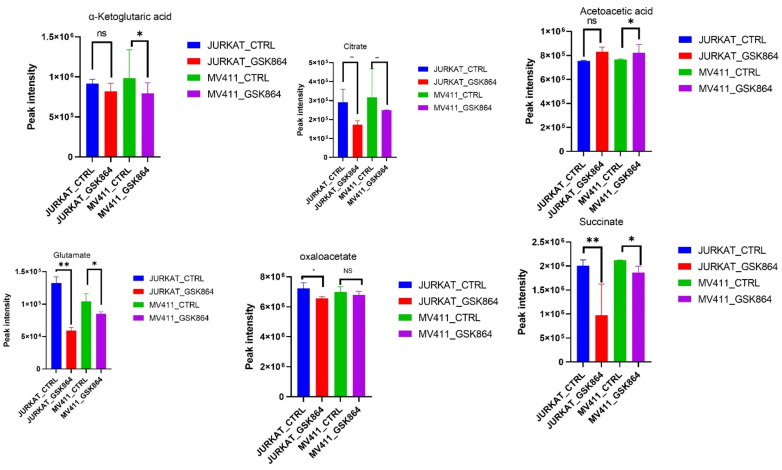
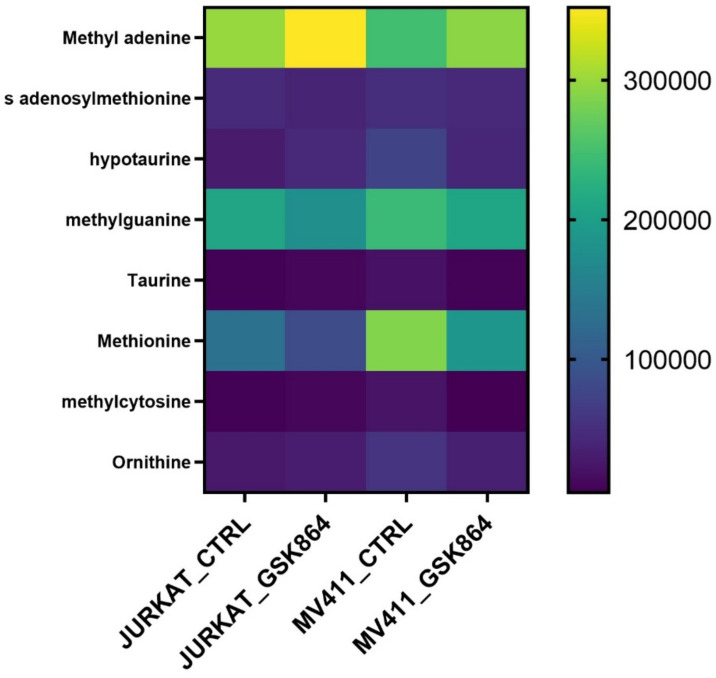
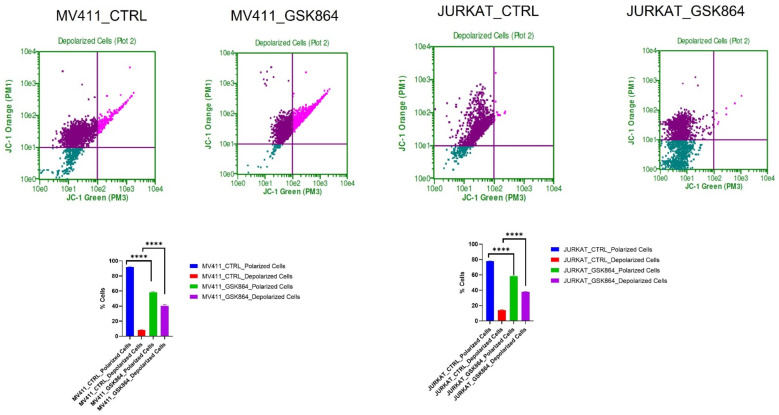
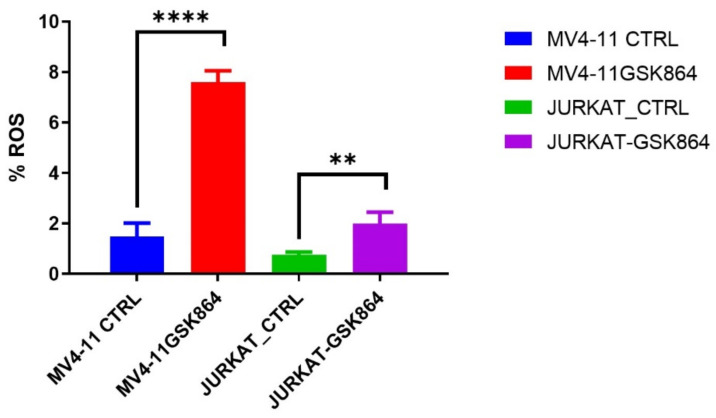
Leukemia is one of the most common primary malignancies of the hematologic system in both children and adults and remains a largely incurable or relapsing disease. The elucidation of disease subtypes based on mutational profiling has not improved clinical outcomes. IDH1/2 are critical enzymes of the TCA cycle that produces α-ketoglutarate (αKG). However, their mutated version is well reported in various cancer types, including leukemia, which produces D-2 hydroxyglutarate (D-2HG), an oncometabolite. Recently, some studies have shown that wild-type IDH1 is highly expressed in non-small cell lung carcinoma (NSCLC), primary glioblastomas (GBM), and several hematological malignancies and is correlated with disease progression. This work shows that the treatment of wild-type IDH1 leukemia cells with a specific IDH1 inhibitor shifted leukemic cells toward glycolysis from the oxidative phosphorylation (OXPHOS) phenotype. We also noticed a reduction in αKG in treated cells, possibly suggesting the inhibition of IDH1 enzymatic activity. Furthermore, we found that IDH1 inhibition reduced the metabolites related to one-carbon metabolism, which is essential for maintaining global methylation in leukemic cells. Finally, we observed that metabolic alteration in IDH1 inhibitor-treated leukemic cells promoted reactive oxygen species (ROS) formation and the loss of mitochondrial membrane potential, leading to apoptosis in leukemic cells. We showed that targeting wild-type IDH1 leukemic cells promotes metabolic alterations that can be exploited for combination therapies for a better outcome.
白血病是儿童和成人血液系统中最常见的原发性恶性肿瘤之一,仍然是一种基本无法治愈或易复发的疾病。基于突变分析阐明疾病亚型并没有改善临床结果。IDH1/2 是三羧酸 (TCA) 循环的关键酶,产生 α-酮戊二酸 (αKG)。然而,它们的突变形式在各种癌症类型中已有报道,包括白血病,会产生致癌代谢物 D-2 羟基戊二酸 (D-2HG)。最近,一些研究表明,野生型 IDH1 在非小细胞肺癌 (NSCLC)、原发性胶质母细胞瘤 (GBM) 和几种血液恶性肿瘤中高度表达,与疾病进展相关。这项工作表明,用特异性 IDH1 抑制剂治疗野生型 IDH1 白血病细胞会使白血病细胞从氧化磷酸化 (OXPHOS) 表型转向糖酵解。我们还注意到处理细胞中 αKG 的减少,这可能表明 IDH1 酶活性受到抑制。此外,我们发现 IDH1 抑制降低了与一碳代谢相关的代谢物,这对维持白血病细胞的全局甲基化至关重要。最后,我们观察到 IDH1 抑制剂处理的白血病细胞中的代谢改变促进了活性氧 (ROS) 的形成和线粒体膜电位的丧失,导致白血病细胞凋亡。我们表明,针对野生型 IDH1 白血病细胞的治疗可促进代谢改变,这可用于联合治疗以获得更好的治疗效果。