Bellini Maria Irene, Amabile Maria Ida, Saullo Paolina, Zorzetti Noemi, Testini Mario, Caronna Roberto, D'Andrea Vito
Department of Surgical Sciences, Sapienza University of Rome, 00161 Rome, Italy.
Academic Unit of General Surgery, Department of Biomedical Sciences and Human Oncology, School of Medical, University of Bari Aldo Moro, 70120 Bari, Italy.
J Clin Med. 2022 Jun 18;11(12):3496. doi: 10.3390/jcm11123496.
Literature regarding ergonomic protocols for surgery is lacking, and there is a paucity of information on how this impacts on gender differences with regards to the barriers faced by women in surgery.
This article reviews current literature addressing women in surgery and ergonomics through a systematic search including the Web of Science, Scopus, and PubMed databases.
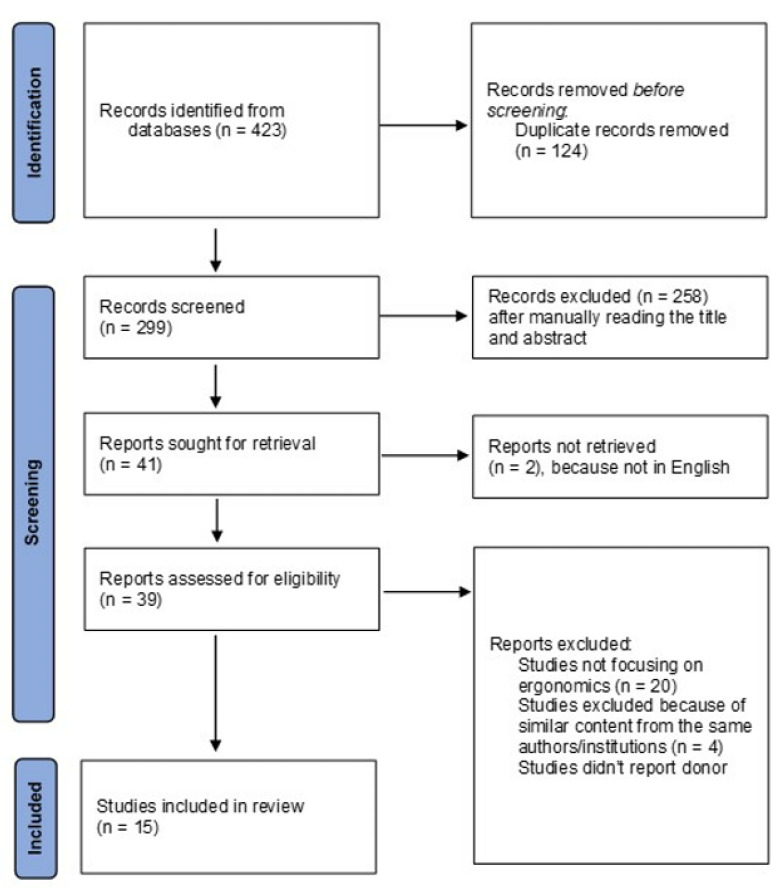
Searches retrieved 425 items, and after a thorough evaluation for inclusion, 15 studies were examined-predominantly surveys (n = 9) and originating from the USA (n = 9). Identified ergonomic challenges included the general shorter height and smaller glove size of women. Furthermore, women experienced more musculoskeletal pain than men, potentially because the size and design of theatre tools are designed for male and tall individuals, highlighting an unconscious gender bias still pervading the surgical field.
As more women enter medicine and pursue surgical careers, it is essential to foster a culture of diversity and inclusion in theatre to develop more ergonomic environments.
关于手术人体工程学方案的文献匮乏,关于这如何影响女性在手术中所面临障碍方面的性别差异的信息也很少。
本文通过系统检索包括科学网、Scopus和PubMed数据库在内的文献,回顾了当前关于手术中的女性和人体工程学的文献。
检索到425篇文章,经过全面评估纳入标准后,对15项研究进行了审查——主要是调查研究(n = 9),且大多来自美国(n = 9)。确定的人体工程学挑战包括女性普遍身高较矮和手套尺寸较小。此外,女性比男性经历更多的肌肉骨骼疼痛,这可能是因为手术工具的尺寸和设计是为男性和高个子人群设计的,这凸显了手术领域仍然存在无意识的性别偏见。
随着越来越多的女性进入医学领域并追求外科职业,在手术室营造一种多元化和包容性的文化以发展更符合人体工程学的环境至关重要。