Chu Kuan-Yu, Yu Hsin-Su, Yu Sebastian
Department of Dermatology, Kaohsiung Medical University Hospital, Kaohsiung Medical University, Kaohsiung 807378, Taiwan.
Graduate Institute of Clinical Medicine, College of Medicine, Kaohsiung Medical University, Kaohsiung 807378, Taiwan.
J Clin Med. 2022 Jun 19;11(12):3528. doi: 10.3390/jcm11123528.
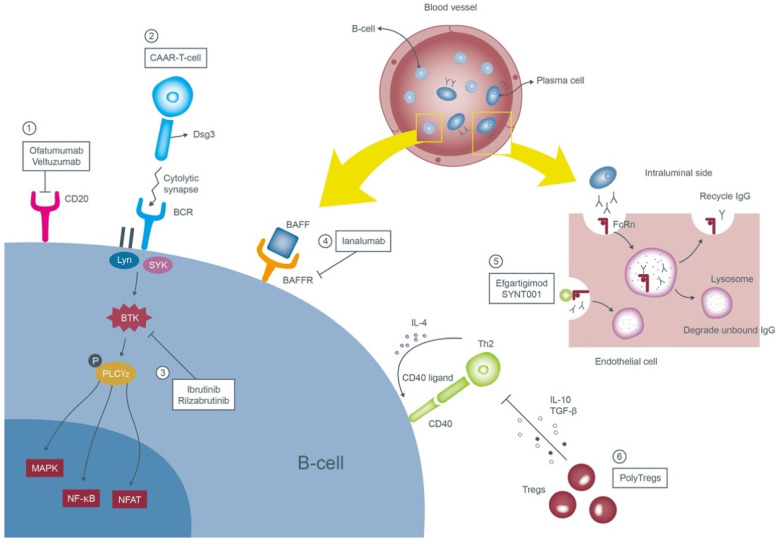
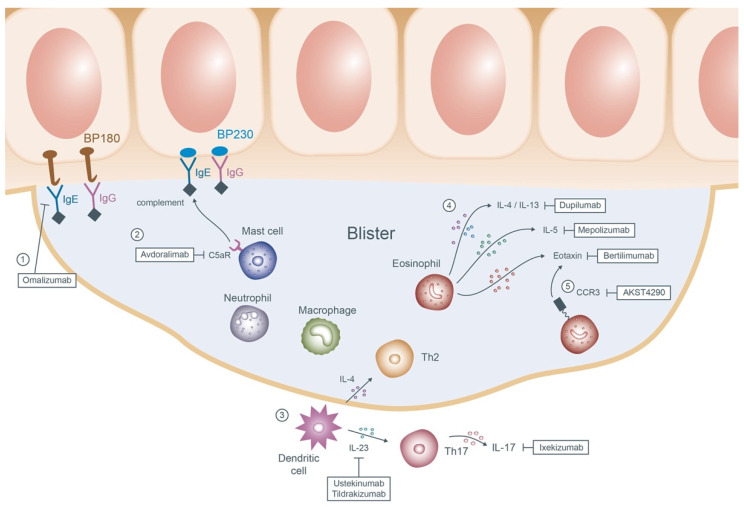
Autoimmune bullous skin disorders are a group of disorders characterized by the formation of numerous blisters and erosions on the skin and/or the mucosal membrane, arising from autoantibodies against the intercellular adhesion molecules and the structural proteins. They can be classified into intraepithelial or subepithelial autoimmune bullous dermatoses based on the location of the targeted antigens. These dermatoses are extremely debilitating and fatal in certain cases, depending on the degree of cutaneous and mucosal involvement. Effective treatments should be implemented promptly. Glucocorticoids serve as the first-line approach due to their rapid onset of therapeutic effects and remission of the acute phase. Nonetheless, long-term applications may lead to major adverse effects that outweigh the benefits. Hence, other adjuvant therapies are mandatory to minimize the potential harm and ameliorate the quality of life. Herein, we summarize the current therapeutic strategies and introduce promising therapies for intractable autoimmune bullous diseases.
自身免疫性大疱性皮肤病是一组以皮肤和/或粘膜上形成大量水疱和糜烂为特征的疾病,由针对细胞间粘附分子和结构蛋白的自身抗体引起。根据靶向抗原的位置,它们可分为上皮内或上皮下自身免疫性大疱性皮肤病。这些皮肤病在某些情况下极其使人衰弱甚至致命,这取决于皮肤和粘膜受累的程度。应及时实施有效的治疗。糖皮质激素由于其治疗效果起效快且能缓解急性期,因此作为一线治疗方法。然而,长期应用可能会导致严重的不良反应,其危害超过益处。因此,必须采用其他辅助疗法以尽量减少潜在危害并改善生活质量。在此,我们总结了当前的治疗策略,并介绍了针对难治性自身免疫性大疱性疾病的有前景的疗法。