Klumpers Marije J, Witte Ward De, Gattuso Giovanna, Schiavello Elisabetta, Terenziani Monica, Massimino Maura, Gidding Corrie E M, Vermeulen Sita H, Driessen Chantal M, Van Herpen Carla M, Van Meerten Esther, Guchelaar Henk-Jan, Coenen Marieke J H, Te Loo D Maroeska W M
Department of Pediatrics, Radboud University Medical Center, Postbox 9101, 6500 HB Nijmegen, The Netherlands.
Department of Human Genetics, Radboud University Medical Center, Postbox 9101, 6500 HB Nijmegen, The Netherlands.
J Pers Med. 2022 May 28;12(6):892. doi: 10.3390/jpm12060892.
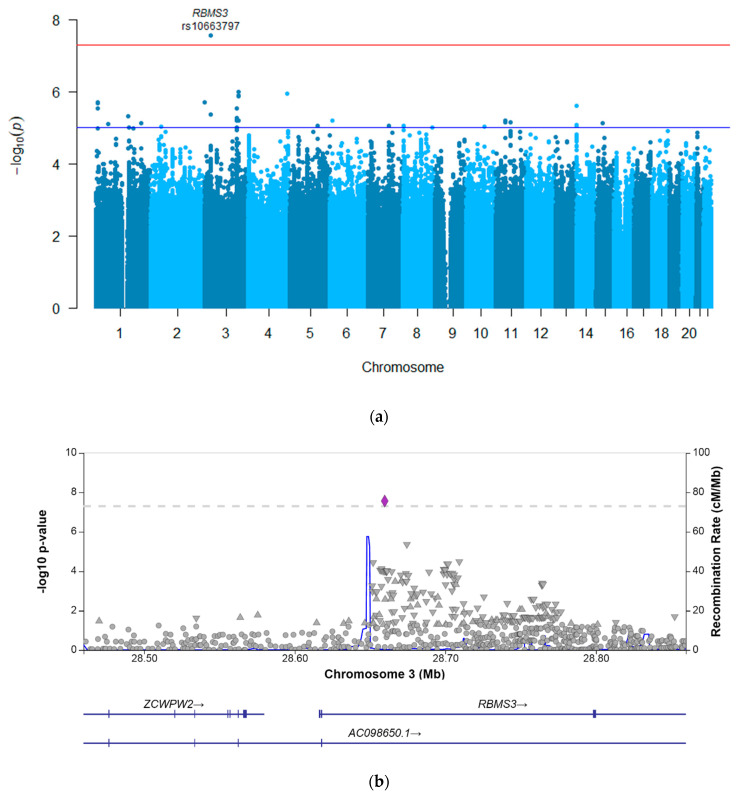
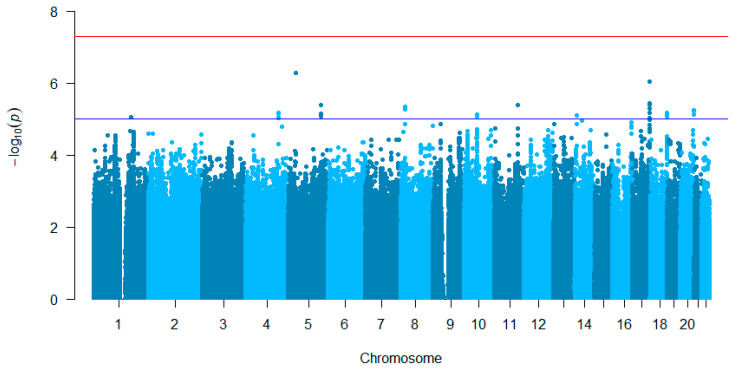
Nephrotoxicity is a common and dose-limiting side effect of platinum compounds, which often manifests as acute kidney injury or hypomagnesemia. This study aimed to investigate the genetic risk loci for platinum-induced nephrotoxicity. Platinum-treated brain tumor and head-neck tumor patients were genotyped with genome-wide coverage. The data regarding the patient and treatment characteristics and the laboratory results reflecting the nephrotoxicity during and after the platinum treatment were collected from the medical records. Linear and logistic regression analyses were performed to investigate the associations between the genetic variants and the acute kidney injury and hypomagnesemia phenotypes. A cohort of 195 platinum-treated patients was included, and 9,799,032 DNA variants passed the quality control. An association was identified between rs10663797 and acute kidney injury (coefficient -0.10 (95% confidence interval -0.13--0.06), -value 2.72 × 10). The patients who carried an AC deletion at this locus had statistically significantly lower glomerular filtration rates after platinum treatment. Previously reported associations, such as rs4388268, could not be replicated in this study's cohort. No statistically significant associations were identified for platinum-induced hypomagnesemia. The genetic variant in was not previously linked to nephrotoxicity or related traits. The validation of this study's results in independent cohorts is needed to confirm this novel association.
肾毒性是铂类化合物常见的剂量限制性副作用,常表现为急性肾损伤或低镁血症。本研究旨在调查铂诱导肾毒性的遗传风险位点。对接受铂治疗的脑肿瘤和头颈肿瘤患者进行全基因组覆盖基因分型。从病历中收集患者及治疗特征数据以及反映铂治疗期间及之后肾毒性的实验室结果。进行线性和逻辑回归分析以研究基因变异与急性肾损伤及低镁血症表型之间的关联。纳入了195例接受铂治疗的患者,9,799,032个DNA变异通过了质量控制。在rs10663797与急性肾损伤之间发现了一种关联(系数为-0.10(95%置信区间为-0.13至-0.06),P值为2.72×10)。在该位点携带AC缺失的患者在铂治疗后肾小球滤过率在统计学上显著更低。先前报道的关联,如rs4388268,在本研究队列中未能得到重复验证。未发现铂诱导低镁血症有统计学显著关联。该基因变异之前未与肾毒性或相关特征相关联。需要在独立队列中验证本研究结果以确认这种新的关联。