Ortega Miguel A, García-Montero Cielo, Fraile-Martinez Oscar, Colet Paolo, Baizhaxynova Ardak, Mukhtarova Kymbat, Alvarez-Mon Melchor, Kanatova Kaznagul, Asúnsolo Angel, Sarría-Santamera Antonio
Department of Medicine and Medical Specialities, Faculty of Medicine and Health Sciences, University of Alcalá, 28801 Alcala de Henares, Spain.
Ramón y Cajal Institute of Sanitary Research (IRYCIS), 28034 Madrid, Spain.
J Pers Med. 2022 Jun 18;12(6):995. doi: 10.3390/jpm12060995.
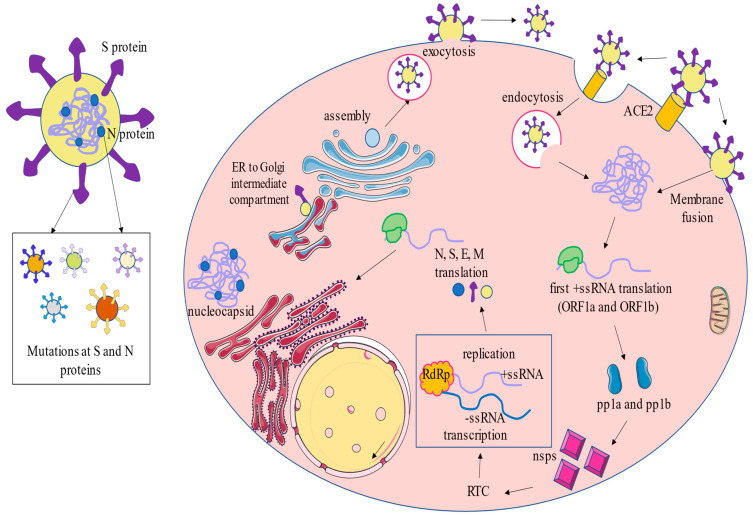
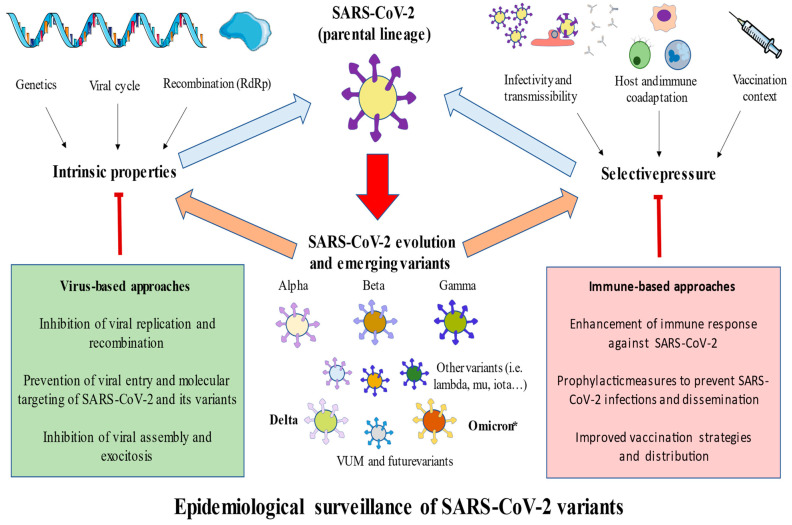
Over the two years that we have been experiencing the Severe Acute Respiratory Syndrome Coronavirus-2 (SARS-CoV-2) pandemic, our challenges have been the race to develop vaccines and the difficulties in fighting against new variants due to the rapid ability of the virus to evolve. In this sense, different organizations have identified and classified the different variants that have been emerging, distinguishing between variants of concern (VOC), variants of interest (VOI), or variants under monitoring (VUM). The following review aims to describe the latest updates focusing on VOC and already de-escalated variants, as well as to describe the impact these have had on the global situation. Understanding the intrinsic properties of SARS-CoV-2 and its interaction with the immune system and vaccination is essential to make out the underlying mechanisms that have led to the appearance of these variants, helping to determine the next steps for better public management of this pandemic.
在我们经历严重急性呼吸综合征冠状病毒2(SARS-CoV-2)大流行的这两年里,我们面临的挑战包括竞相研发疫苗以及由于病毒快速进化能力而在对抗新变种方面遇到的困难。从这个意义上说,不同组织已经识别并分类了不断出现的不同变种,区分了关注变种(VOC)、感兴趣变种(VOI)或监测中的变种(VUM)。以下综述旨在描述聚焦于VOC和已降级变种的最新进展,以及描述这些变种对全球形势产生的影响。了解SARS-CoV-2的内在特性及其与免疫系统和疫苗接种的相互作用,对于弄清楚导致这些变种出现的潜在机制至关重要,有助于确定更好地进行这场大流行公共管理的下一步措施。