Universidade Federal de Santa Catarina, Florianópolis 88040-900, Brazil.
Instituto Federal de Santa Catarina, Lages 88506-400, Brazil.
Viruses. 2022 Mar 27;14(4):695. doi: 10.3390/v14040695.
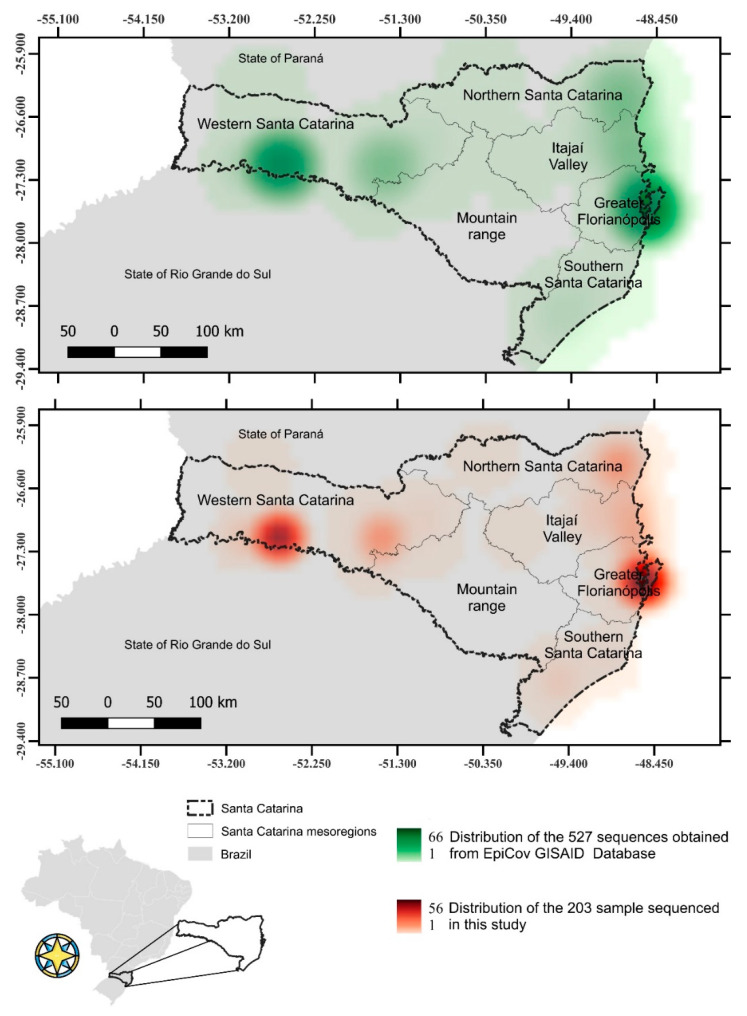
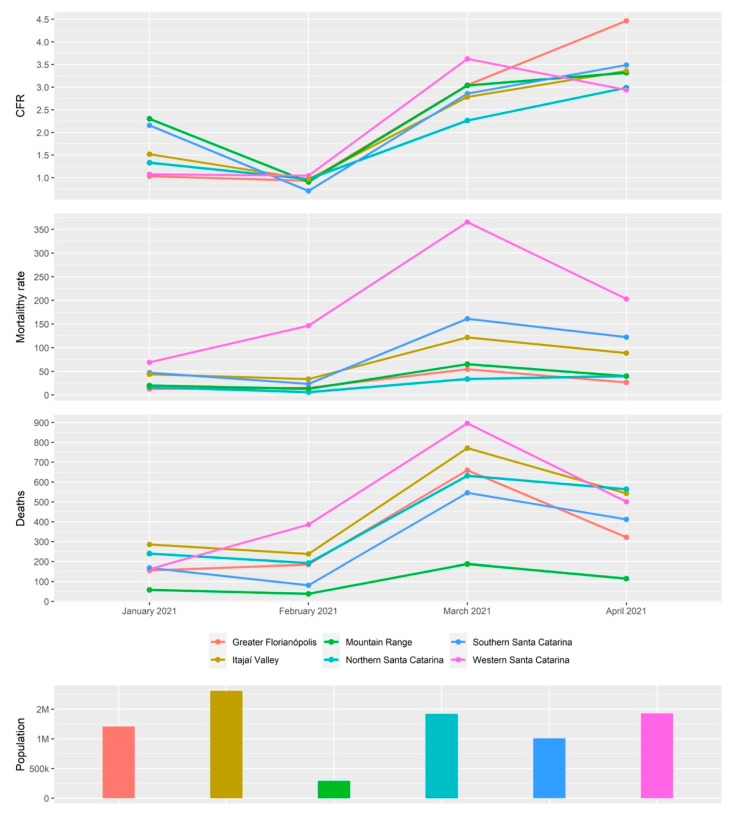
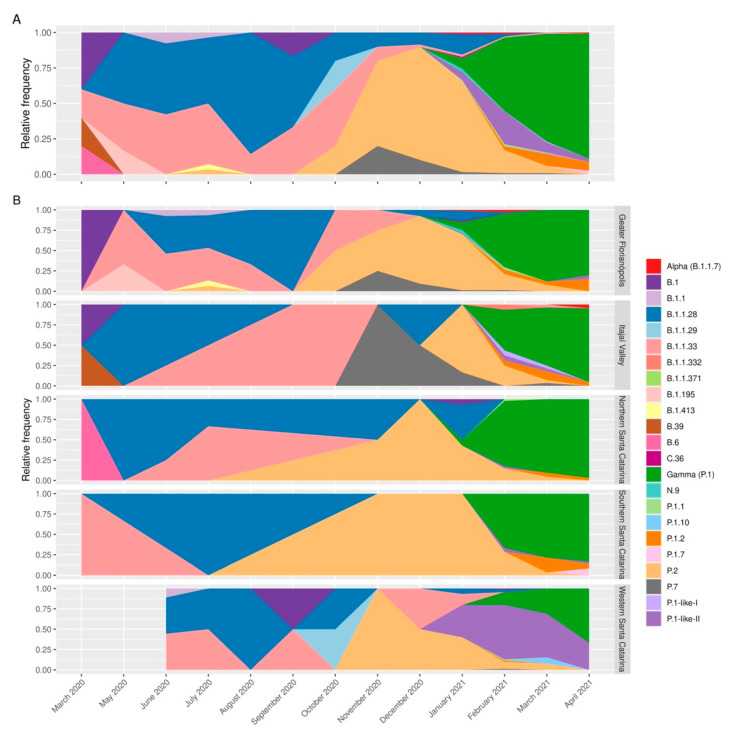
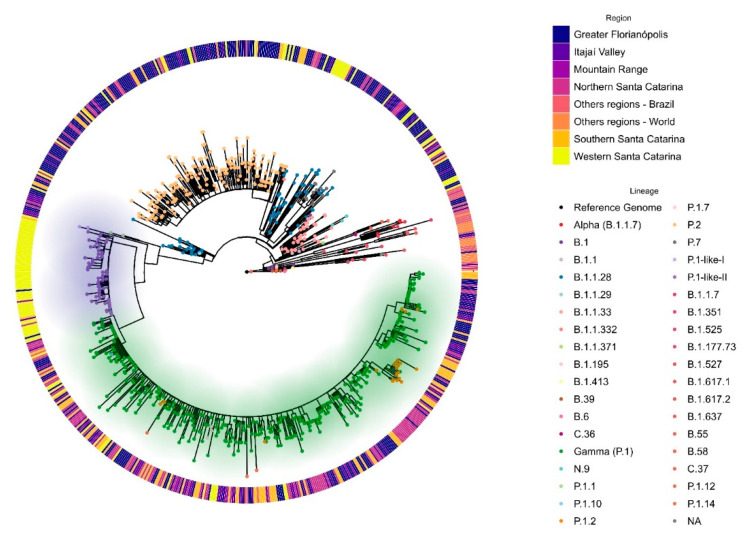
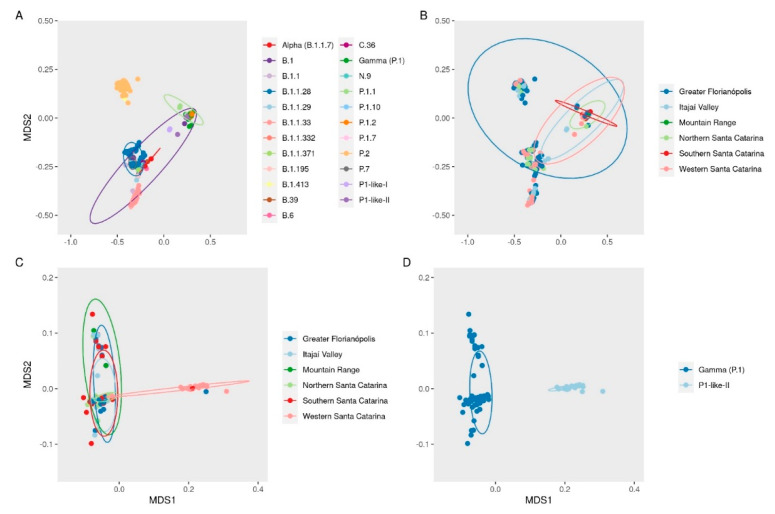
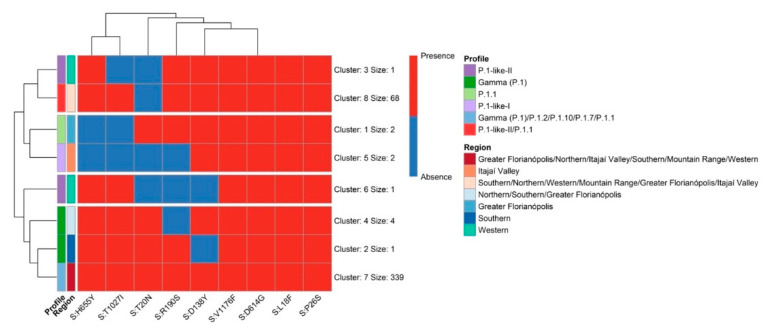
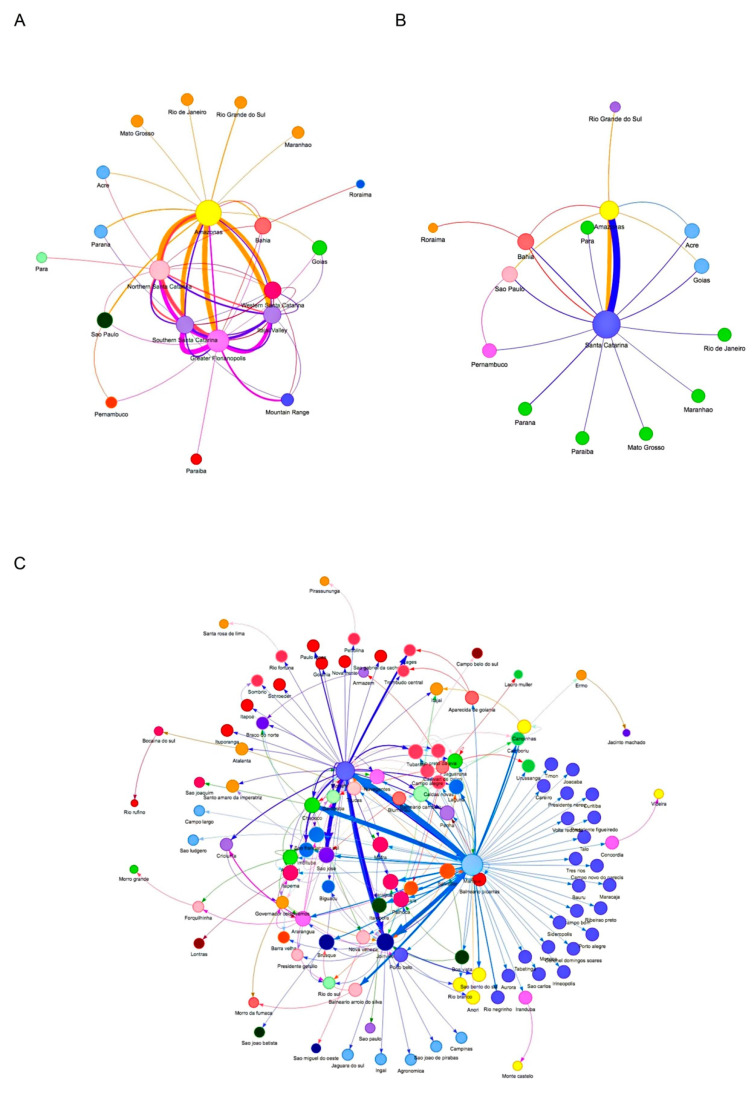
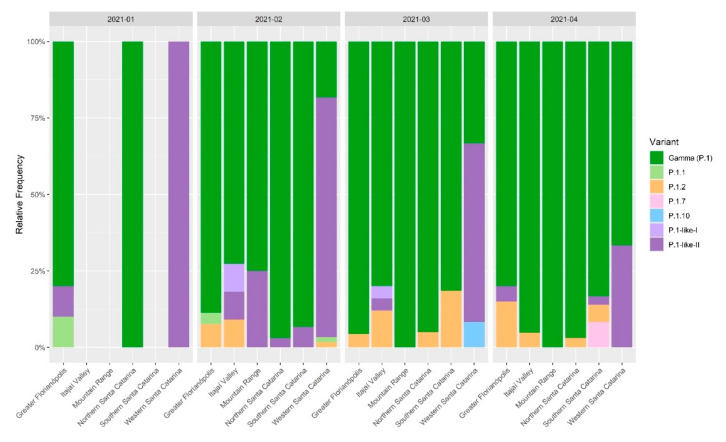
The western mesoregion of the state of Santa Catarina (SC), Southern Brazil, was heavily affected as a whole by the COVID-19 pandemic in early 2021. This study aimed to evaluate the dynamics of the SARS-CoV-2 virus spreading patterns in the SC state from March 2020 to April 2021 using genomic surveillance. During this period, there were 23 distinct variants, including Beta and Gamma, among which the Gamma and related lineages were predominant in the second pandemic wave within SC. A regionalization of P.1-like-II in the Western SC region was observed, concomitant to the increase in cases, mortality, and the case fatality rate (CFR) index. This is the first evidence of the regionalization of the SARS-CoV-2 transmission in SC and it highlights the importance of tracking the variants, dispersion, and impact of SARS-CoV-2 on the public health systems.
2021 年初,巴西南部圣卡塔琳娜州(SC)的西部地区整体受到 COVID-19 疫情的严重影响。本研究旨在通过基因组监测评估 2020 年 3 月至 2021 年 4 月期间 SC 州 SARS-CoV-2 病毒传播模式的动态。在此期间,出现了 23 种不同的变体,包括 Beta 和 Gamma,其中 Gamma 和相关谱系在 SC 的第二波疫情中占主导地位。在 SC 西部地区观察到 P.1-like-II 的区域化现象,同时病例、死亡率和病死率(CFR)指数增加。这是首次证明 SC 中 SARS-CoV-2 传播的区域化,它强调了跟踪 SARS-CoV-2 的变体、分散和对公共卫生系统的影响的重要性。