Facultad de Ciencias Básicas, Universidad Santiago de Cali, Calle 5 # 62-00, Cali 760035, Colombia.
Instituto de Investigaciones en Tecnología Química (INTEQUI), Área de Química General e Inorgánica, Facultad de Química, Bioquímica y Farmacia, Chacabuco y Pedernera, Universidad Nacional de San Luis, Almirante Brown, 1455, San Luis 5700, Argentina.
Molecules. 2022 Jun 14;27(12):3830. doi: 10.3390/molecules27123830.
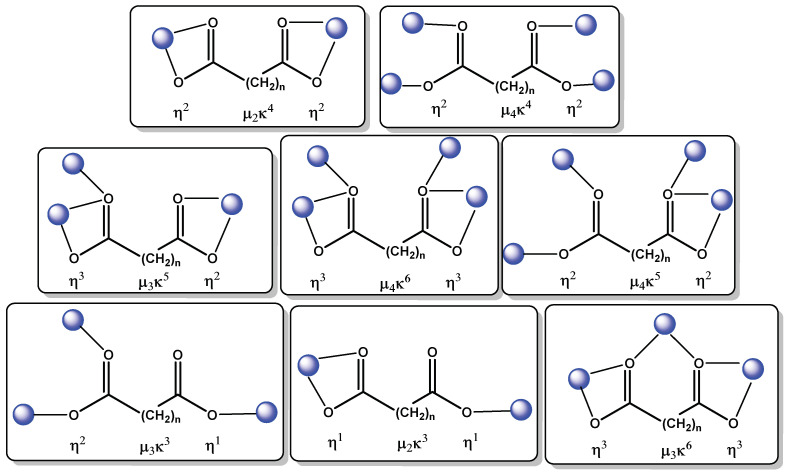
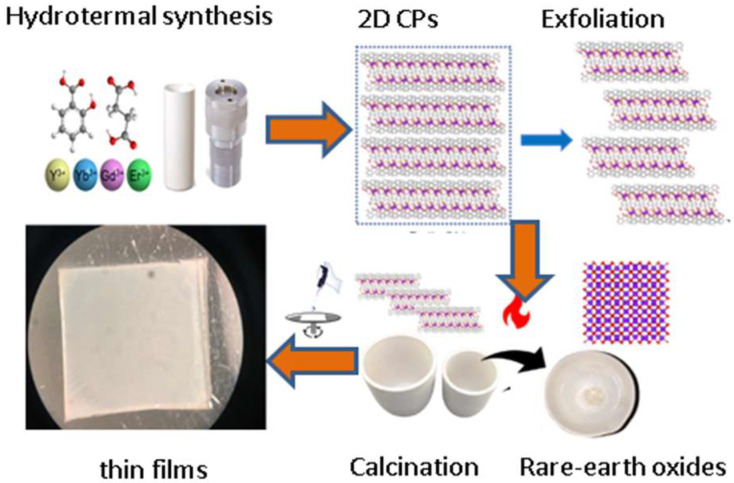
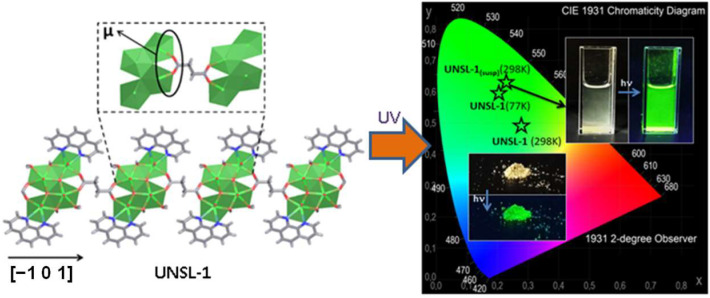
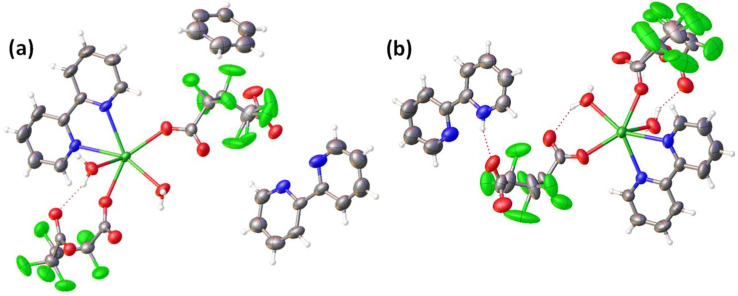
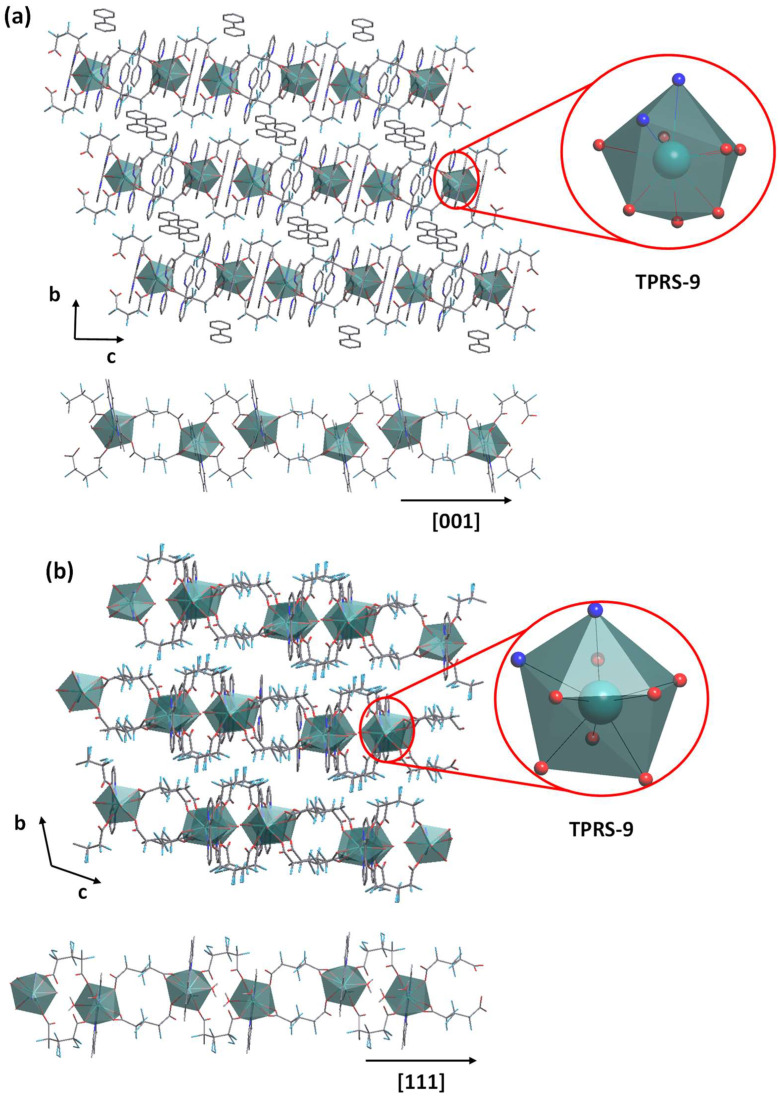
Three principal factors may influence the final structure of coordination polymers (CPs): (i) the nature of the ligand, (ii) the type and coordination number of the metal center, and (iii) the reaction conditions. Further, flexible carboxylate aliphatic ligands have been widely employed as building blocks for designing and synthesizing CPs, resulting in a diverse array of materials with exciting architectures, porosities, dimensionalities, and topologies as well as an increasing number of properties and applications. These ligands show different structural features, such as torsion angles, carbon backbone number, and coordination modes, which affect the desired products and so enable the generation of polymorphs or crystalline phases. Additionally, due to their large coordination numbers, using 4 and 5 metals as coordination centers combined with aliphatic ligands increases the possibility of obtaining different crystal phases. Additionally, by varying the synthetic conditions, we may control the production of a specific solid phase by understanding the thermodynamic and kinetic factors that influence the self-assembly process. This revision highlights the relationship between the structural variety of CPs based on flexible carboxylate aliphatic ligands and f-elements (lanthanide and actinides) and their outstanding luminescent properties such as solid-state emissions, sensing, and photocatalysis. In this sense, we present a structural analysis of the CPs reported with the oxalate ligand, as the one rigid ligand of the family, and other flexible dicarboxylate linkers with -CH- spacers. Additionally, the nature of the luminescence properties of the 4 or 5-CPs is analyzed, and finally, we present a novel set of CPs using a glutarate-derived ligand and samarium, with the formula [2,2'-bipyH][Sm(HFG) (2,2'-bipy) (HO)]•(2,2'-bipy) () and [2,2'-bipyH][Sm(HFG) (2,2'-bipy) (HO)] ().
三个主要因素可能会影响配位聚合物 (CPs) 的最终结构:(i) 配体的性质,(ii) 金属中心的类型和配位数,以及 (iii) 反应条件。此外,柔性羧酸脂肪族配体已被广泛用作设计和合成 CPs 的构建块,从而产生了具有令人兴奋的结构、孔隙率、维度和拓扑结构的各种材料,以及越来越多的特性和应用。这些配体表现出不同的结构特征,例如扭转角、碳骨架数和配位方式,这会影响所需的产物,从而产生多晶型物或晶相。此外,由于其较大的配位数,使用 4 和 5 个金属作为配位中心与脂肪族配体结合增加了获得不同晶体相的可能性。此外,通过改变合成条件,我们可以通过了解影响自组装过程的热力学和动力学因素来控制特定固相的生成。本次修订强调了基于柔性羧酸脂肪族配体的 CPs 的结构多样性与 f 族元素(镧系和锕系元素)之间的关系,以及它们在固态发射、传感和光催化等方面的出色发光特性。在这方面,我们展示了基于 oxalate 配体的 CPs 的结构分析,oxalate 配体是该家族中刚性配体之一,以及其他具有-CH-间隔基的柔性二羧酸连接体。此外,还分析了 4 或 5-CPs 的发光性质的性质,最后,我们展示了一组使用戊二酸盐衍生配体和钐的新型 CPs,其化学式为 [2,2'-bipyH][Sm(HFG) (2,2'-bipy) (HO)]•(2,2'-bipy) () 和 [2,2'-bipyH][Sm(HFG) (2,2'-bipy) (HO)] ()。