Department of Anesthesiology, Telemark Hospital, Skien, Norway.
University of Oslo, Oslo, Norway.
Physiol Rep. 2022 Jun;10(12):e15355. doi: 10.14814/phy2.15355.
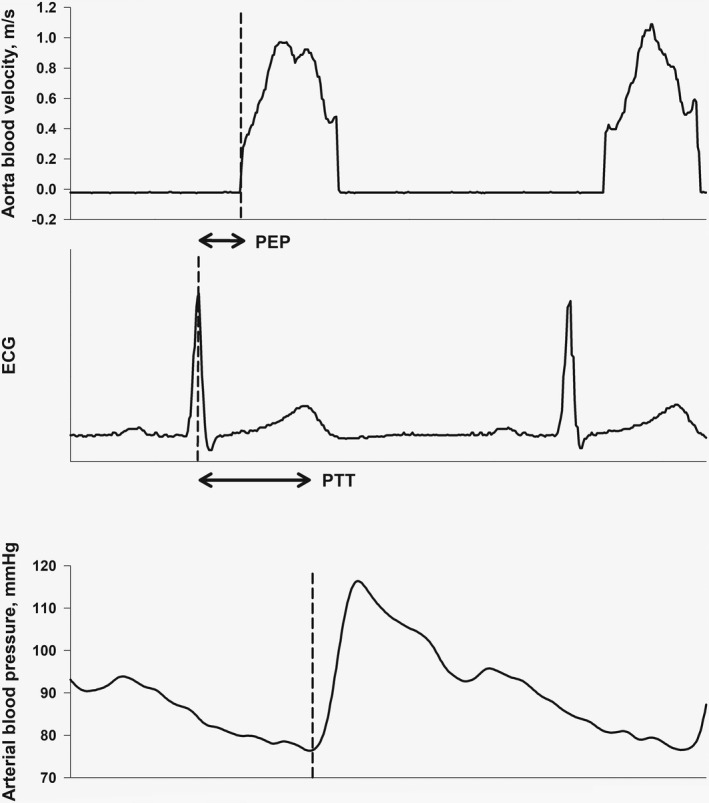
Trauma patients may suffer significant blood loss, and noninvasive methods to diagnose hypovolemia in these patients are needed. Physiologic effects of hypovolemia, aiming to maintain blood pressure, are largely mediated by increased sympathetic nervous activity. Trauma patients may however experience pain, which also increases sympathetic nervous activity, potentially confounding measures of hypovolemia. Elucidating the common and separate effects of the two stimuli on diagnostic methods is therefore important. Lower body negative pressure (LBNP) and cold pressor test (CPT) are experimental models of central hypovolemia and pain, respectively. In the present analysis, we explored the effects of LBNP and CPT on pre-ejection period and pulse transit time, aiming to further elucidate the potential use of these variables in diagnosing hypovolemia in trauma patients. We exposed healthy volunteers to four experimental sequences with hypovolemia (LBNP 60 mmHg) or normovolemia (LBNP 0 mmHg) and pain (CPT) or no pain (sham) in a 2 × 2 fashion. We calculated pre-ejection period and pulse transit time from ECG and ascending aortic blood velocity (suprasternal Doppler) and continuous noninvasive arterial pressure waveform (volume-clamp method). Fourteen subjects were available for the current analyses. This experimental study found that pre-ejection period increased with hypovolemia and remained unaltered with pain. Pulse transit time was reduced by pain and increased with hypovolemia. Thus, the direction of change in pulse transit time has the potential to distinguish hypovolemia and pain.
创伤患者可能会大量失血,因此需要非侵入性方法来诊断这些患者的低血容量。旨在维持血压的低血容量的生理效应主要通过增加交感神经活动来介导。然而,创伤患者可能会经历疼痛,这也会增加交感神经活动,从而可能干扰低血容量的测量。因此,阐明这两种刺激对诊断方法的共同和单独影响非常重要。下体负压(LBNP)和冷加压试验(CPT)分别是中枢性低血容量和疼痛的实验模型。在本分析中,我们探讨了 LBNP 和 CPT 对射血前期和脉搏传输时间的影响,旨在进一步阐明这些变量在诊断创伤患者低血容量中的潜在用途。我们以 2×2 的方式将健康志愿者暴露于低血容量(LBNP 60mmHg)或正常血容量(LBNP 0mmHg)和疼痛(CPT)或无疼痛(假)的四种实验序列中。我们从心电图和升主动脉血流速度(胸骨上多普勒)和连续无创动脉压力波形(体积钳法)计算射血前期和脉搏传输时间。当前分析有 14 名受试者。这项实验研究发现,射血前期随着低血容量而增加,而与疼痛无关。脉搏传输时间因疼痛而减少,随低血容量而增加。因此,脉搏传输时间变化的方向有可能区分低血容量和疼痛。