Department of Computer Science, Stanford University, Stanford, CA 94305, USA; Gladstone-UCSF Institute of Genomic Immunology, San Francisco, CA 94158, USA.
Department of Pathology, Stanford University, Stanford, CA 94305, USA.
Cancer Cell. 2022 Jul 11;40(7):768-786.e7. doi: 10.1016/j.ccell.2022.06.001. Epub 2022 Jun 23.
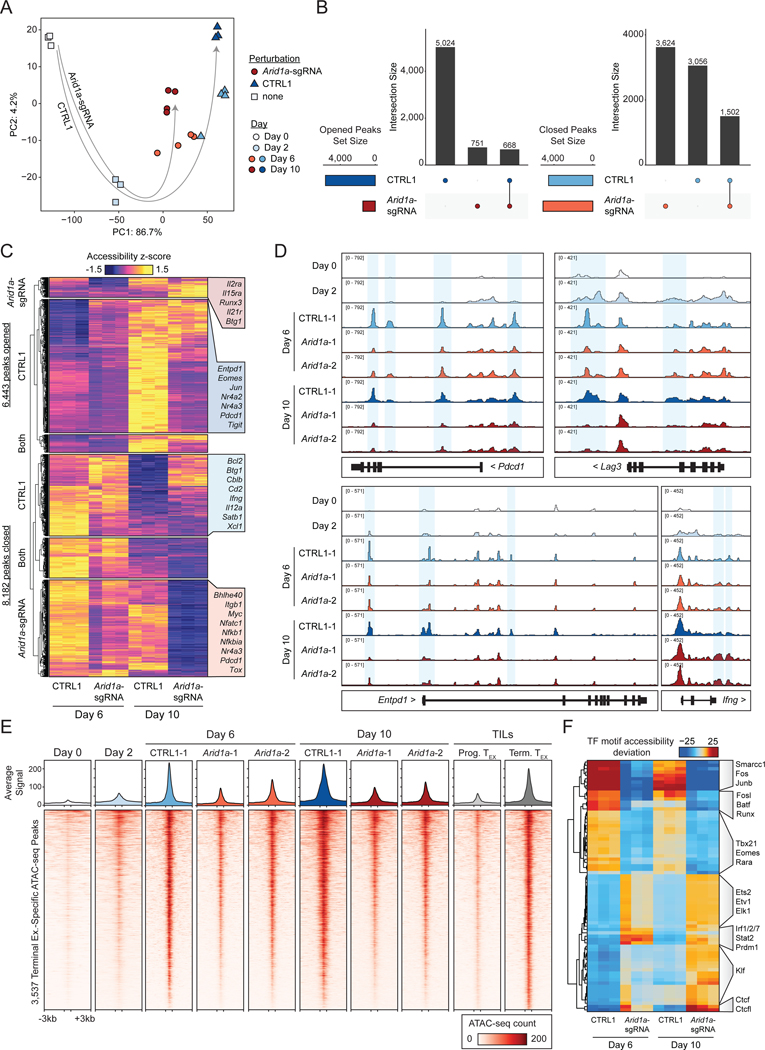
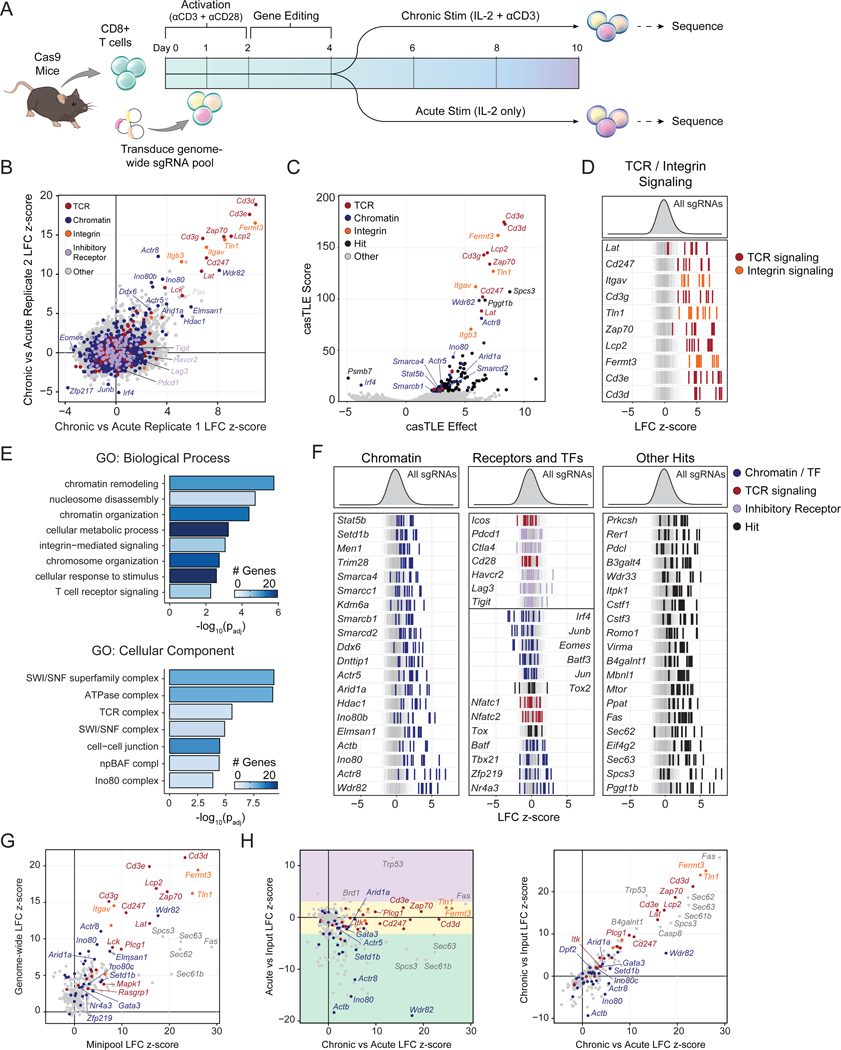
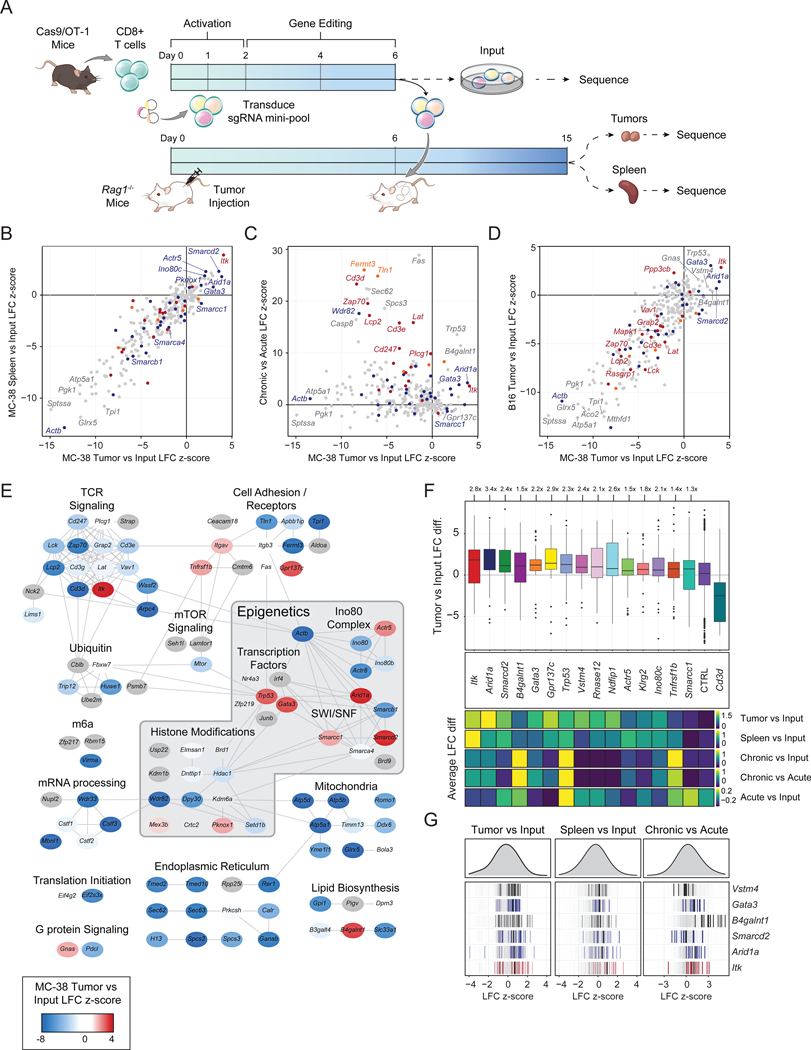
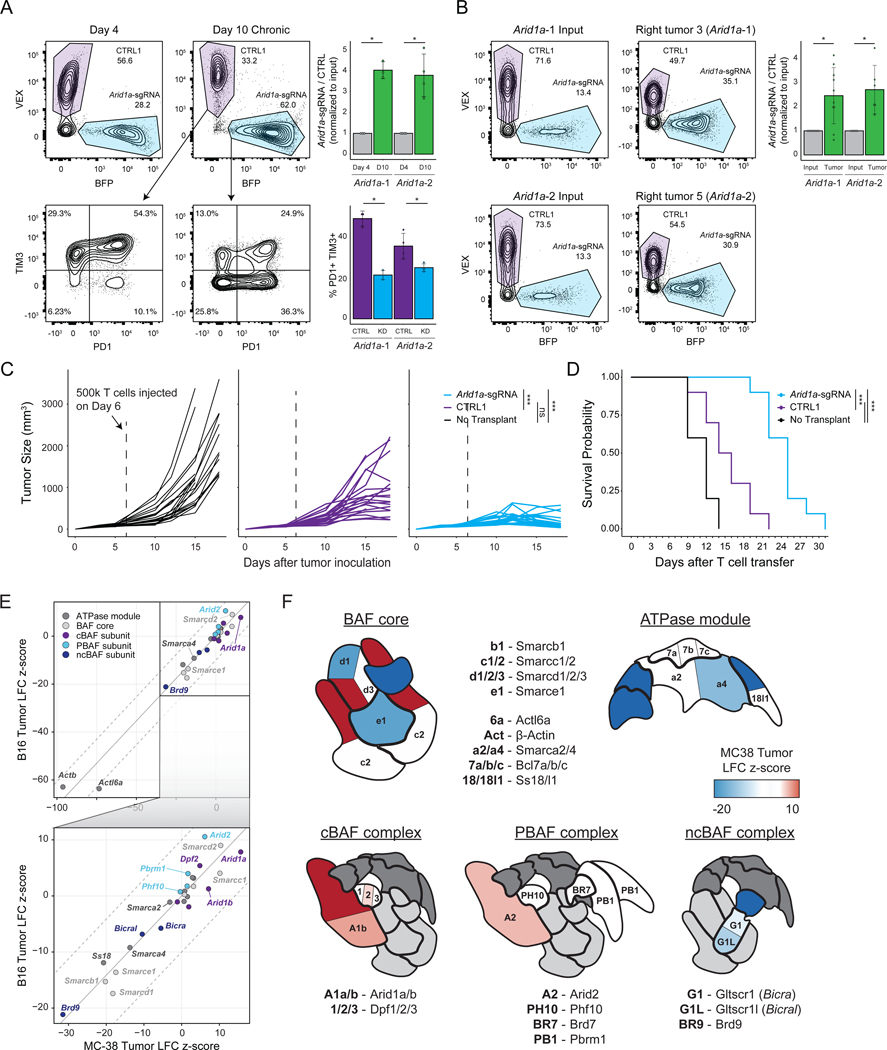
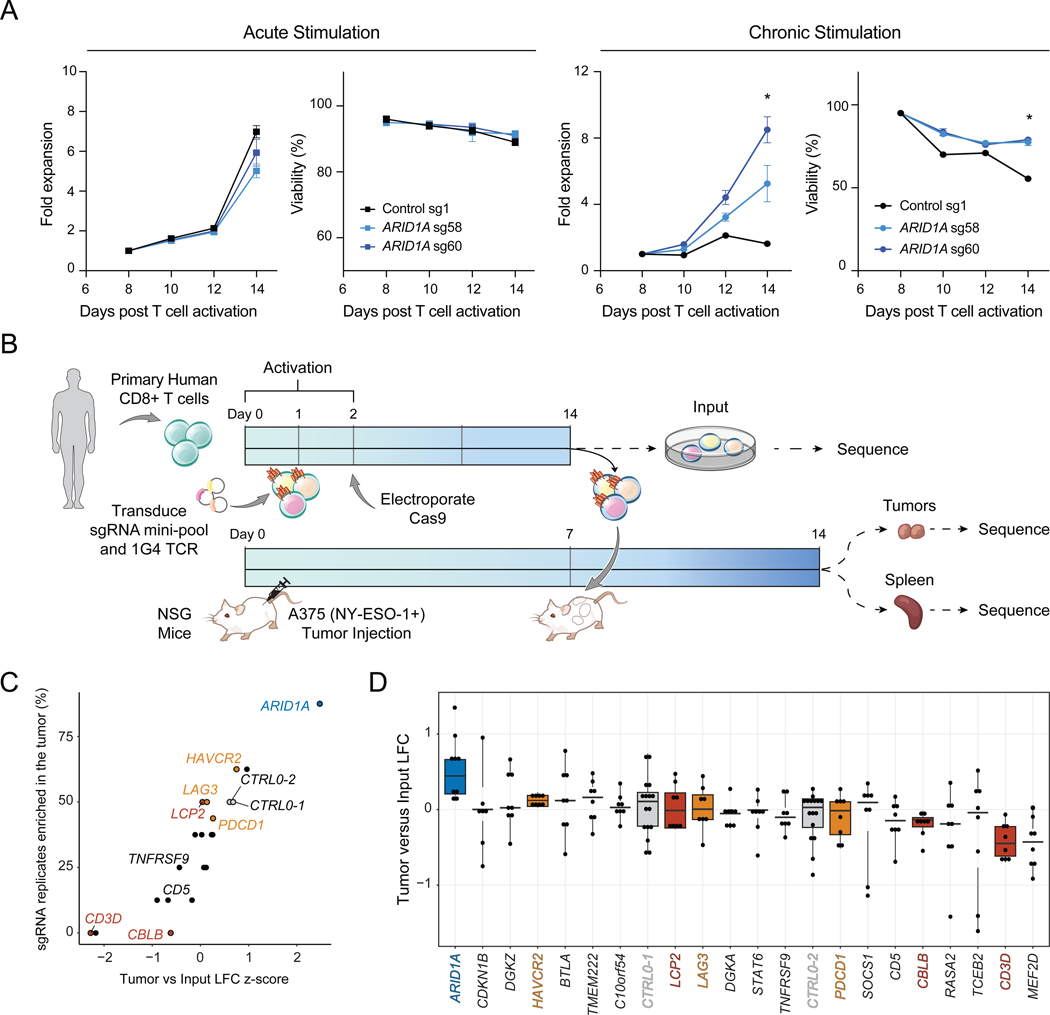
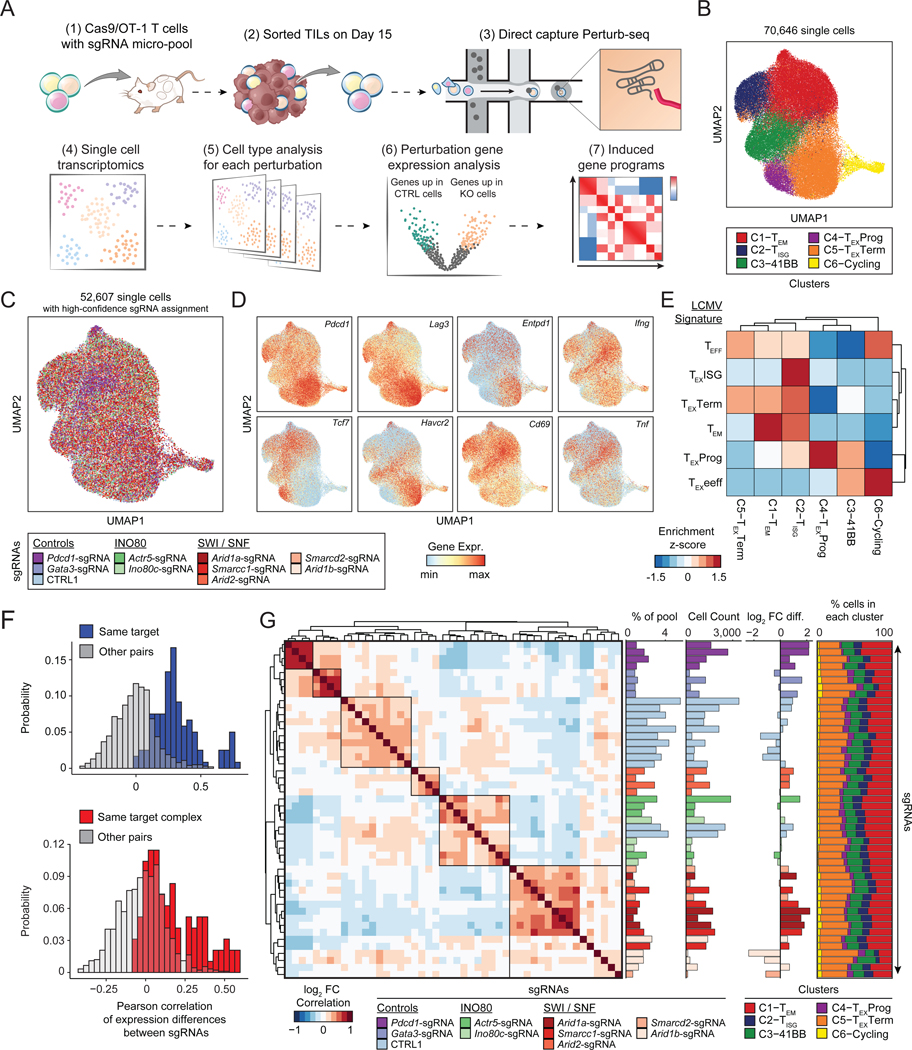
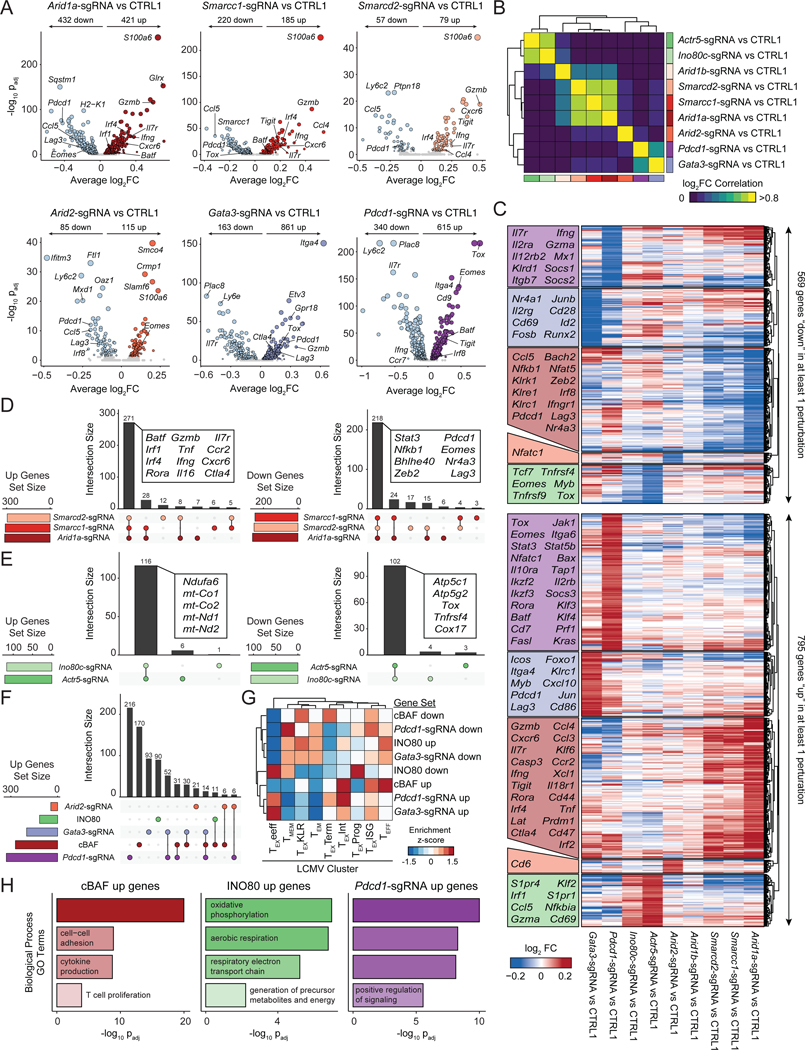
T cell exhaustion limits antitumor immunity, but the molecular determinants of this process remain poorly understood. Using a chronic stimulation assay, we performed genome-wide CRISPR-Cas9 screens to systematically discover regulators of T cell exhaustion, which identified an enrichment of epigenetic factors. In vivo CRISPR screens in murine and human tumor models demonstrated that perturbation of the INO80 and BAF chromatin remodeling complexes improved T cell persistence in tumors. In vivo Perturb-seq revealed distinct transcriptional roles of each complex and that depletion of canonical BAF complex members, including Arid1a, resulted in the maintenance of an effector program and downregulation of exhaustion-related genes in tumor-infiltrating T cells. Finally, Arid1a depletion limited the acquisition of exhaustion-associated chromatin accessibility and led to improved antitumor immunity. In summary, we provide an atlas of the genetic regulators of T cell exhaustion and demonstrate that modulation of epigenetic state can improve T cell responses in cancer immunotherapy.
T 细胞耗竭限制了抗肿瘤免疫,但这一过程的分子决定因素仍知之甚少。我们使用慢性刺激测定法,进行了全基因组 CRISPR-Cas9 筛选,以系统地发现 T 细胞耗竭的调节因子,这确定了表观遗传因子的富集。在小鼠和人类肿瘤模型中的体内 CRISPR 筛选表明,INO80 和 BAF 染色质重塑复合物的扰动改善了肿瘤中 T 细胞的持久性。体内 Perturb-seq 揭示了每个复合物的不同转录作用,并且耗尽经典的 BAF 复合物成员,包括 Arid1a,导致维持效应器程序和下调肿瘤浸润 T 细胞中的耗竭相关基因。最后,Arid1a 的耗竭限制了与耗竭相关的染色质可及性的获得,并导致抗肿瘤免疫的改善。总之,我们提供了 T 细胞耗竭的遗传调节因子图谱,并表明表观遗传状态的调节可以改善癌症免疫治疗中的 T 细胞反应。