Department of Pathology and Laura and Isaac Perlmutter Cancer Center, NYU Grossman School of Medicine, New York, NY 10016, USA.
Department of Pediatric Oncology, Dana-Farber Cancer Institute and Harvard Medical School, Boston, MA 02215, USA; Broad Institute of MIT and Harvard, Cambridge, MA 02142, USA; Biological and Biomedical Sciences Program, Harvard Medical School, Boston, MA 02115, USA.
Mol Cell. 2023 Apr 20;83(8):1216-1236.e12. doi: 10.1016/j.molcel.2023.02.026. Epub 2023 Mar 20.
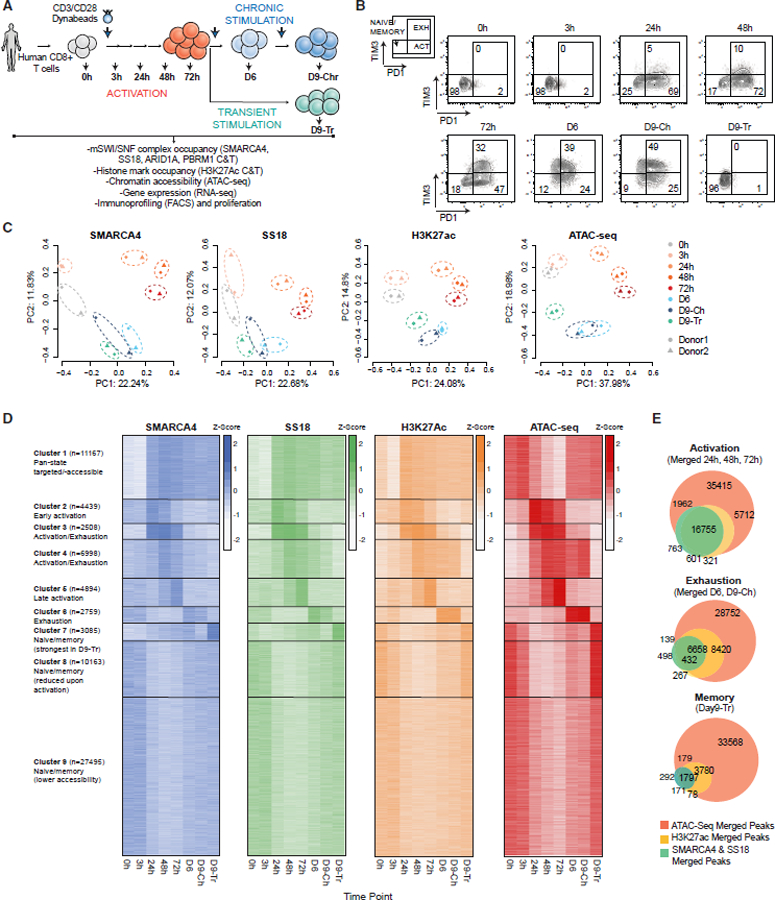
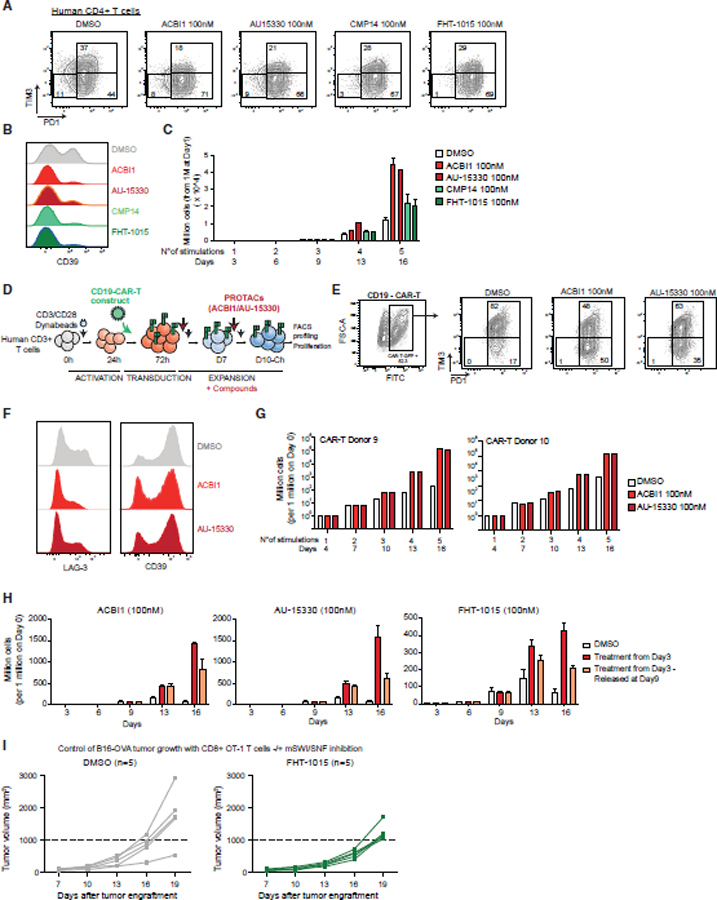
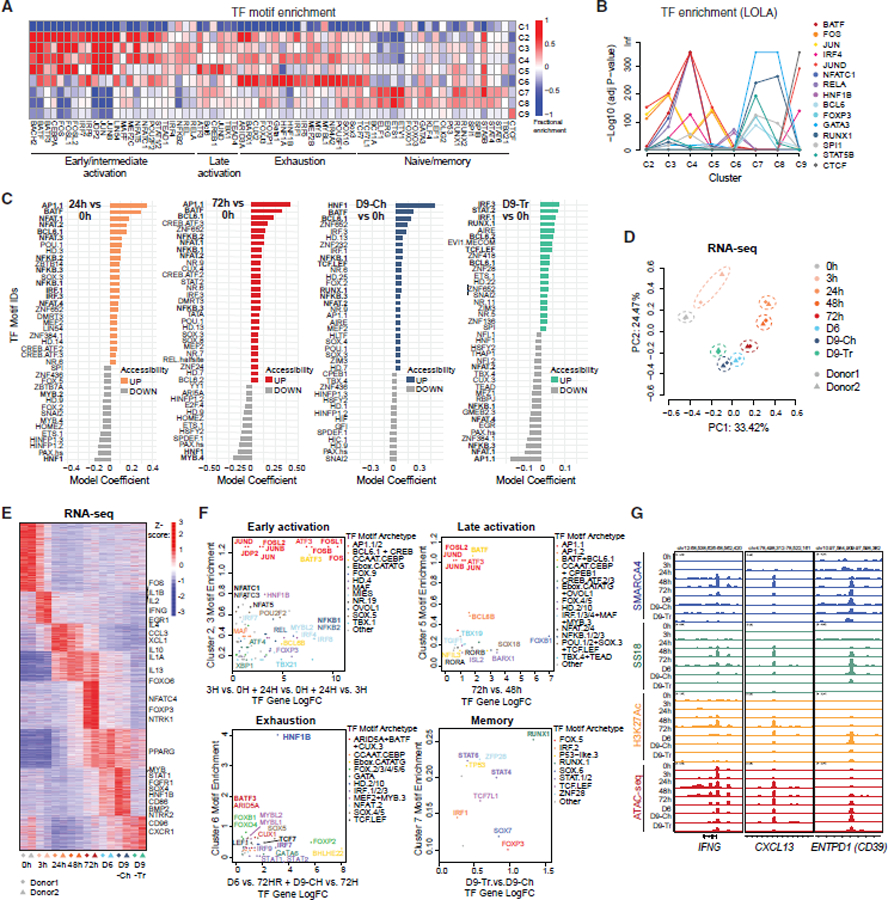
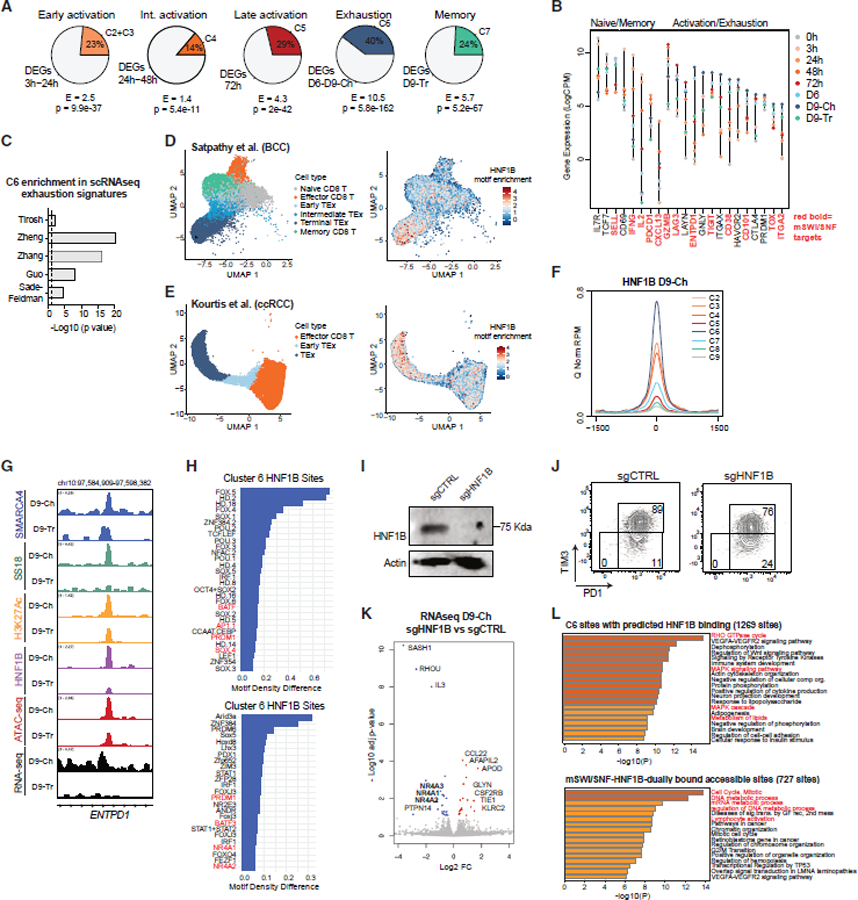
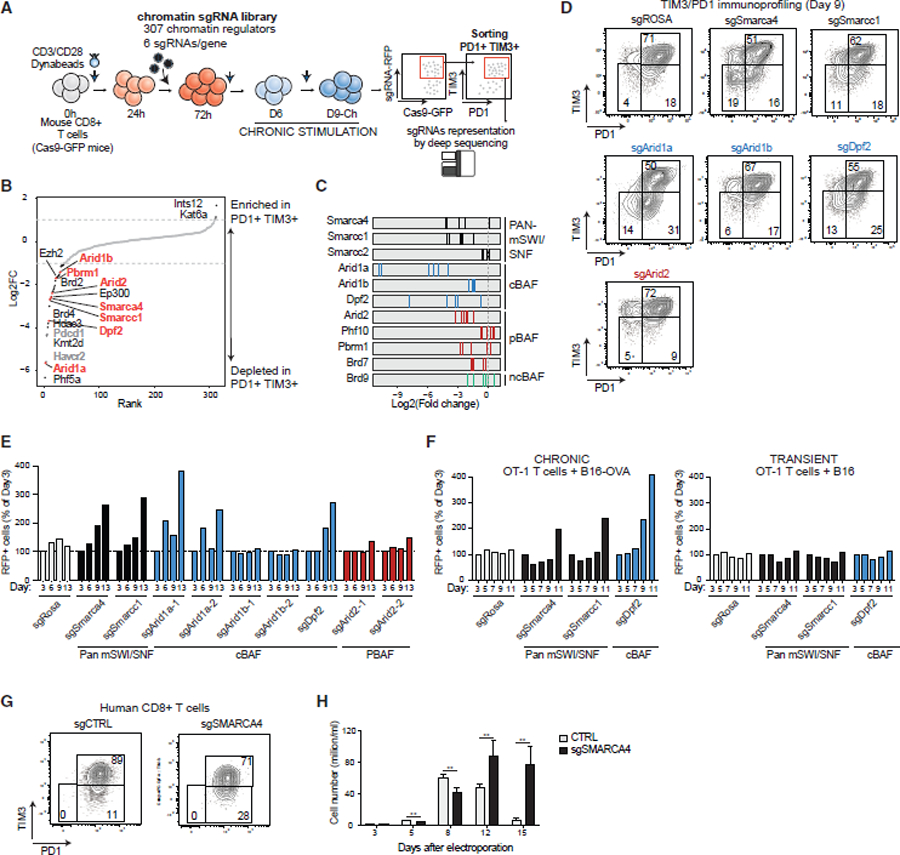
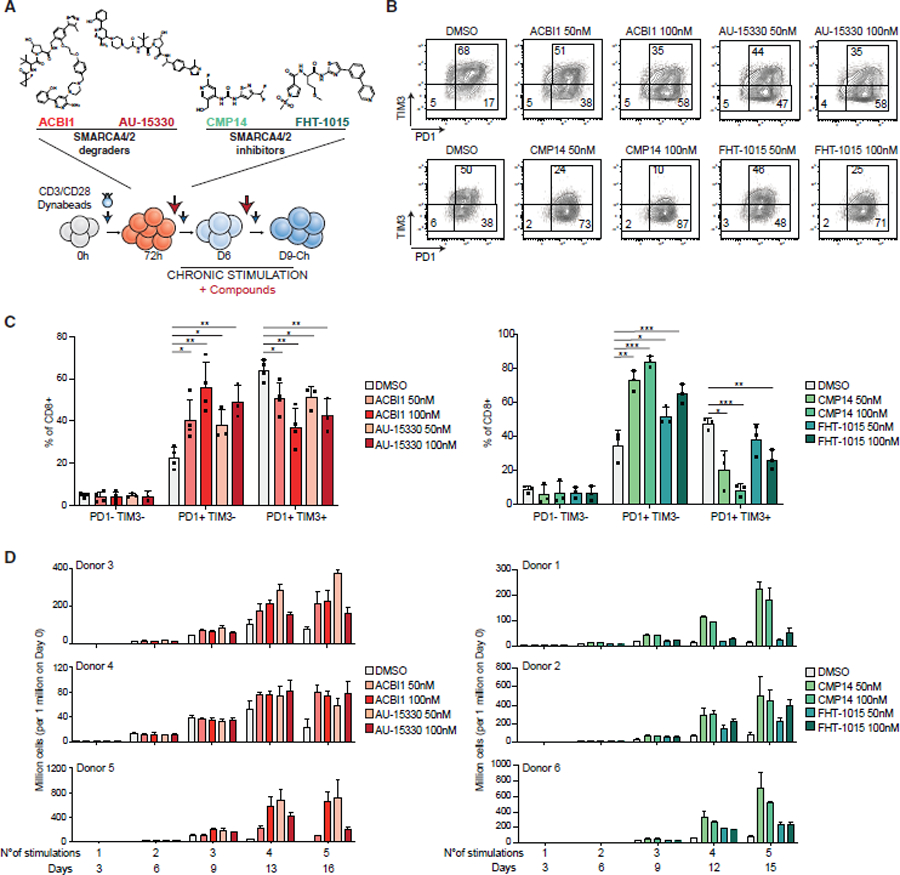
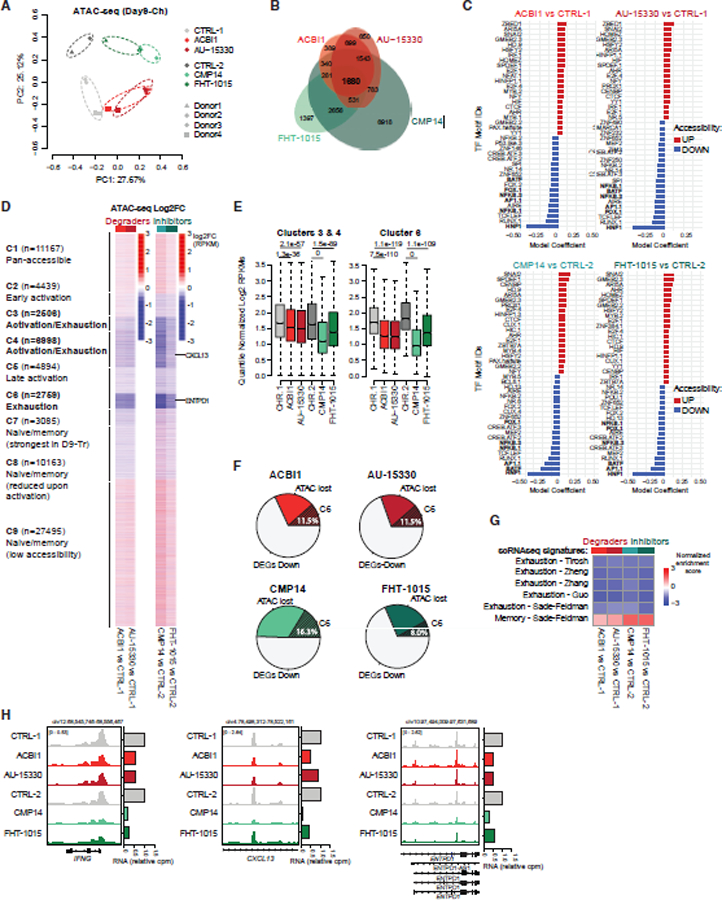
Highly coordinated changes in gene expression underlie T cell activation and exhaustion. However, the mechanisms by which such programs are regulated and how these may be targeted for therapeutic benefit remain poorly understood. Here, we comprehensively profile the genomic occupancy of mSWI/SNF chromatin remodeling complexes throughout acute and chronic T cell stimulation, finding that stepwise changes in localization over transcription factor binding sites direct site-specific chromatin accessibility and gene activation leading to distinct phenotypes. Notably, perturbation of mSWI/SNF complexes using genetic and clinically relevant chemical strategies enhances the persistence of T cells with attenuated exhaustion hallmarks and increased memory features in vitro and in vivo. Finally, pharmacologic mSWI/SNF inhibition improves CAR-T expansion and results in improved anti-tumor control in vivo. These findings reveal the central role of mSWI/SNF complexes in the coordination of T cell activation and exhaustion and nominate small-molecule-based strategies for the improvement of current immunotherapy protocols.
高度协调的基因表达变化是 T 细胞激活和耗竭的基础。然而,这些程序是如何被调控的,以及如何针对这些程序进行治疗性干预以获得治疗效果,目前仍知之甚少。在这里,我们全面描绘了 mSWI/SNF 染色质重塑复合物在急性和慢性 T 细胞刺激过程中的全基因组占据情况,发现转录因子结合位点上定位的逐步变化指导了特定部位的染色质可及性和基因激活,从而产生不同的表型。值得注意的是,使用遗传和临床相关的化学策略对 mSWI/SNF 复合物进行干扰,可增强体外和体内具有减弱的耗竭特征和增强的记忆特征的 T 细胞的持久性。最后,药物抑制 mSWI/SNF 可改善 CAR-T 细胞的扩增,并在体内提高抗肿瘤控制效果。这些发现揭示了 mSWI/SNF 复合物在协调 T 细胞激活和耗竭中的核心作用,并为改善当前的免疫治疗方案提名了基于小分子的策略。