State Key Laboratory of Military Stomatology & National Clinical Research Center for Oral Diseases & Shaanxi Clinical Research Center for Oral Diseases, Department of Orthodontics, School of Stomatology, The Fourth Military Medical University, No. 169 Changle West Road, Xi'an, 710032, China.
Department of Stomatology, Haiyi Hospital, Zhoushan, 316000, China.
BMC Oral Health. 2022 Jun 26;22(1):257. doi: 10.1186/s12903-022-02280-5.
Some female adults who received orthodontic treatment often complain about thinner faces, protruding cheekbones and sunken temples, even at the beginning of treatment. The present research aimed to explore facial soft tissue changes during and after orthodontic treatment, as well as the related factors affecting facial soft tissue changes.
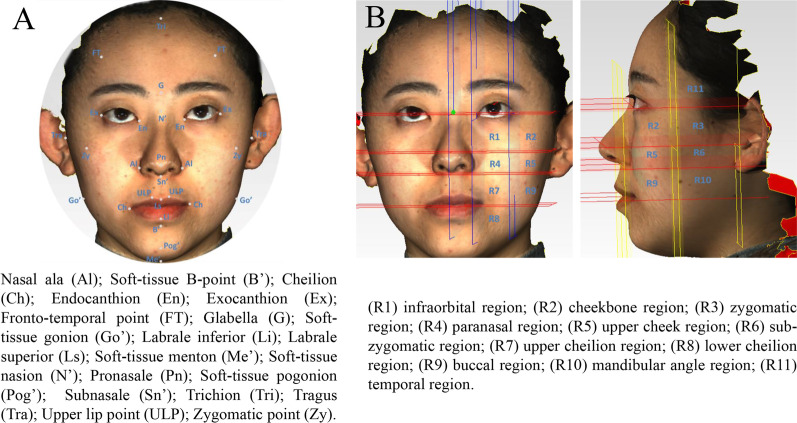
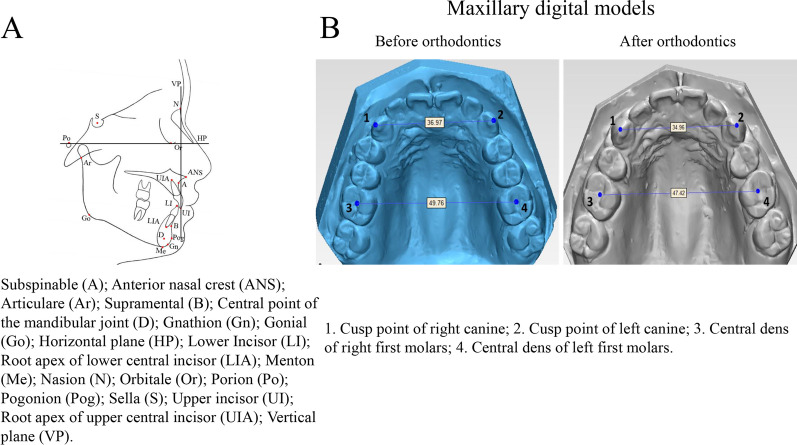
This study used 3dMD stereo photography technology to compare facial soft tissue changes among adult females who received orthodontics. A total of 52 adult females (24 teeth extraction, 28 non-teeth extraction cases) were included and potential correlations between related factors (facial morphology features, the change of occlusal height and dental arch width) were evaluated during different treatment periods.
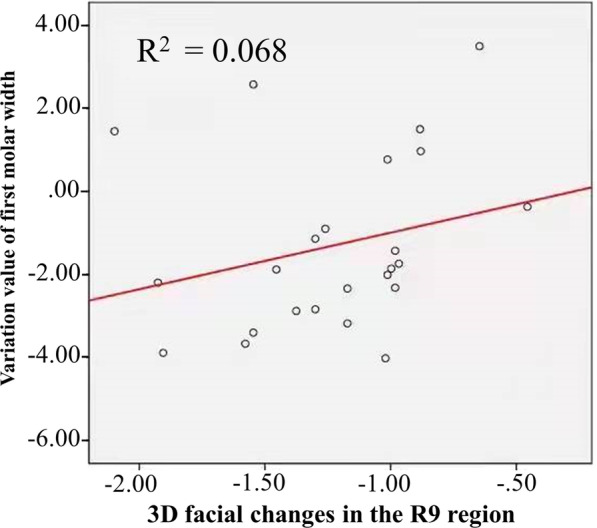
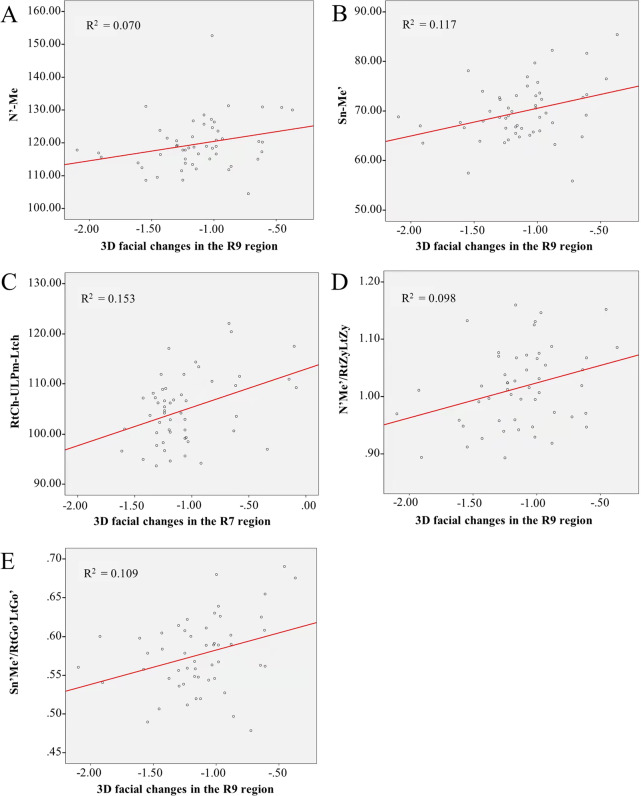
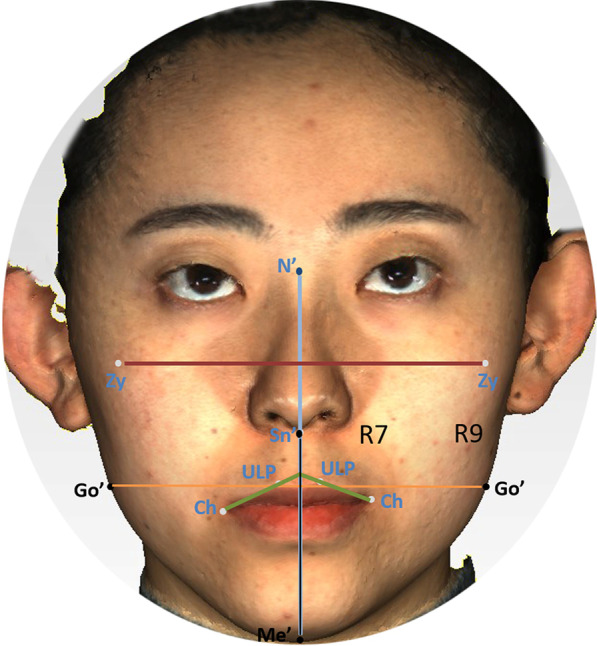
Overall, 3D-negative soft tissue changes of the buccal region moderately correlated with distances of nasion-menton and subnasale-menton (both rs = 0.30, P < 0.05) as well as the ratio of subnasale-menton/right gonion-left gonion (rs = 0.33, P < 0.05) and nasion-menton/right zygomatic point-left zygomatic point (rs = 0.30, P < 0.05). Among the 3D angle measurements, the right chelion-median upper lip point-left chelion angle was found to have a moderate correlation with 3D negative changes of the upper cheilion region (rs = 0.31, P < 0.01). Analysis of occlusal height changes revealed that an increase in the posterior facial height (nasion-gonial distance) may be a risk factor for negative changes in the zygomatic arch area. In addition, a moderate positive correlation between the maxillary first molar width changes and 3D-negative changes of the lower cheek region was found (rs = 0.41, P < 0.05).
After orthodontic treatment, adult females with wide and short faces may be prone to negative soft tissue changes. Changes of posterior facial height and arch width between the first molars were also risk factors for negative changes of facial soft tissues. Extraction is not a major factor producing facial soft tissue changes.
一些接受正畸治疗的成年女性经常抱怨脸变瘦了,颧骨突出,太阳穴凹陷,甚至在治疗开始时就有这种情况。本研究旨在探讨正畸治疗过程中和治疗后面部软组织的变化,以及影响面部软组织变化的相关因素。
本研究使用 3dMD 立体摄影技术比较了接受正畸治疗的成年女性的面部软组织变化。共纳入 52 名成年女性(24 例拔牙,28 例非拔牙病例),评估了不同治疗阶段相关因素(面部形态特征、咬合高度和牙弓宽度的变化)之间的潜在相关性。
总体而言,颊部 3D 软组织的负向变化与鼻颏距和颏下点-鼻颏距(均 rs=0.30,P<0.05)以及颏下点-右侧下颌角-左侧下颌角/右侧颧突-左侧颧突(rs=0.33,P<0.05)和鼻颏距/右侧颧突-左侧颧突(rs=0.30,P<0.05)呈中度相关。在 3D 角度测量中,右侧下唇突-上唇突中点-左侧下唇突角与上唇突区 3D 负向变化呈中度相关(rs=0.31,P<0.01)。分析咬合高度的变化发现,后颜面高度(鼻颏点距)的增加可能是颧骨区域负向变化的一个危险因素。此外,还发现上颌第一磨牙宽度的变化与下面颊部的 3D 负向变化呈中度正相关(rs=0.41,P<0.05)。
正畸治疗后,宽短脸的成年女性可能更容易出现软组织的负向变化。后颜面高度和第一磨牙之间的牙弓宽度变化也是面部软组织负向变化的危险因素。拔牙不是导致面部软组织变化的主要因素。