Yao Xiaoyue, Liu Yu, Chu Zhenyu, Jin Wanqin
State Key Laboratory of Materials-Oriented Chemical Engineering, College of Chemical Engineering, Nanjing Tech University, Nanjing 211816, China.
Chin J Chem Eng. 2022 Sep;49:1-20. doi: 10.1016/j.cjche.2022.04.027. Epub 2022 Jun 15.
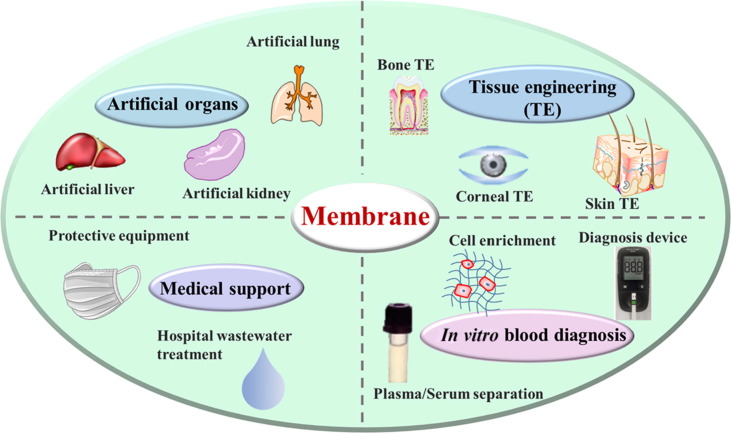
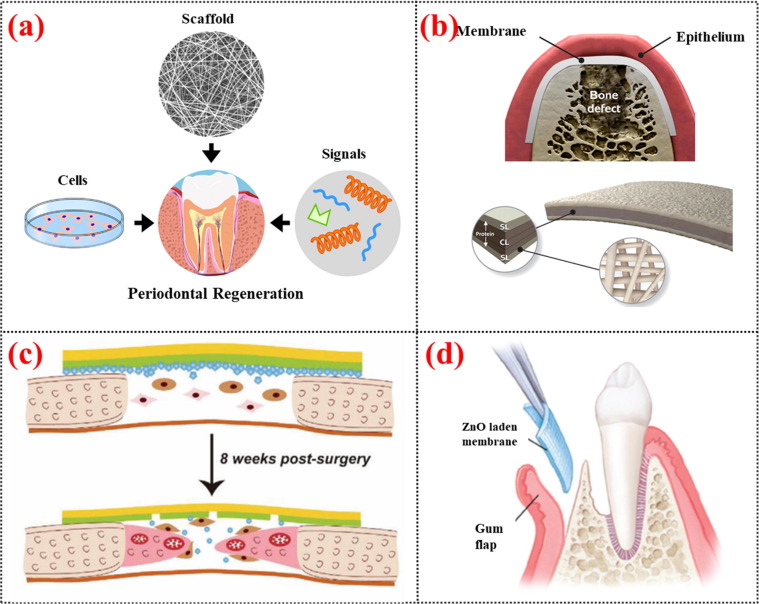
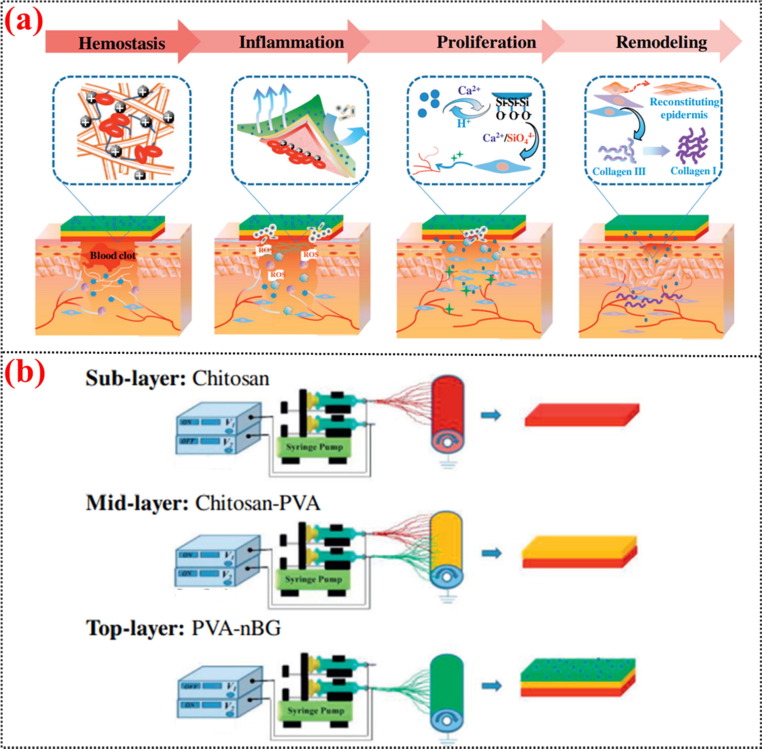
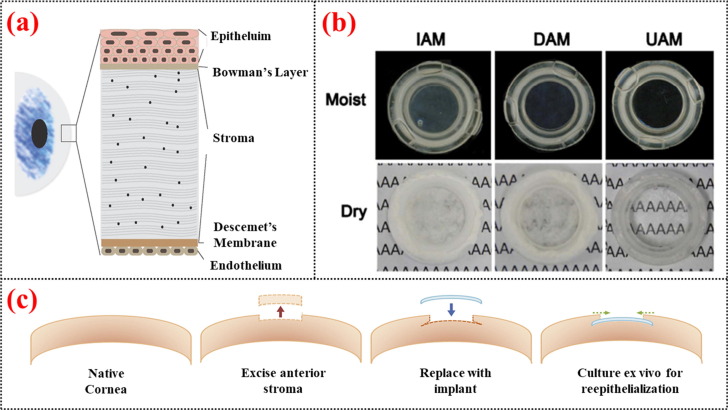
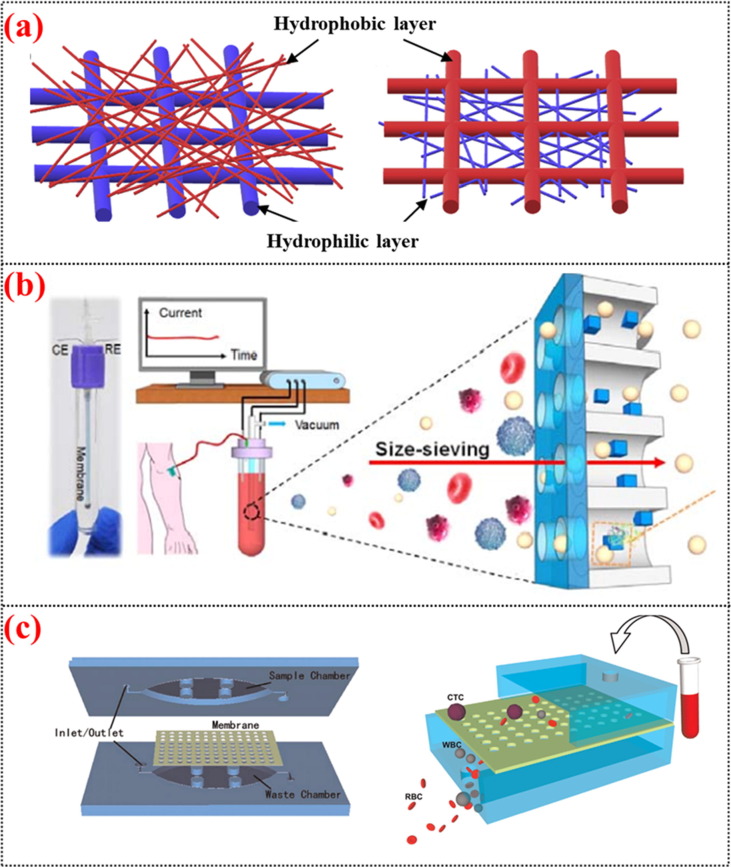
Since the global outbreak of COVID-19, membrane technology for clinical treatments, including extracorporeal membrane oxygenation (ECMO) and protective masks and clothing, has attracted intense research attention for its irreplaceable abilities. Membrane research and applications are now playing an increasingly important role in various fields of life science. In addition to intrinsic properties such as size sieving, dissolution and diffusion, membranes are often endowed with additional functions as cell scaffolds, catalysts or sensors to satisfy the specific requirements of different clinical applications. In this review, we will introduce and discuss state-of-the-art membranes and their respective functions in four typical areas of life science: artificial organs, tissue engineering, blood diagnosis and medical support. Emphasis will be given to the description of certain specific functions required of membranes in each field to provide guidance for the selection and fabrication of the membrane material. The advantages and disadvantages of these membranes have been compared to indicate further development directions for different clinical applications. Finally, we propose challenges and outlooks for future development.
自新冠疫情全球爆发以来,用于临床治疗的膜技术,包括体外膜肺氧合(ECMO)以及防护口罩和防护服,因其不可替代的功能而备受研究关注。膜的研究与应用如今在生命科学的各个领域发挥着越来越重要的作用。除了尺寸筛分、溶解和扩散等固有特性外,膜通常还被赋予作为细胞支架、催化剂或传感器等额外功能,以满足不同临床应用的特定需求。在本综述中,我们将介绍并讨论生命科学四个典型领域中最先进的膜及其各自的功能:人工器官、组织工程、血液诊断和医疗支持。重点将描述每个领域对膜所要求的某些特定功能,为膜材料的选择和制备提供指导。已对这些膜的优缺点进行了比较,以指明不同临床应用的进一步发展方向。最后,我们提出了未来发展的挑战与展望。