Zhou Ru, Zhang Mingzu, He Jinlin, Liu Jian, Sun Xingwei, Ni Peihong
College of Chemistry, Chemical Engineering and Materials Science, State and Local Joint Engineering Laboratory for Novel Functional Polymeric Materials, Jiangsu Key Laboratory of Advanced Functional Polymer Design and Application, Suzhou Key Laboratory of Macromolecular Design and Precision Synthesis, Soochow University, Suzhou 215123, P. R. China.
Institute of Functional Nano and Soft Materials (FUNSOM), Soochow University, Suzhou 215123, P. R. China.
ACS Omega. 2022 Jun 7;7(24):21325-21336. doi: 10.1021/acsomega.2c02683. eCollection 2022 Jun 21.
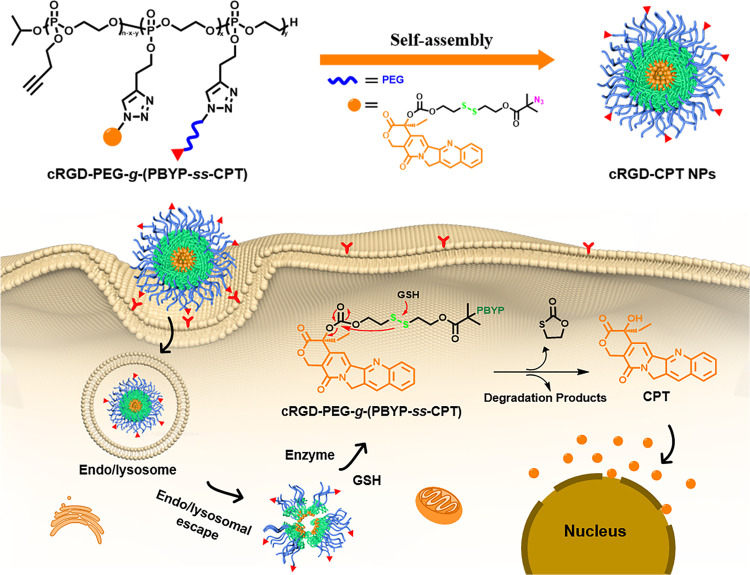
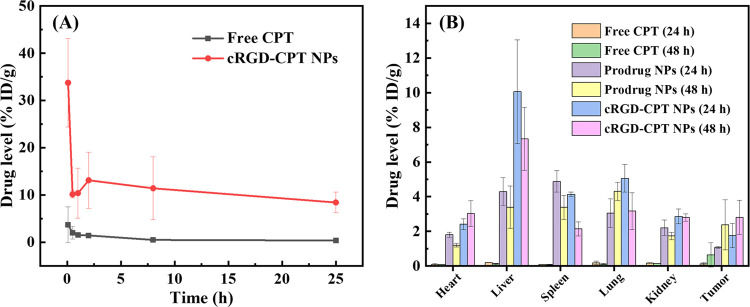
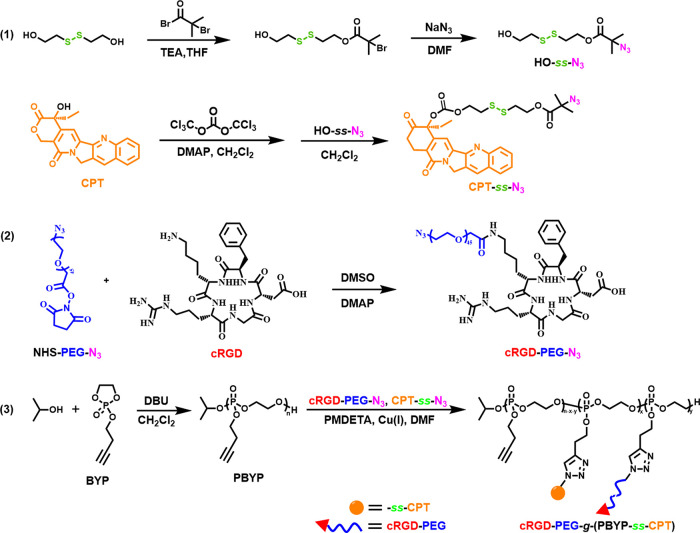
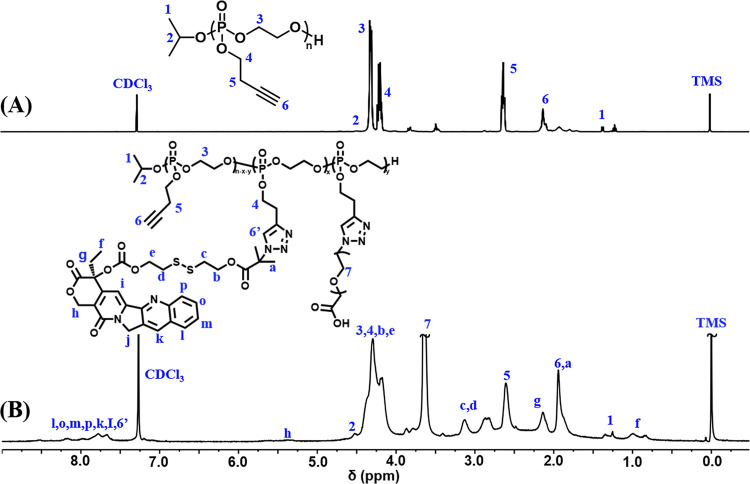
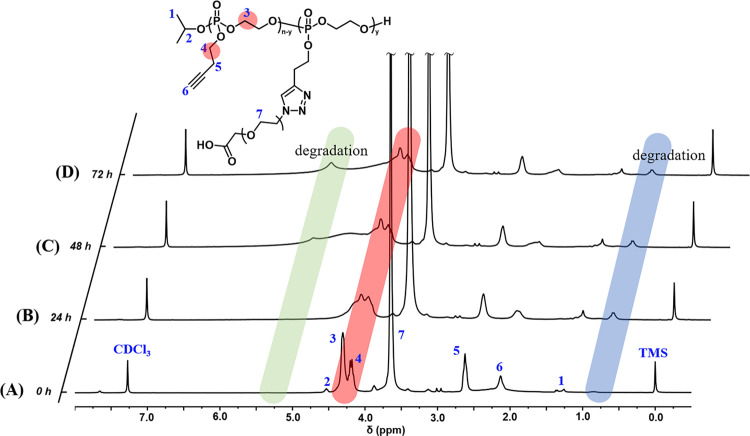
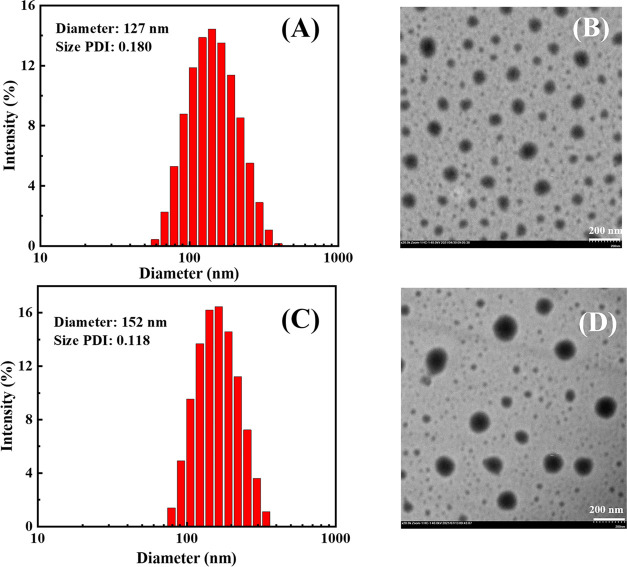
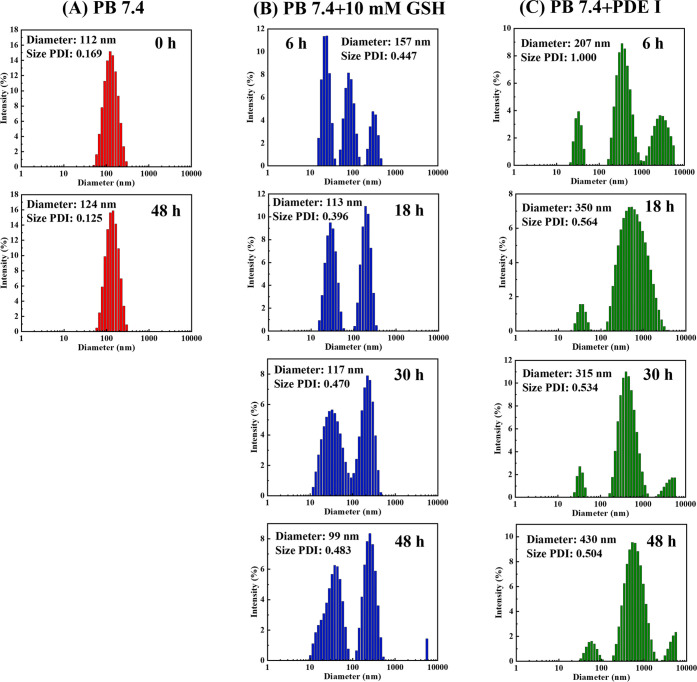
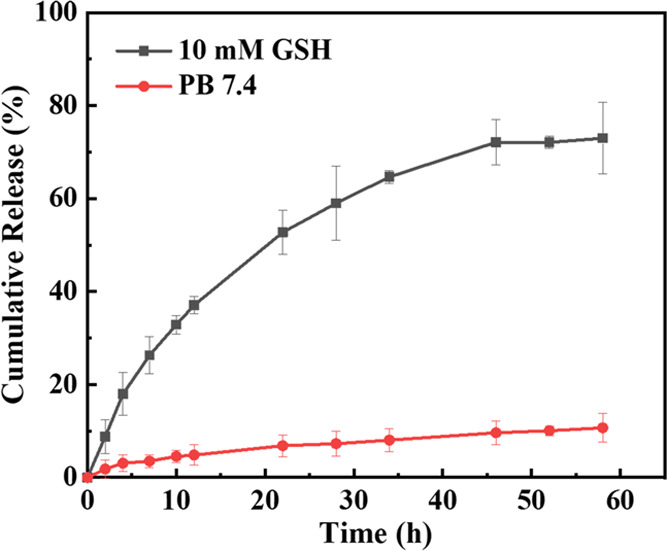
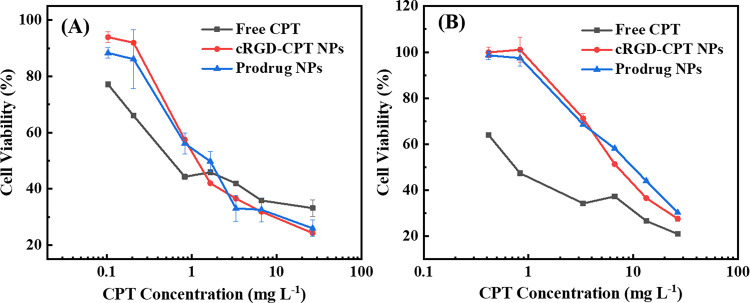
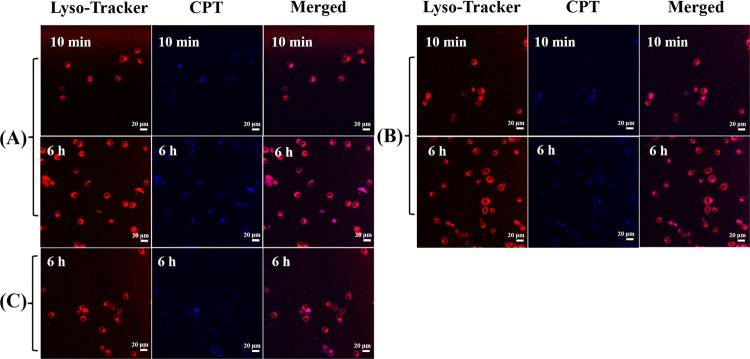
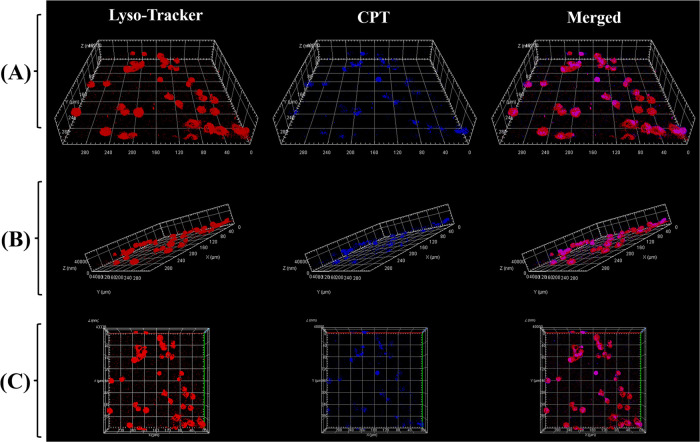
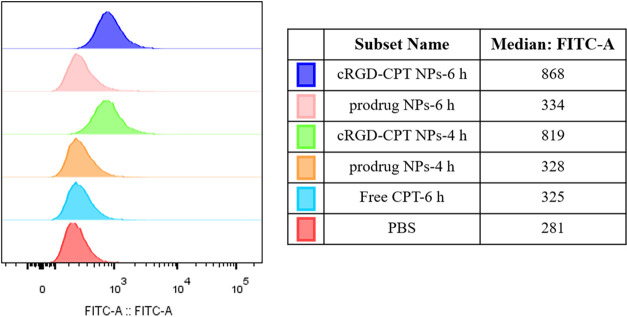
To overcome the limitation of conventional nanodrugs in tumor targeting efficiency, coupling targeting ligands to polymeric nanoparticles can enhance the specific binding of nanodrugs to tumors. Cyclo(Arg-Gly-Asp-d-Phe-Lys) (abbreviated as c(RGDfK)) peptide has been widely adopted due to its high affinity to the tumor marker αβ integrin receptor. In this study, we develop a cRGD peptide-conjugated camptothecin (CPT) prodrug, which enables self-assembly of nanoparticles for precise targeting and enrichment in tumor tissue. We first synthesized a camptothecin derivative (CPT--N) with a reduction-sensitive bond and simultaneously modified PEG to obtain cRGD-PEG-N. After ring-opening polymerization of the 2-(but-3-yn-1-yolxy)-2-oxo-1,3,2-dioxaphospholane (BYP), an amphiphilic polymeric prodrug, referred to as cRGD-PEG--(PBYP--CPT), was obtained via copper-catalyzed azide-alkyne cycloaddition (CuAAC) reaction. The self-assembly in buffer solution of the cRGD-functional prodrug was studied through DLS and TEM. The drug release behavior of cRGD-PEG--(PBYP--CPT) nanoparticles was investigated. The results show that the nanoparticles are reduction-responsive and the bonded CPT can be released. Endocytosis and MTT assays demonstrate that the cRGD-conjugated prodrug has better affinity for tumor cells, accumulates more intracellularly, and is therefore, more effective. The drug metabolism studies show that nanoparticles greatly prolong the retention time in circulation. By monitoring drug distribution in tumor and in various tissues, we find that free CPT can be rapidly metabolized, resulting in low accumulation in all tissues. However, cRGD-PEG--(PBYP--CPT) nanoparticles accumulate in tumor tissues in higher amounts than PEG--(PBYP--CPT) nanoparticles, except for the inevitable capture by the liver. This indicates that the nanomedicine with cRGD has a certain targeting property, which can improve drug delivery efficiency.
为克服传统纳米药物在肿瘤靶向效率方面的局限性,将靶向配体偶联到聚合物纳米颗粒上可增强纳米药物与肿瘤的特异性结合。环(精氨酸 - 甘氨酸 - 天冬氨酸 - 对苯丙氨酸 - 赖氨酸)(简称为c(RGDfK))肽因其对肿瘤标志物αβ整合素受体具有高亲和力而被广泛采用。在本研究中,我们开发了一种cRGD肽偶联的喜树碱(CPT)前药,其能够自组装形成纳米颗粒,用于在肿瘤组织中进行精确靶向和富集。我们首先合成了一种具有还原敏感键的喜树碱衍生物(CPT - N),并同时对聚乙二醇(PEG)进行修饰以获得cRGD - PEG - N。在2 - (3 - 丁炔 - 1 - 氧基) - 2 - 氧代 - 1,3,2 - 二氧磷杂环戊烷(BYP)开环聚合后,通过铜催化的叠氮化物 - 炔烃环加成(CuAAC)反应获得了一种两亲性聚合物前药,称为cRGD - PEG - (PBYP - CPT)。通过动态光散射(DLS)和透射电子显微镜(TEM)研究了cRGD功能化前药在缓冲溶液中的自组装情况。研究了cRGD - PEG - (PBYP - CPT)纳米颗粒的药物释放行为。结果表明,纳米颗粒具有还原响应性,结合的CPT可以释放。内吞作用和MTT试验表明,cRGD偶联的前药对肿瘤细胞具有更好的亲和力,在细胞内积累更多,因此更有效。药物代谢研究表明,纳米颗粒大大延长了在循环中的保留时间。通过监测药物在肿瘤和各种组织中的分布,我们发现游离CPT可迅速代谢,导致在所有组织中的积累量较低。然而,cRGD - PEG - (PBYP - CPT)纳米颗粒在肿瘤组织中的积累量比PEG - (PBYP - CPT)纳米颗粒高,除了不可避免地被肝脏摄取。这表明具有cRGD的纳米药物具有一定的靶向性,可提高药物递送效率。