Tang Qiong, Luan Fei, Yuan An, Sun Jiayi, Rao Zhili, Wang Baojun, Liu Yao, Zeng Nan
State Key Laboratory of South Western Chinese Medicine Resources, School of Pharmacy, Chengdu University of Traditional Chinese Medicine, Chengdu, China.
Innovative Institute of Chinese Medicine and Pharmacy, Chengdu University of Traditional Chinese Medicine, Chengdu, China.
Front Microbiol. 2022 Jun 10;13:872505. doi: 10.3389/fmicb.2022.872505. eCollection 2022.
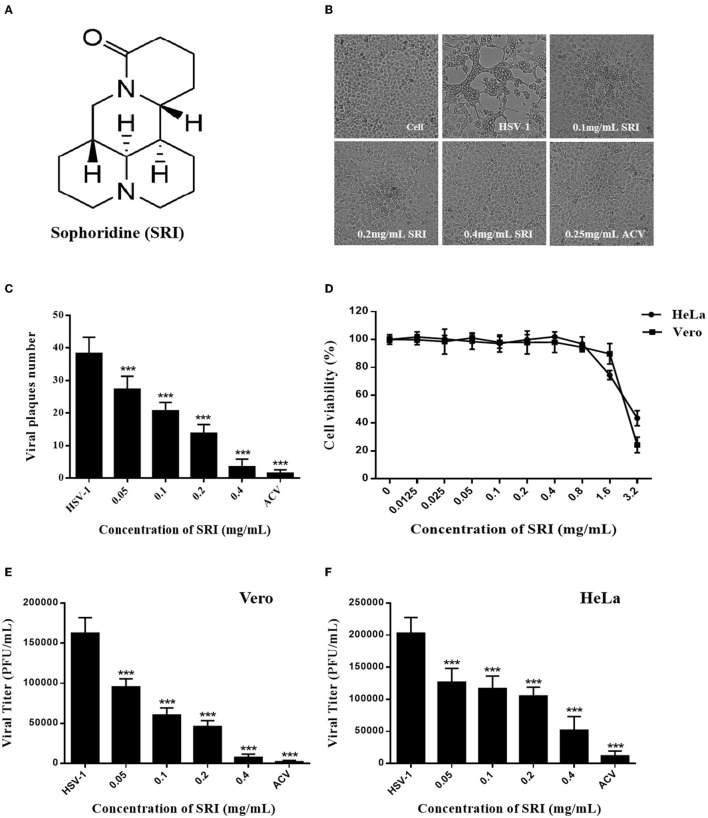
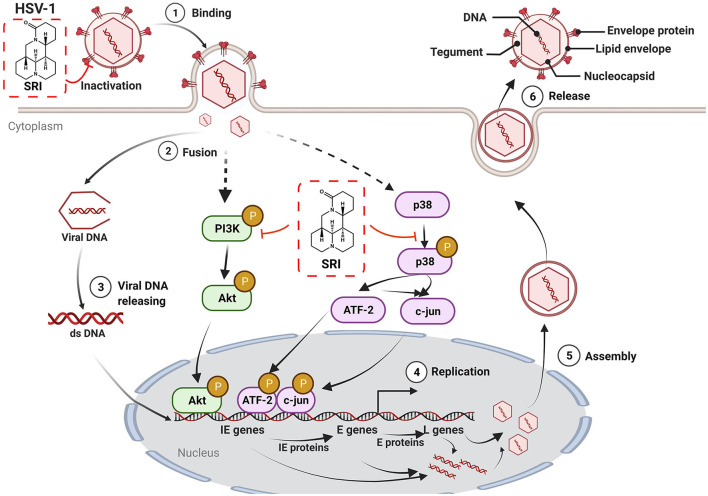
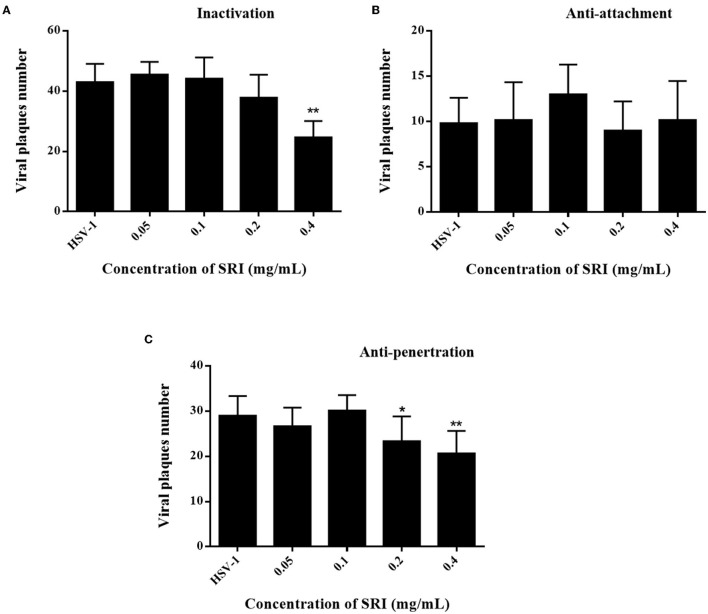
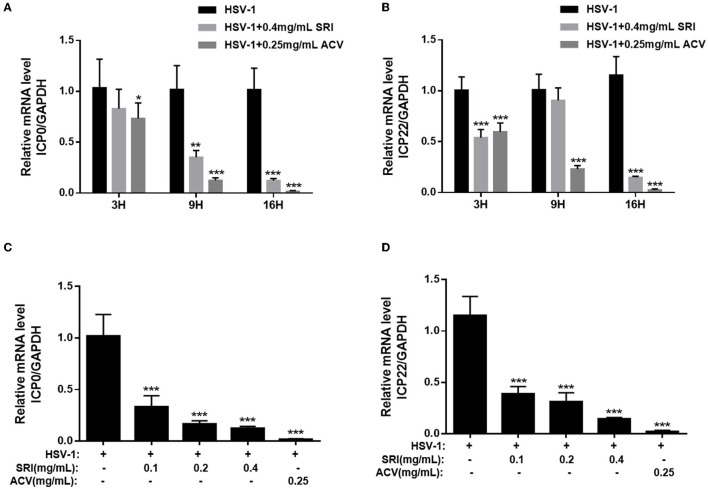
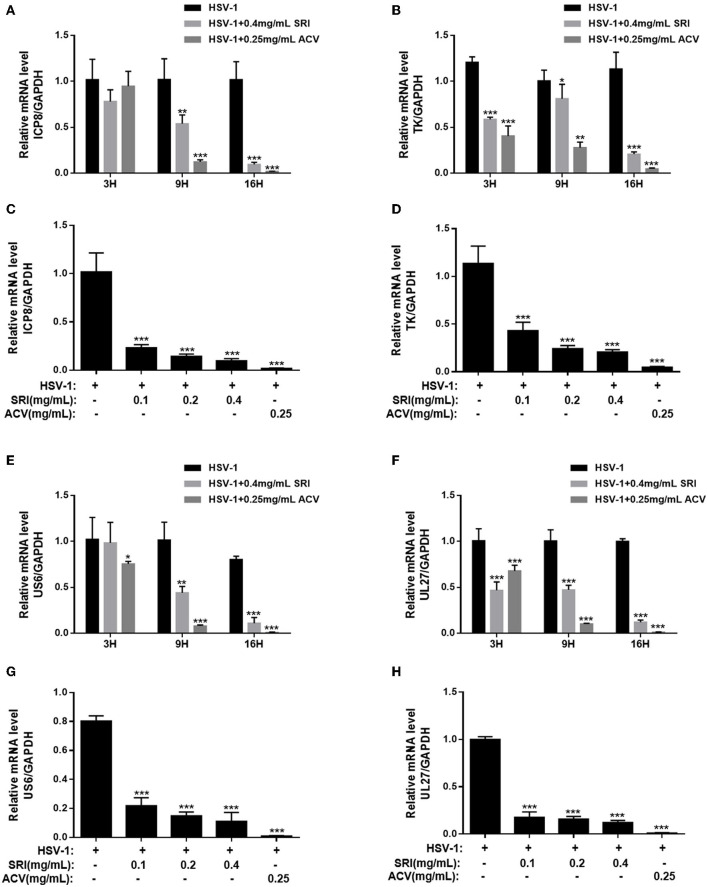
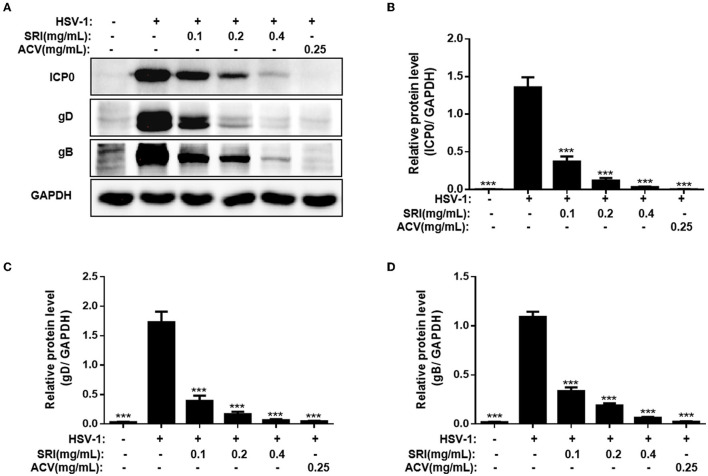
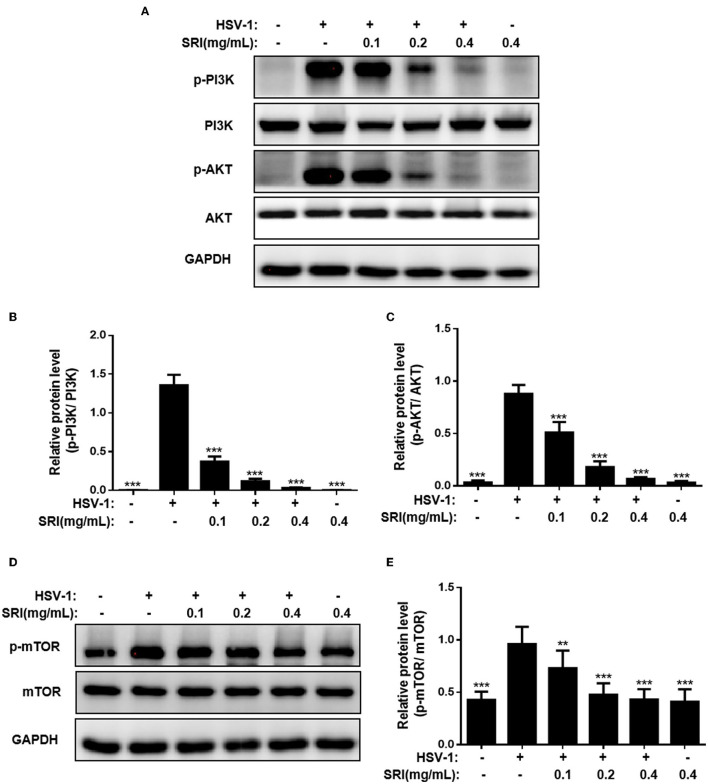
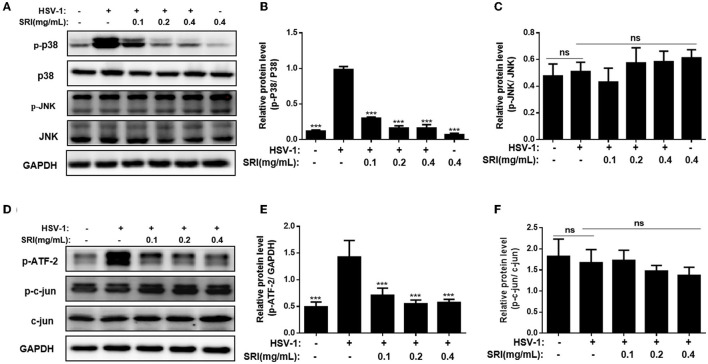
Herpes simplex virus type 1 (HSV-1) is a ubiquitous and important human pathogen capable of causing significant clinical diseases ranging from skin damage to encephalitis, particularly in immunocompromised and neonatal hosts. Currently, widely used nucleoside analogs, including acyclovir and penciclovir, have some limitations in their use due to side effects and drug resistance. Herein, we report sophoridine's (SRI) dramatic inhibition of HSV-1 replication . SRI exhibited a remarkable inhibitory influence on HSV-1 virus-induced cytopathic effect and plaque formation, as well as on progeny viruses in Vero and HeLa cells, with selection indexes (SI) of 38.96 and 22.62, respectively. Moreover, SRI also considerably suppressed HSV-1 replication by hindering the expression of viral immediate-early (ICP0 and ICP22), early (ICP8 and TK), and late (gB and gD) genes and the expression of viral proteins ICP0, gB, and gD. We suggest that SRI can directly inactivate viral particles and block some stages in the life cycle of HSV-1 after adsorption. Further experiments showed that SRI downregulated the cellular PI3K/Akt signaling pathway and obstructed HSV-1 replication even more. Most importantly, SRI markedly repressed HSV-1-induced p38 MAPK pathway activation. Collectively, this natural bioactive alkaloid could be a promising therapeutic candidate against HSV-1 the modulation of cellular PI3K/Akt and p38 MAPK pathways.
单纯疱疹病毒1型(HSV-1)是一种普遍存在且重要的人类病原体,能够引发从皮肤损伤到脑炎等严重临床疾病,尤其是在免疫功能低下的人群和新生儿中。目前,广泛使用的核苷类似物,包括阿昔洛韦和喷昔洛韦,由于副作用和耐药性,在使用上存在一些局限性。在此,我们报告了槐定碱(SRI)对HSV-1复制具有显著抑制作用。SRI对HSV-1病毒诱导的细胞病变效应和蚀斑形成,以及对Vero和HeLa细胞中的子代病毒均表现出显著的抑制作用,其选择指数(SI)分别为38.96和22.62。此外,SRI还通过阻碍病毒即刻早期(ICP0和ICP22)、早期(ICP8和TK)和晚期(gB和gD)基因的表达以及病毒蛋白ICP0、gB和gD的表达,极大地抑制了HSV-1的复制。我们认为SRI可以直接使病毒颗粒失活,并在吸附后阻断HSV-1生命周期的某些阶段。进一步的实验表明,SRI下调细胞PI3K/Akt信号通路,从而更有效地阻碍HSV-1的复制。最重要的是,SRI显著抑制HSV-1诱导的p38 MAPK通路激活。总的来说,这种天然生物活性生物碱通过调节细胞PI3K/Akt和p38 MAPK通路,可能是一种有前景的抗HSV-1治疗候选药物。