Yan Chang, Luo Zhuo, Li Wen, Li Xue, Dallmann Robert, Kurihara Hiroshi, Li Yi-Fang, He Rong-Rong
Guangdong Engineering Research Center of Chinese Medicine & Disease Susceptibility, Jinan University, Guangzhou 510632, China.
International Cooperative Laboratory of Traditional Chinese Medicine Modernization and Innovative Drug Development of Chinese Ministry of Education (MOE), School of Pharmacy, Jinan University, Guangzhou 510632, China.
Acta Pharm Sin B. 2020 Mar;10(3):383-398. doi: 10.1016/j.apsb.2019.06.005. Epub 2019 Jun 22.
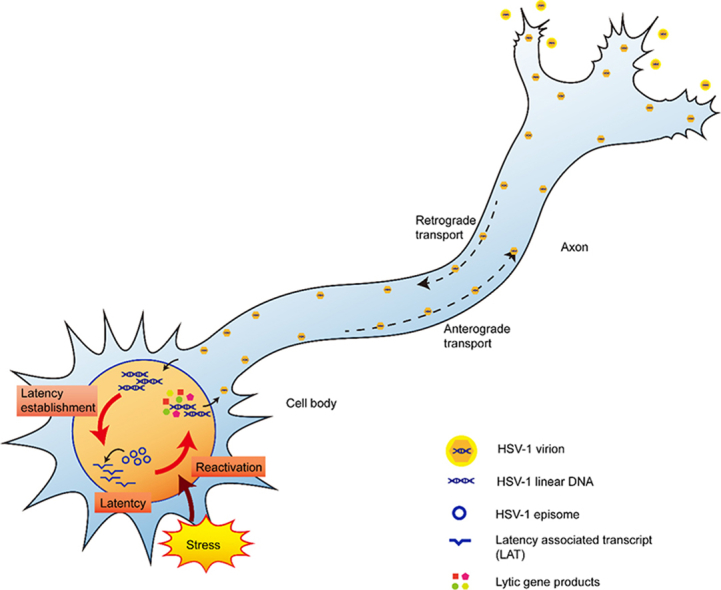
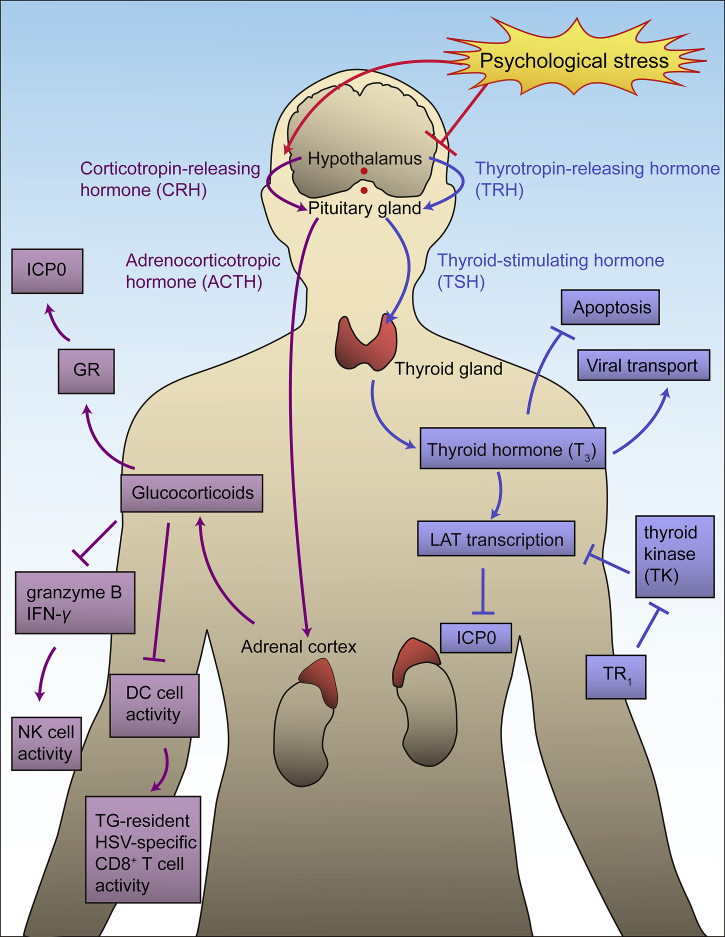
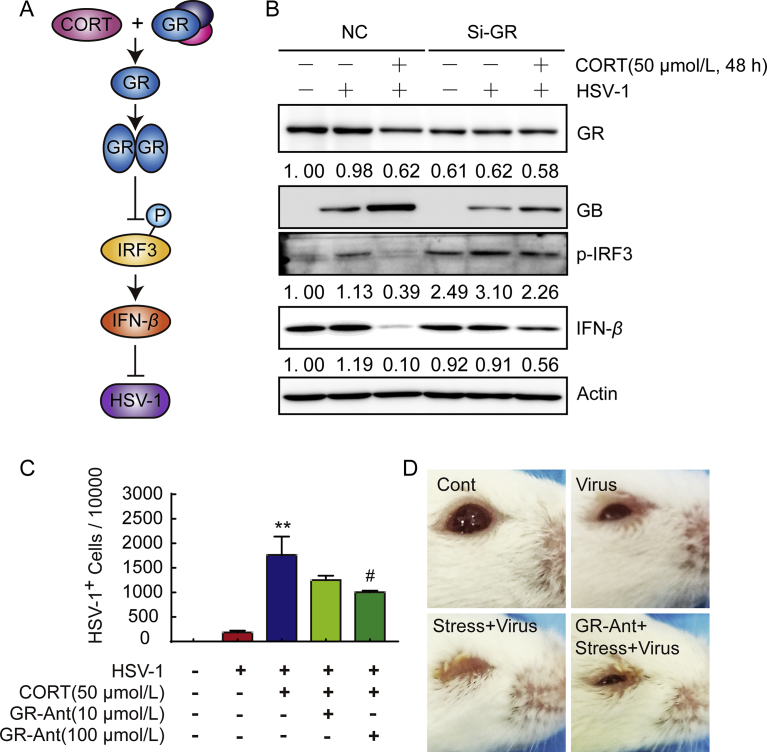
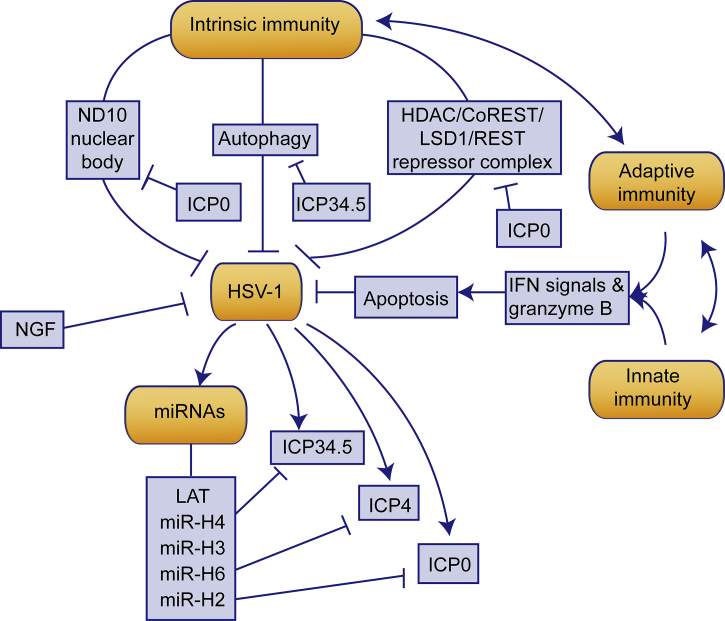
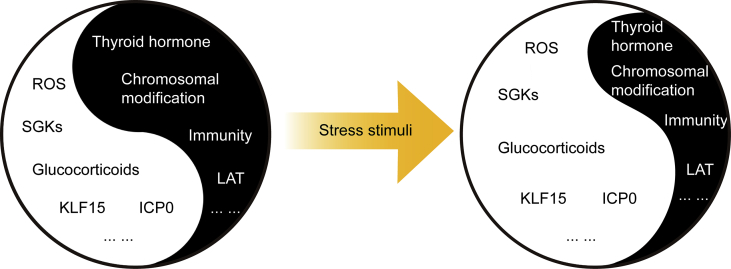
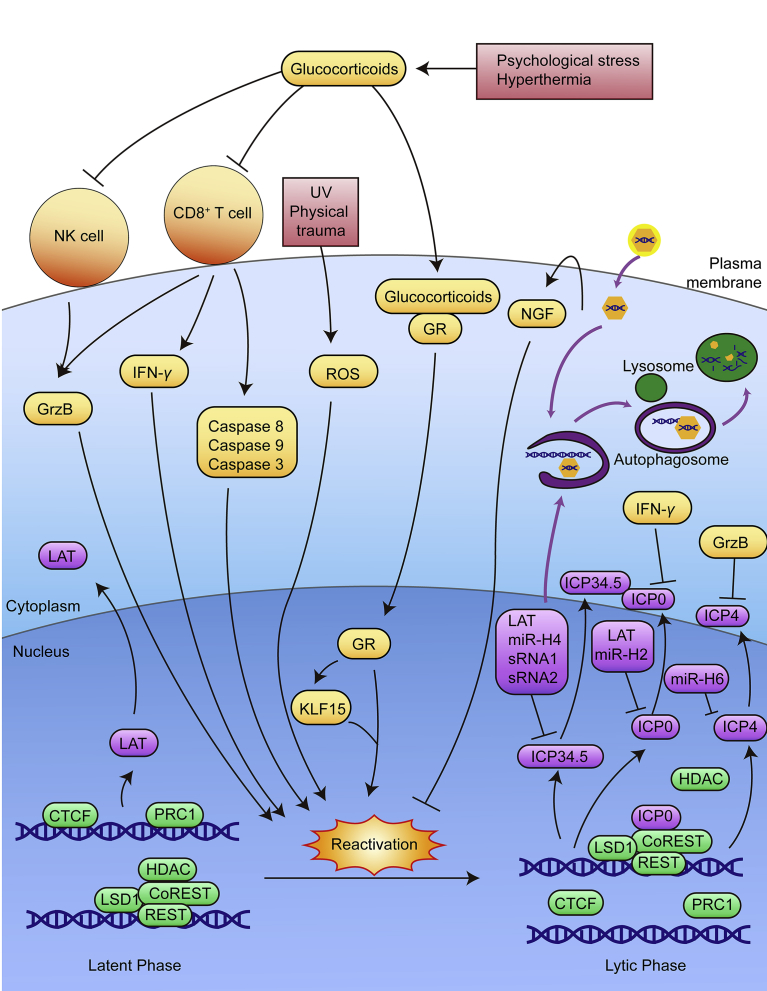
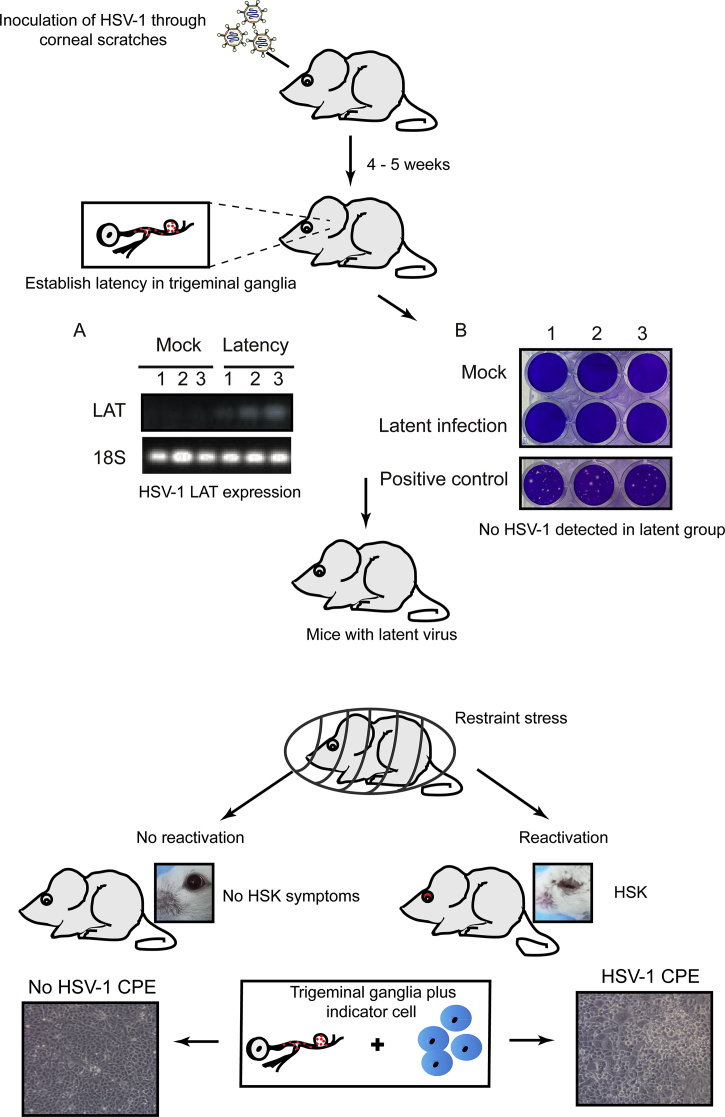
Herpes simplex virus type 1 (HSV-1), a neurotropic herpes virus, is able to establish a lifelong latent infection in the human host. Following primary replication in mucosal epithelial cells, the virus can enter sensory neurons innervating peripheral tissues nerve termini. The viral genome is then transported to the nucleus where it can be maintained without producing infectious progeny, and thus latency is established in the cell. Yin-Yang balance is an essential concept in traditional Chinese medicine (TCM) theory. Yin represents stable and inhibitory factors, and Yang represents the active and aggressive factors. When the organism is exposed to stress, especially psychological stress caused by emotional stimulation, the Yin-Yang balance is disturbed and the virus can re-engage in productive replication, resulting in recurrent diseases. Therefore, a better understanding of the stress-induced susceptibility to HSV-1 primary infection and reactivation is needed and will provide helpful insights into the effective control and treatment of HSV-1. Here we reviewed the recent advances in the studies of HSV-1 susceptibility, latency and reactivation. We included mechanisms involved in primary infection and the regulation of latency and described how stress-induced changes increase the susceptibility to primary and recurrent infections.
单纯疱疹病毒1型(HSV-1)是一种嗜神经性疱疹病毒,能够在人类宿主中建立终身潜伏感染。在黏膜上皮细胞中进行初次复制后,该病毒可进入支配外周组织神经末梢的感觉神经元。然后病毒基因组被转运至细胞核,在那里它可以在不产生感染性后代的情况下得以维持,从而在细胞中建立潜伏状态。阴阳平衡是中医理论中的一个重要概念。阴代表稳定和抑制因素,阳代表活跃和亢进因素。当机体受到应激,尤其是由情绪刺激引起的心理应激时,阴阳平衡被打破,病毒可重新进行增殖性复制,导致疾病复发。因此,需要更好地了解应激诱导的对HSV-1初次感染和再激活的易感性,这将为HSV-1的有效控制和治疗提供有益的见解。在此,我们综述了HSV-1易感性、潜伏和再激活研究的最新进展。我们纳入了初次感染所涉及的机制以及潜伏的调控,并描述了应激诱导的变化如何增加对初次感染和复发性感染的易感性。