Shanxi Key Laboratory for Modernization of TCVM, College of Veterinary Medicine, Shanxi Agricultural University, Jinzhong 030801, China.
China Institute of Veterinary Drug Control, Beijing 100081, China.
Int J Mol Sci. 2024 Sep 14;25(18):9930. doi: 10.3390/ijms25189930.
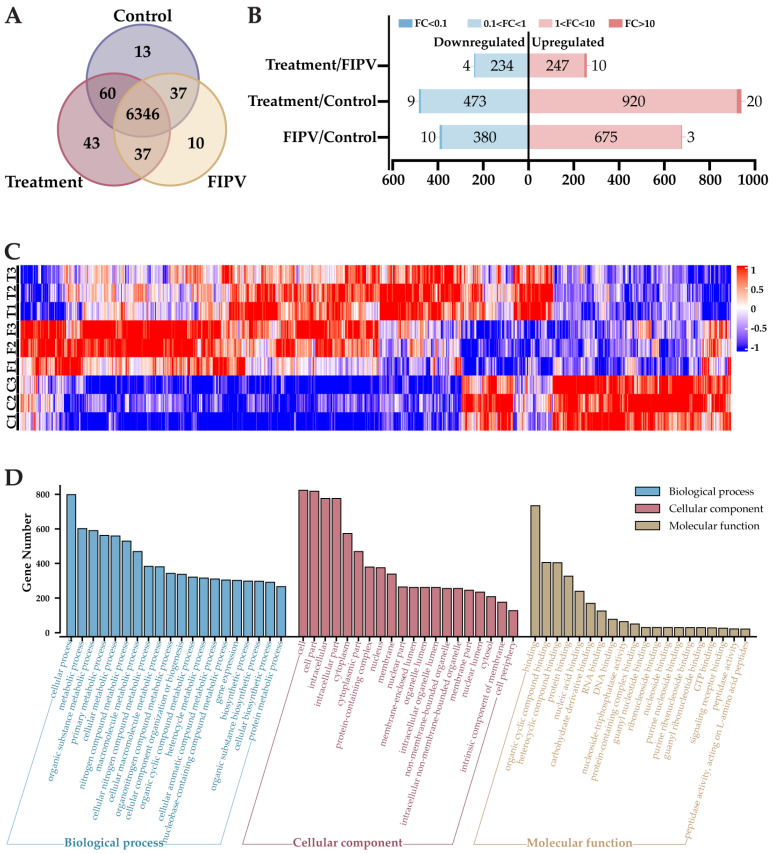
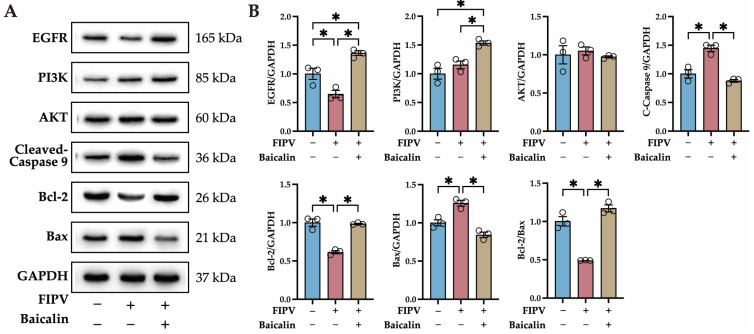
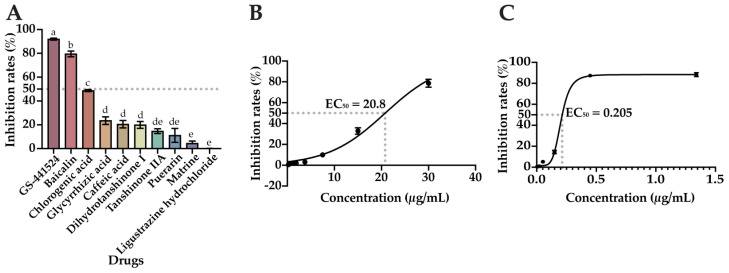
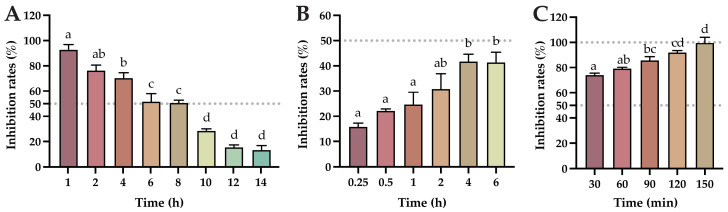
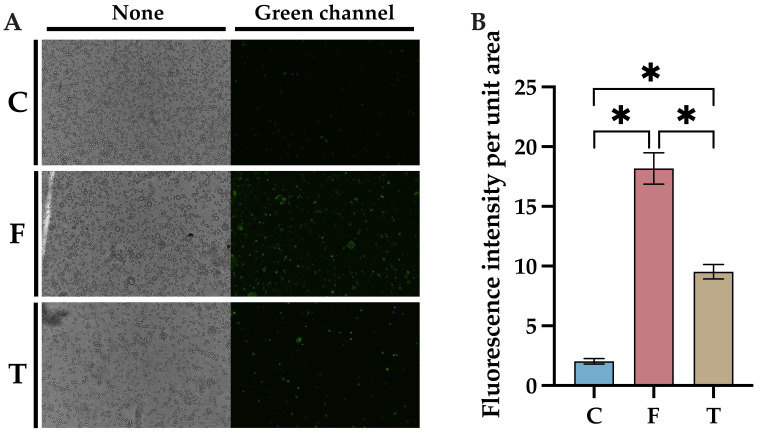
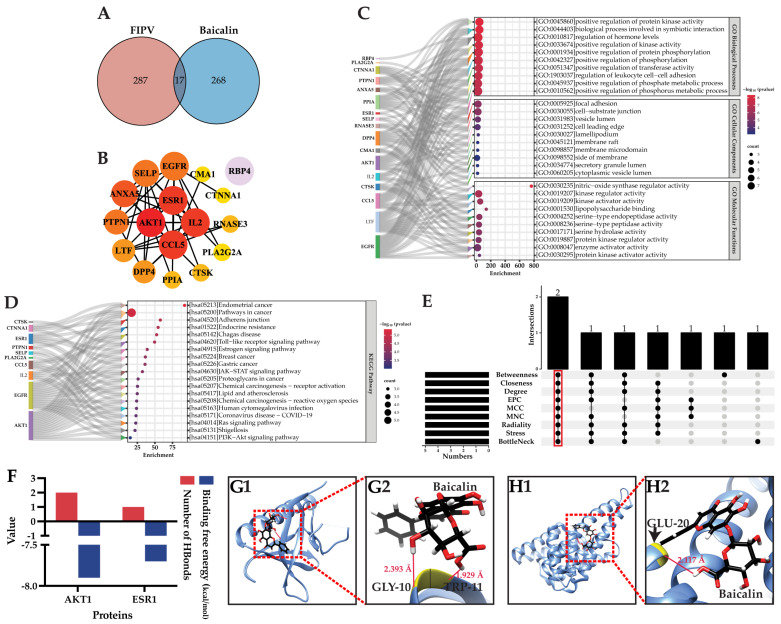
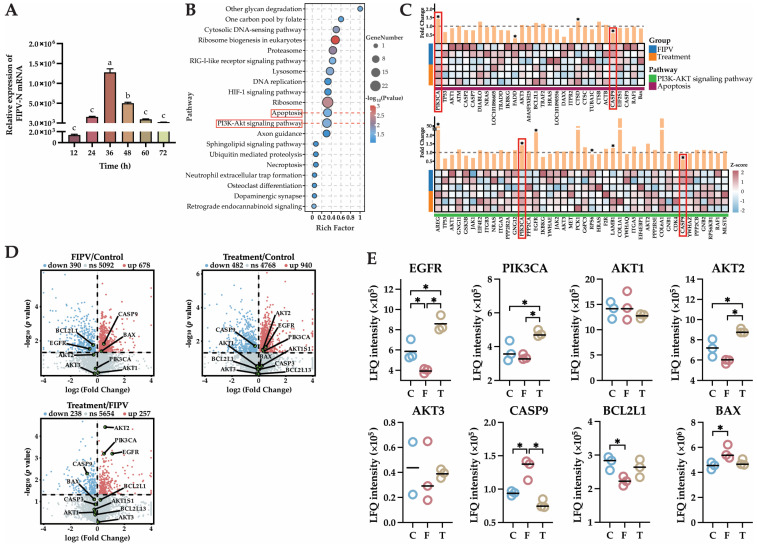
Feline infectious peritonitis (FIP), a serious infectious disease in cats, has become a challenging problem for pet owners and the industry due to the lack of effective vaccinations and medications for prevention and treatment. Currently, most natural compounds have been proven to have good antiviral activity. Hence, it is essential to develop efficacious novel natural compounds that inhibit FIPV infection. Our study aimed to screen compounds with in vitro anti-FIPV effects from nine natural compounds that have been proven to have antiviral activity and preliminarily investigate their mechanisms of action. In this study, the CCK-8 method was used to determine the maximum noncytotoxic concentration (MNTC), 50% cytotoxic concentration (CC), and 50% effective concentration (EC) of natural compounds on CRFK cells and the maximum inhibition ratio (MIR) of the compounds inhibit FIPV. The effect of natural compounds on FIPV-induced apoptosis was detected via Annexin V-FITC/PI assay. Network pharmacology (NP), molecular docking (MD), and 4D label-free quantitative (4D-LFQ) proteomic techniques were used in the joint analysis the mechanism of action of the screened natural compounds against FIPV infection. Finally, Western blotting was used to validate the analysis results. Among the nine natural compounds, baicalin had good antiviral effects, with an MIR > 50% and an SI > 3. Baicalin inhibited FIPV-induced apoptosis. NP and MD analyses showed that AKT1 was the best target of baicalin for inhibiting FIPV infection. 4D-LFQ proteomics analysis showed that baicalin might inhibit FIPV infection by modulating the PI3K-AKT pathway and the apoptosis pathway. The WB results showed that baicalin promoted the expression of EGFR, PI3K, and Bcl-2 and inhibited the expression of cleaved caspase 9 and Bax. This study found that baicalin regulated the PI3K-AKT pathway and the apoptosis pathway in vitro and inhibited FIPV-induced apoptosis, thus exerting anti-FIPV effects.
猫传染性腹膜炎(Feline infectious peritonitis,FIP)是一种严重的猫科动物传染病,由于缺乏有效的预防和治疗疫苗和药物,已成为宠物主人和行业的一个挑战。目前,大多数天然化合物已被证明具有良好的抗病毒活性。因此,开发有效的新型天然化合物来抑制 FIPV 感染至关重要。本研究旨在从已证明具有抗病毒活性的 9 种天然化合物中筛选具有体外抗 FIPV 作用的化合物,并初步研究其作用机制。在这项研究中,我们使用 CCK-8 法确定天然化合物对 CRFK 细胞的最大非细胞毒性浓度(MNTC)、50%细胞毒性浓度(CC)和 50%有效浓度(EC)以及化合物抑制 FIPV 的最大抑制率(MIR)。通过 Annexin V-FITC/PI 检测天然化合物对 FIPV 诱导的细胞凋亡的影响。网络药理学(NP)、分子对接(MD)和 4D 无标记定量(4D-LFQ)蛋白质组学技术用于联合分析筛选的天然化合物对 FIPV 感染作用机制。最后,使用 Western blotting 验证分析结果。在这 9 种天然化合物中,黄芩苷具有良好的抗病毒作用,MIR>50%,SI>3。黄芩苷抑制 FIPV 诱导的细胞凋亡。NP 和 MD 分析表明,AKT1 是黄芩苷抑制 FIPV 感染的最佳靶点。4D-LFQ 蛋白质组学分析表明,黄芩苷可能通过调节 PI3K-AKT 通路和细胞凋亡通路来抑制 FIPV 感染。WB 结果表明,黄芩苷促进 EGFR、PI3K 和 Bcl-2 的表达,抑制 cleaved caspase 9 和 Bax 的表达。本研究发现,黄芩苷在体外调节 PI3K-AKT 通路和细胞凋亡通路,抑制 FIPV 诱导的细胞凋亡,从而发挥抗 FIPV 作用。