Liang Shixiao, Higuera Aaron, Peters Christina, Roy Venkat, Bajwa Waheed U, Shatkay Hagit, Tunnell Christopher D
Department of Physics and Astronomy, Rice University, Houston, TX, United States.
Department of Computer and Information Sciences, University of Delaware, Newark, DE, United States.
Front Artif Intell. 2022 Jun 9;5:832909. doi: 10.3389/frai.2022.832909. eCollection 2022.
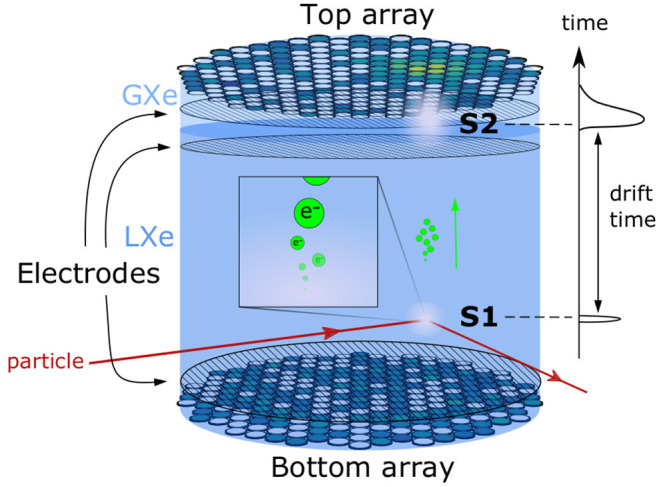
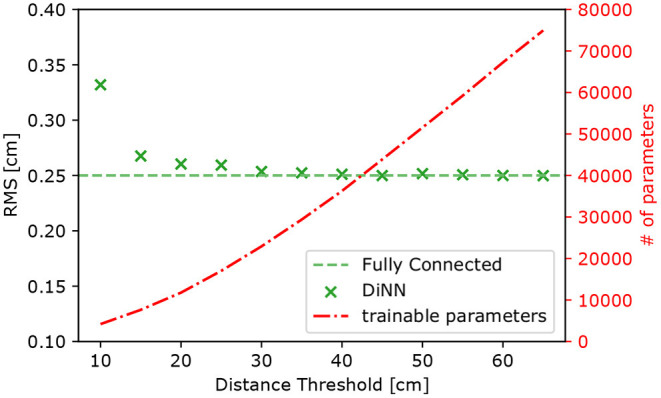
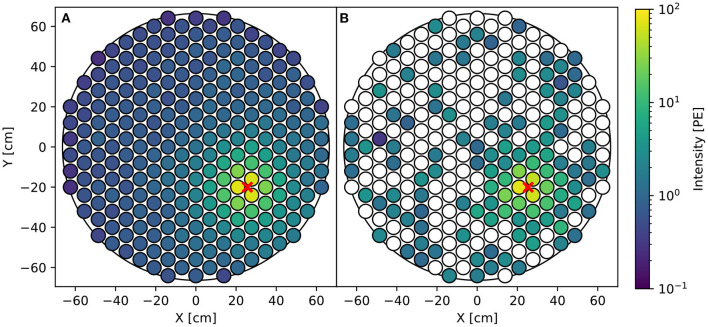
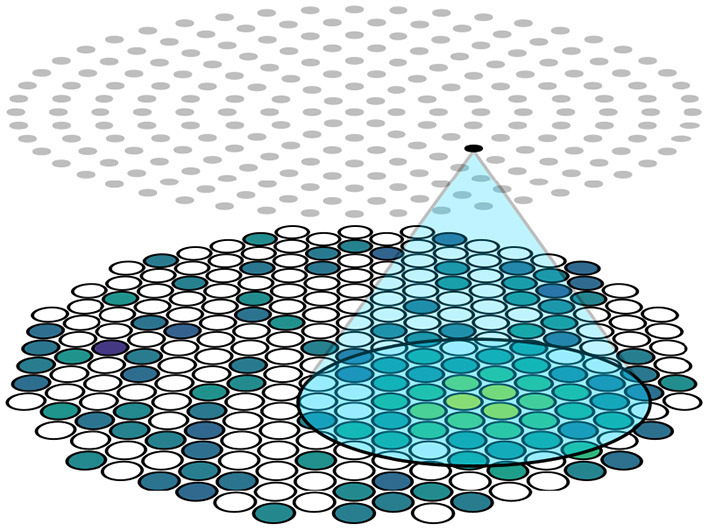
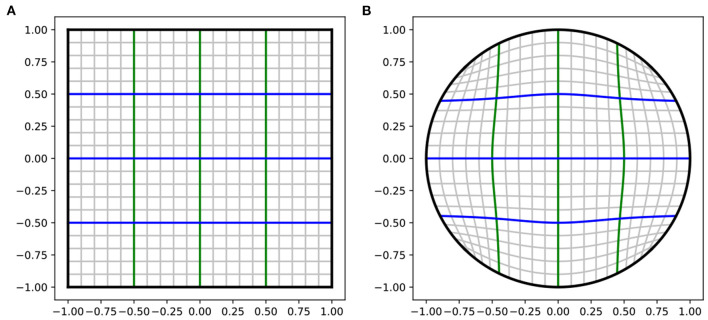
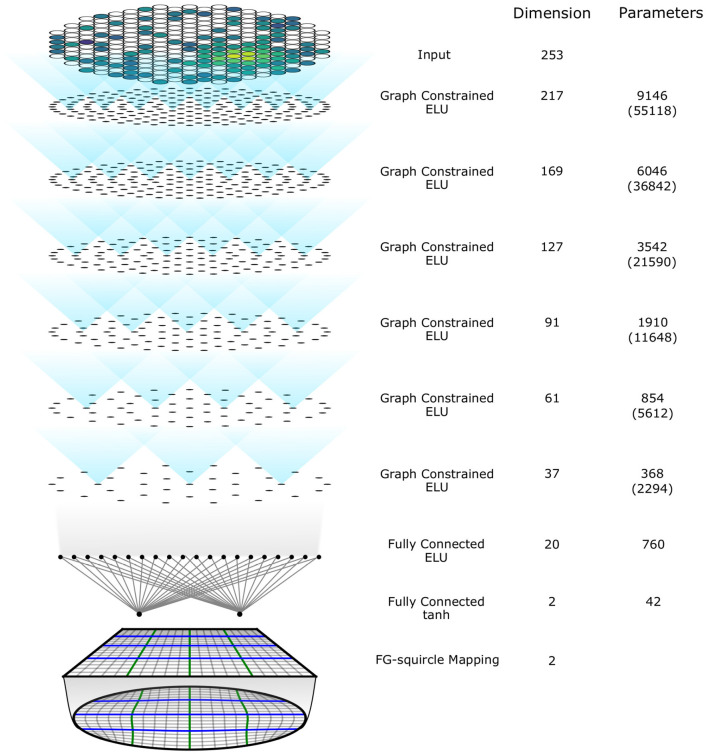
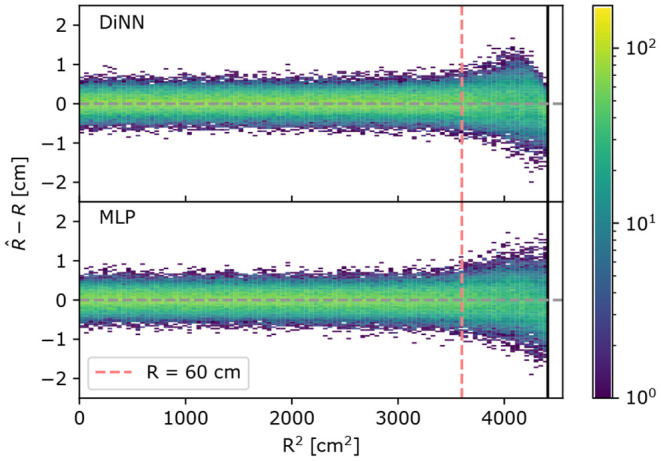
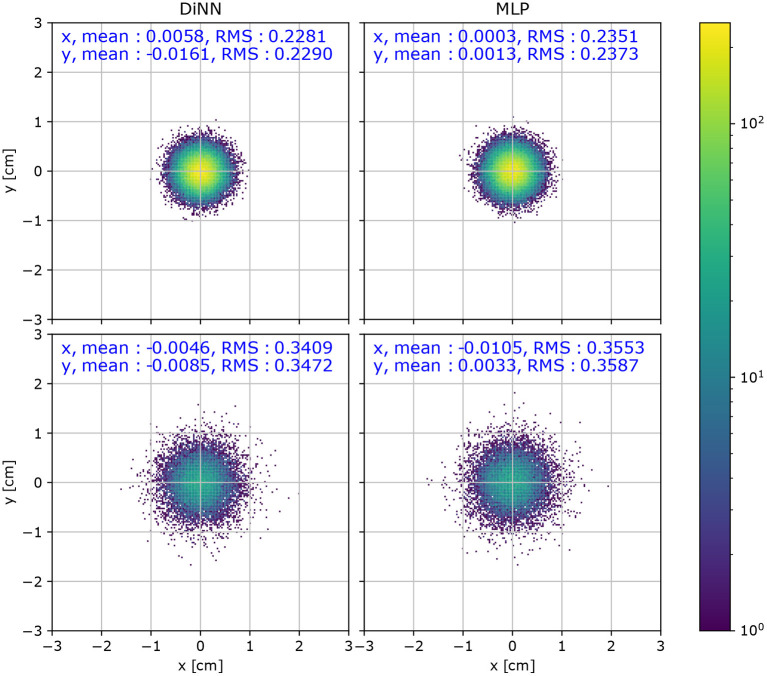
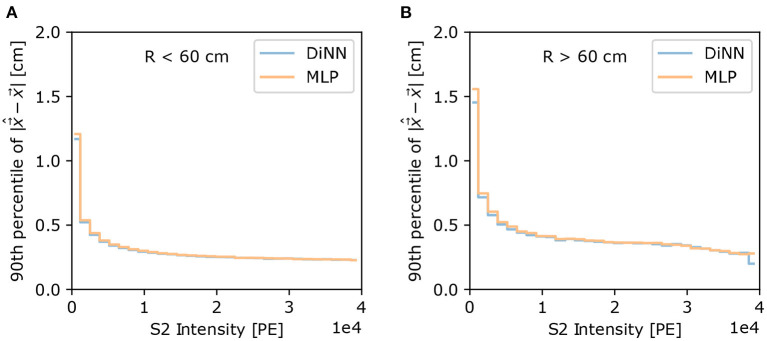
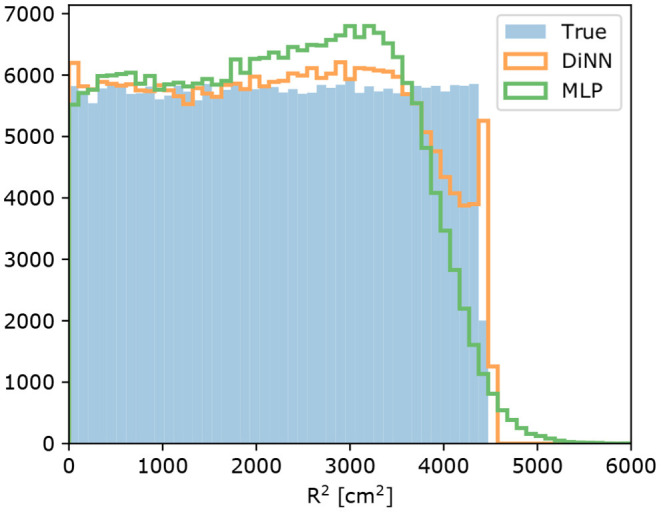
This work proposes a domain-informed neural network architecture for experimental particle physics, using particle interaction localization with the time-projection chamber (TPC) technology for dark matter research as an example application. A key feature of the signals generated within the TPC is that they allow localization of particle interactions through a process called reconstruction (i.e., inverse-problem regression). While multilayer perceptrons (MLPs) have emerged as a leading contender for reconstruction in TPCs, such a black-box approach does not reflect prior knowledge of the underlying scientific processes. This paper looks anew at neural network-based interaction localization and encodes prior detector knowledge, in terms of both signal characteristics and detector geometry, into the feature encoding and the output layers of a multilayer (deep) neural network. The resulting neural network, termed (DiNN), limits the receptive fields of the neurons in the initial feature encoding layers in order to account for the spatially localized nature of the signals produced within the TPC. This aspect of the DiNN, which has similarities with the emerging area of graph neural networks in that the neurons in the initial layers only connect to a handful of neurons in their succeeding layer, significantly reduces the number of parameters in the network in comparison to an MLP. In addition, in order to account for the detector geometry, the output layers of the network are modified using two geometric transformations to ensure the DiNN produces localizations within the interior of the detector. The end result is a neural network architecture that has 60% fewer parameters than an MLP, but that still achieves similar localization performance and provides a path to future architectural developments with improved performance because of their ability to encode additional domain knowledge into the architecture.
这项工作提出了一种用于实验粒子物理学的领域信息神经网络架构,以利用时间投影室(TPC)技术进行暗物质研究的粒子相互作用定位作为示例应用。TPC内产生的信号的一个关键特征是,它们允许通过一个称为重建(即逆问题回归)的过程来定位粒子相互作用。虽然多层感知器(MLP)已成为TPC中重建的主要竞争者,但这种黑箱方法并未反映基础科学过程的先验知识。本文重新审视基于神经网络的相互作用定位,并将关于信号特征和探测器几何结构的先验探测器知识编码到多层(深度)神经网络的特征编码和输出层中。由此产生的神经网络,称为DiNN,限制了初始特征编码层中神经元的感受野,以考虑TPC内产生的信号的空间局部性质。DiNN的这一方面与图神经网络的新兴领域有相似之处,即初始层中的神经元仅连接到其后续层中的少数神经元,与MLP相比,显著减少了网络中的参数数量。此外,为了考虑探测器几何结构,使用两种几何变换对网络的输出层进行修改,以确保DiNN在探测器内部产生定位。最终结果是一种神经网络架构,其参数比MLP少60%,但仍能实现相似的定位性能,并为未来性能改进的架构发展提供了一条途径,因为它们能够将额外的领域知识编码到架构中。