University Animal Hospital, Swedish University of Agricultural Sciences, Uppsala, Sweden.
Swedish National Veterinary Institute (SVA), Uppsala, Sweden.
J Feline Med Surg. 2022 Oct;24(10):e324-e329. doi: 10.1177/1098612X221107787. Epub 2022 Jun 27.
The aim of this study was to describe the clinical picture in cats with alpha-chloralose (AC) intoxication and to confirm AC in serum from suspected cases of AC poisoning.
Suspected cases of AC poisoning were identified in patient records from a small animal university hospital from January 2014 to February 2020. Clinical signs of intoxication described in respective records were compiled, the cats were graded into four intoxication severity scores and hospitalisation time and mortality were recorded. Surplus serum from select cases in late 2019 and early 2020 was analysed to detect AC with a quantitative ultra-high performance liquid chromatography tandem mass spectrometry analysis, and the AC concentration was compared with the respective cat's intoxication severity score.
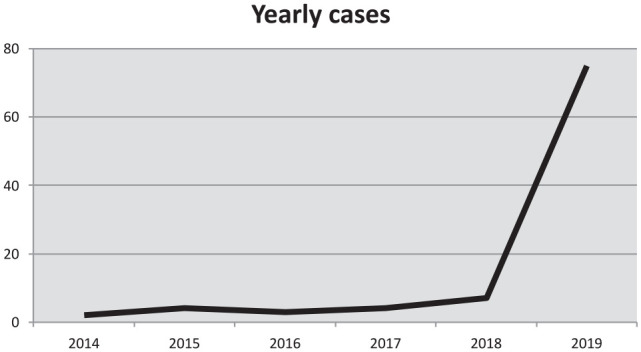
Serum from 25 cats was available for analysis and AC poisoning was confirmed in all. Additionally, 78 cats with a clinical suspicion of AC intoxication were identified in the patient records, most of which presented from September to April. The most common signs of intoxication were ataxia, tremors, cranial nerve deficits and hyperaesthesia. The prevalence of clinical signs and intoxication severity differed from what has previously been reported, with our population presenting with less severe signs and no deaths due to intoxication. The majority had a hospitalisation time <48 h, irrespective of intoxication severity score.
This study describes the clinical signs and prognosis in feline AC intoxication. There were no mortalities in confirmed cases, indicating that AC-poisoned cats have an excellent prognosis when treated in a timely manner. Recognition of AC intoxication as a differential diagnosis for acute onset of the described neurological signs in areas where AC exposure is possible may influence clinical decision-making and help avoid excessive diagnostic procedures. A severe clinical picture upon presentation could be misinterpreted as a grave prognosis and awareness about AC poisoning may avoid unnecessary euthanasia.
本研究旨在描述氯醛糖(AC)中毒猫的临床特征,并确认疑似 AC 中毒病例的血清中是否存在 AC。
从 2014 年 1 月至 2020 年 2 月的一家小动物教学医院的患者记录中确定疑似 AC 中毒病例。对各记录中描述的中毒症状进行汇总,将猫分为四级中毒严重程度评分,并记录住院时间和死亡率。分析 2019 年末和 2020 年初部分病例的剩余血清,采用定量超高效液相色谱串联质谱分析来检测 AC,并将 AC 浓度与相应猫的中毒严重程度评分进行比较。
25 只猫的血清可用于分析,均证实存在 AC 中毒。此外,在患者记录中还确定了 78 例疑似 AC 中毒的猫,其中大部分是在 9 月至 4 月就诊的。最常见的中毒症状为共济失调、震颤、颅神经缺陷和感觉过敏。中毒的临床症状和严重程度与之前的报道不同,本研究中猫的中毒症状较轻,没有因中毒而死亡。无论中毒严重程度评分如何,大多数猫的住院时间都<48 h。
本研究描述了猫 AC 中毒的临床症状和预后。在确诊病例中没有死亡,这表明及时治疗的 AC 中毒猫预后良好。在 AC 暴露可能的地区,如果出现描述的急性发作的神经症状,将 AC 中毒作为鉴别诊断,可能会影响临床决策并有助于避免过度的诊断程序。就诊时出现严重的临床症状可能会被误解为预后严重,而对 AC 中毒的认识可能会避免不必要的安乐死。