College of Computer Science, Sichuan University, Chengdu, China.
School of Information and Library Science, University of North Carolina at Chapel Hill, Chapel Hill, NC, USA.
BMC Med Inform Decis Mak. 2022 Jun 27;22(1):170. doi: 10.1186/s12911-022-01909-3.
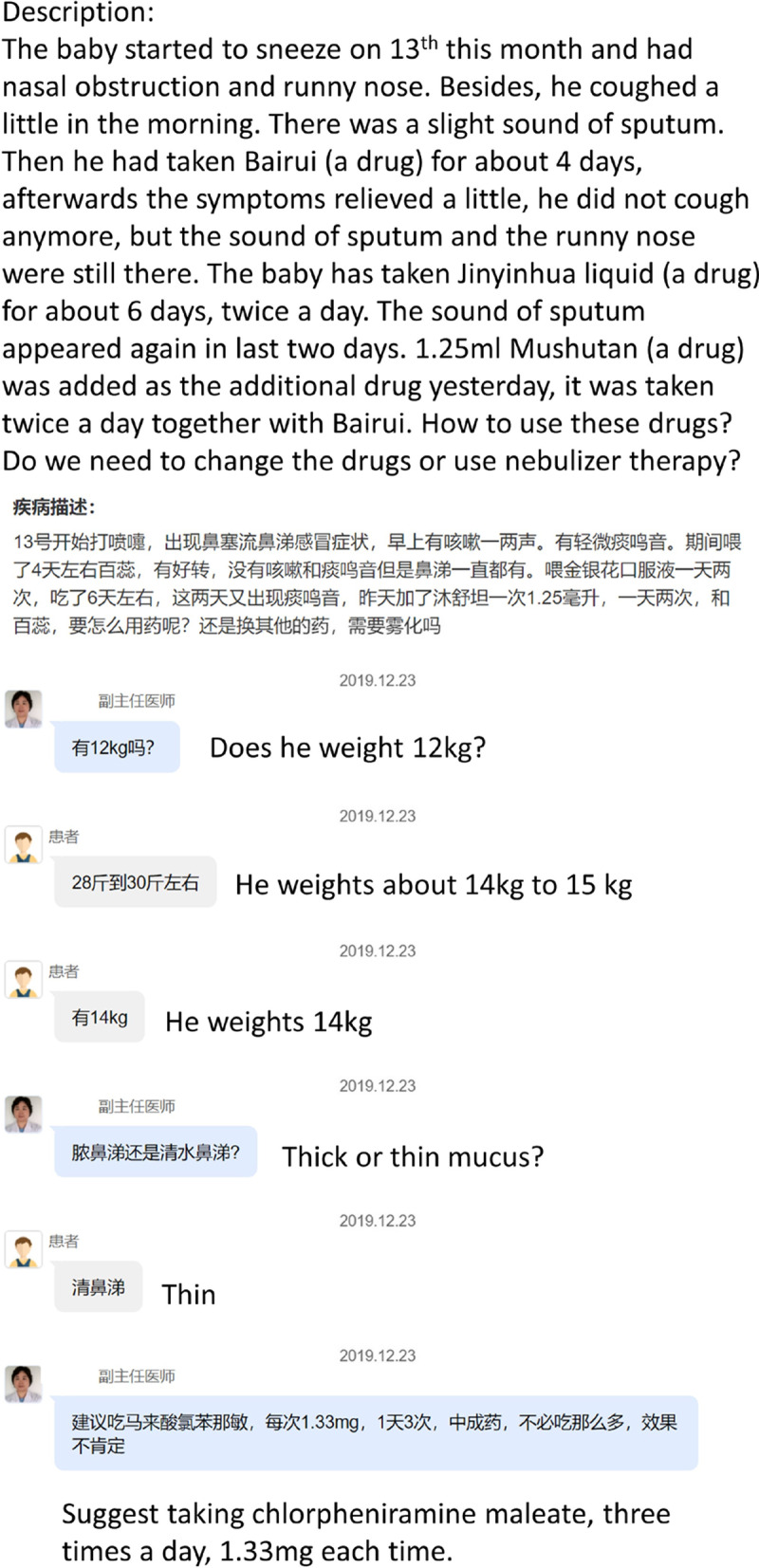
Online health care consultation has been widely adopted to supplement traditional face-to-face patient-doctor interactions. Patients benefit from this new modality of consultation because it allows for time flexibility by eliminating the distance barrier. However, unlike the traditional face-to-face approach, the success of online consultation heavily relies on the accuracy of patient-reported conditions and symptoms. The asynchronous interaction pattern further requires clear and effective patient self-description to avoid lengthy conversation, facilitating timely support for patients.
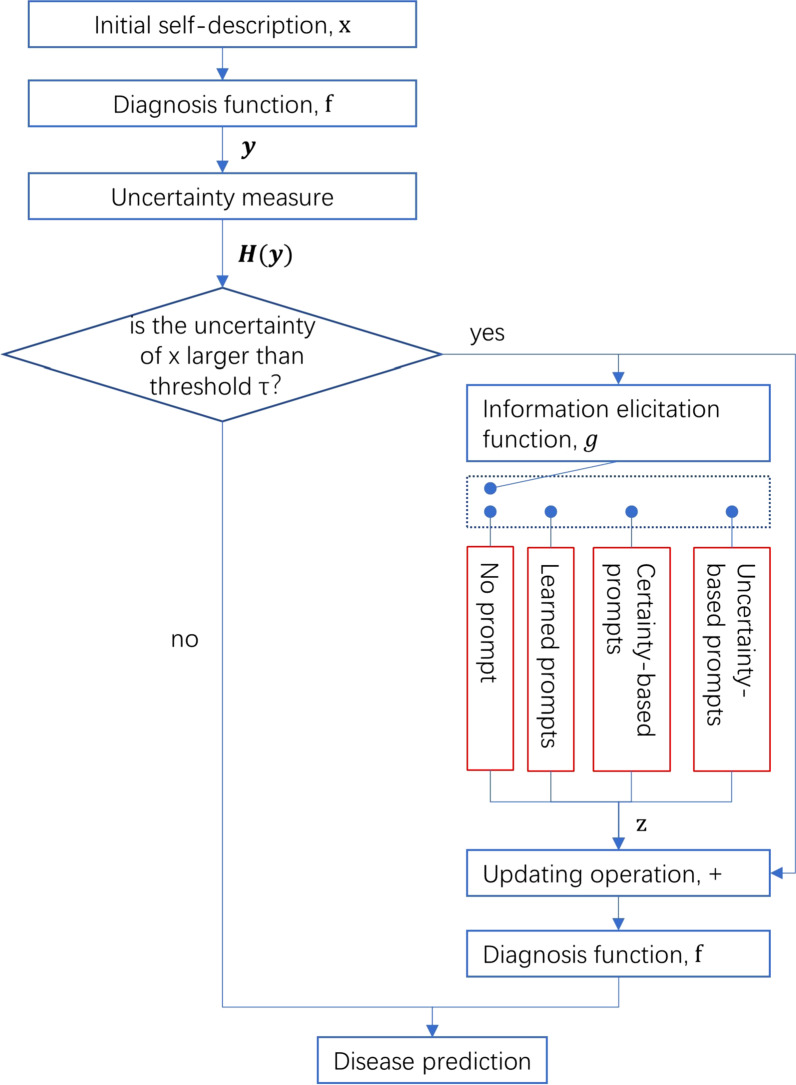
Inspired by the observation that doctors talk to patients with the goal of eliciting information to reduce uncertainty about patients' conditions, we proposed and evaluated a machine learning-based computational model towards this goal. Key components of the model include (1) how a doctor diagnoses (predicts) a disease given natural language description of a patient's conditions, (2) how to measure if the patient's description is incomplete or more information is needed from the patient; and (3) given the patient's current description, what further information is needed to help a doctor reach a diagnosis decision. This model makes it possible for an online consultation system to immediately prompt a patient to provide more information if it senses that the current description is insufficient.
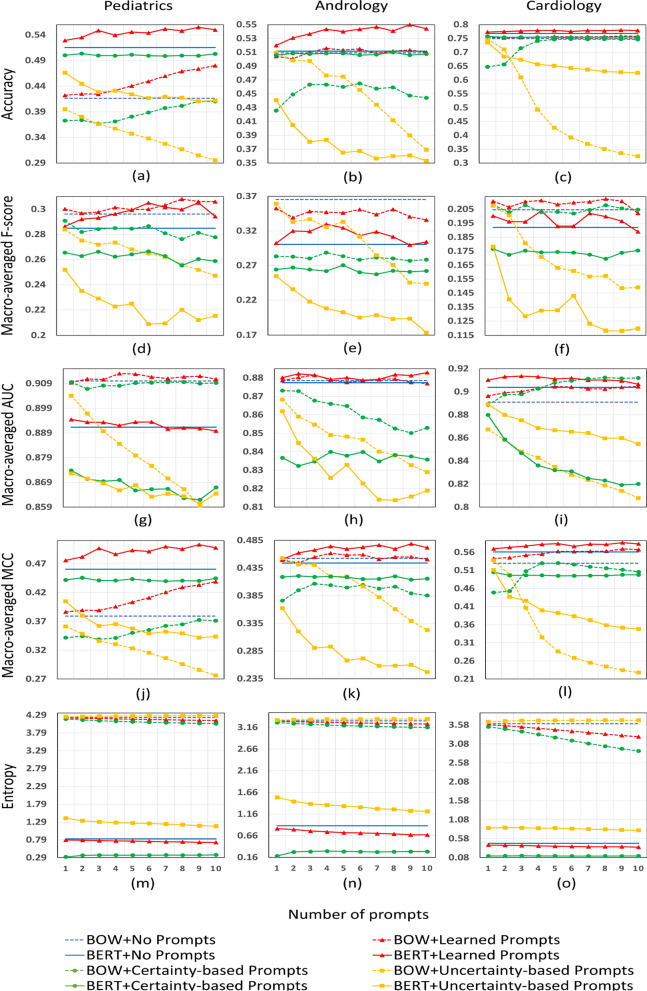
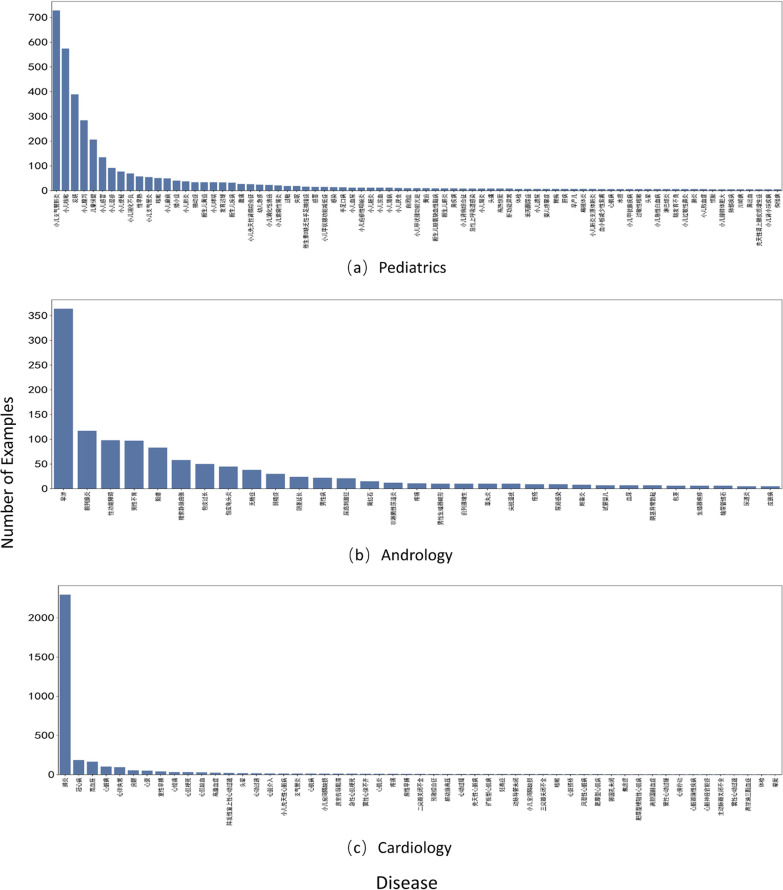
We evaluated the proposed method by using classification-based metrics (accuracy, macro-averaged F-score, area under the receiver operating characteristics curve, and Matthews correlation coefficient) and an uncertainty-based metric (entropy) on three Chinese online consultation corpora. When there was one consultation round, our method delivered better disease prediction performance than the baseline method (No Prompts) and two heuristic methods (Uncertainty-based Prompts and Certainty-based Prompts).
The disease prediction performance correlated with uncertainty of patients' self-described symptoms and conditions. However, heuristic solutions ignored the context to decrease large amounts of uncertainty, which did not improve the prediction performance. By elaborate design, a machine-learning algorithm can learn the inner connection between a patient's self-description and the specific information doctors need from doctor-patient conversations to provide prompts, which can enrich the information in patient self-description for a better performance in disease prediction, thereby achieving online consultation with fewer rounds of doctor-patient conversation.
在线医疗咨询已被广泛采用,以补充传统的医患面对面互动。患者受益于这种新的咨询模式,因为它消除了距离障碍,允许时间更加灵活。然而,与传统的面对面方法不同,在线咨询的成功在很大程度上依赖于患者报告的病情和症状的准确性。异步交互模式还需要患者进行清晰有效的自我描述,以避免冗长的对话,从而为患者提供及时的支持。
受医生与患者交谈以获取信息以减少对患者病情不确定性的启发,我们提出并评估了一个基于机器学习的计算模型来实现这一目标。该模型的关键组成部分包括:(1)医生如何根据患者病情的自然语言描述来诊断(预测)疾病;(2)如何衡量患者的描述是否不完整,或者是否需要从患者那里获取更多信息;(3)考虑到患者当前的描述,需要哪些进一步的信息来帮助医生做出诊断决策。该模型使在线咨询系统能够在感知到当前描述不足时立即提示患者提供更多信息。
我们使用基于分类的指标(准确性、宏平均 F 分数、接收者操作特征曲线下的面积和马修斯相关系数)和基于不确定性的指标(熵)对三个中文在线咨询语料库进行了评估。当只有一轮咨询时,我们的方法比基线方法(无提示)和两种启发式方法(基于不确定性的提示和基于确定性的提示)具有更好的疾病预测性能。
疾病预测性能与患者自我描述症状和病情的不确定性相关。然而,启发式方法忽略了上下文来减少大量的不确定性,这并没有提高预测性能。通过精心设计,机器学习算法可以学习到患者自我描述与医生从医患对话中需要的特定信息之间的内在联系,从而提供提示,丰富患者自我描述中的信息,提高疾病预测的性能,从而实现更少轮次的医患对话的在线咨询。