Department of Biochemistry, Faculty of Sciences, King Abdulaziz University, Jeddah, Kingdom of Saudi Arabia.
Department of Chemistry, College of Sciences & Arts, King Abdulaziz University, Rabigh King Abdulaziz University, Jeddah, Kingdom of Saudi Arabia.
Curr Neuropharmacol. 2023;21(1):151-159. doi: 10.2174/1570159X20666220627165846.
The development of a vaccine for SARS-CoV-2 is primarily focused on the structure of the spike (S) protein. The heavy glycosylation of S with flexible hinges at the stalk shields from antibody attachment.
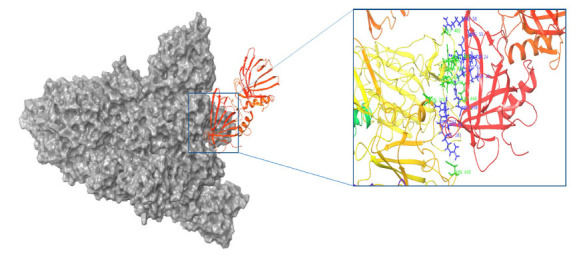
This study deciphers the flexible nature of hinges responsible for binding the odorant receptor on neurons responsible for the loss of smell in COVID-19 patients.
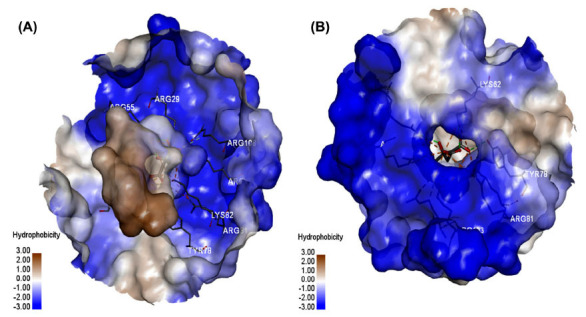
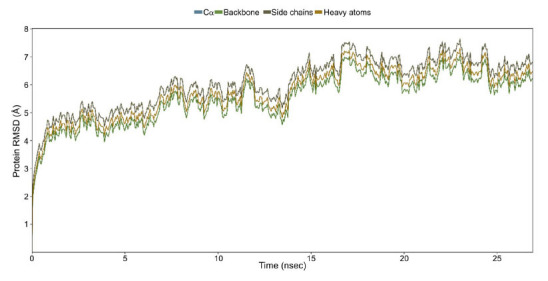
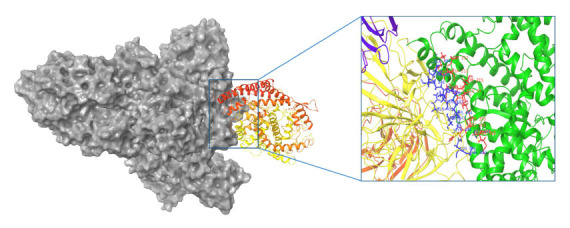
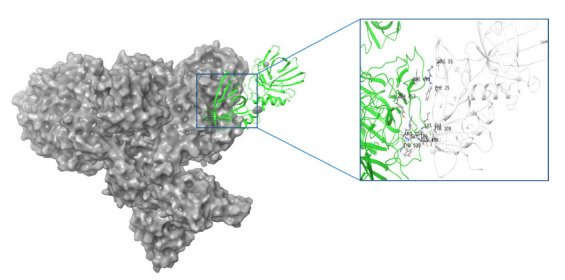
The 3D structure via EPIK in Maestro, protein docking with ligands via Maestro protein analysis tool, and molecular dynamic simulation at 30 ns run using DESMOND was prepared.
The data of the study strongly suggest that strong and stable bond formation results from the reaction between R:14: Trp and Phe at the residue, targeting the flexible hinges of SARS-CoV-2. The difference in the conformational structure of the S protein and its binding with the odorant receptor in COVID-19 is the prime factor for the loss of smell and taste in patients, as supported by the concept of Antigen (epitope) Antibody interaction by the stable formation of a hydrogen bond among odorant receptor and the S protein. The flexibility of structural proteins determines the binding potential of antibodies or other defense proteins produced to participate in the antigen-antibody reaction.
Molecular and atomic details potentiate the design and screening of small molecules that can inhibit the fusion at entry level or odorant receptors and potentially be used in the prevention and treatment of infection, particularly when formulated as nasal drops, paving a new approach for pharmacologists in the treatment of COVID-19 infection.
SARS-CoV-2 疫苗的开发主要集中在刺突(S)蛋白的结构上。S 蛋白的糖基化程度很高,茎干上的灵活铰链可以防止抗体附着。
本研究旨在揭示导致 COVID-19 患者失去嗅觉的神经元上的气味受体结合的铰链的灵活性质。
通过 Maestro 中的 EPIK 制备 3D 结构,使用 Maestro 蛋白分析工具进行蛋白配体对接,在 DESMOND 上运行 30ns 的分子动力学模拟。
研究数据强烈表明,R:14:Trp 和 Phe 残基之间的反应导致了强而稳定的键合形成,靶向 SARS-CoV-2 的灵活铰链。S 蛋白的构象结构及其与 COVID-19 中气味受体的结合差异是患者失去嗅觉和味觉的主要因素,这一概念得到了支持,即通过气味受体和 S 蛋白之间氢键的稳定形成,抗原(表位)抗体相互作用。结构蛋白的灵活性决定了抗体或其他防御蛋白的结合潜力,这些蛋白产生后参与抗原抗体反应。
分子和原子细节为设计和筛选能够抑制进入水平融合或气味受体的小分子提供了可能性,并有可能用于感染的预防和治疗,特别是当制成鼻滴剂时,为 COVID-19 感染的治疗开辟了一种新的方法。