Department of Nephrology, First Medical Center of Chinese PLA General Hospital, Nephrology Institute of the Chinese People's Liberation Army, State Key Laboratory of Kidney Diseases, National Clinical Research Center for Kidney Diseases, Beijing Key Laboratory of Kidney Disease Research, Beijing, China.
School of Clinical Medicine, Guangdong Pharmaceutical University, Guangzhou, China.
Cell Prolif. 2022 Oct;55(10):e13299. doi: 10.1111/cpr.13299. Epub 2022 Jun 28.
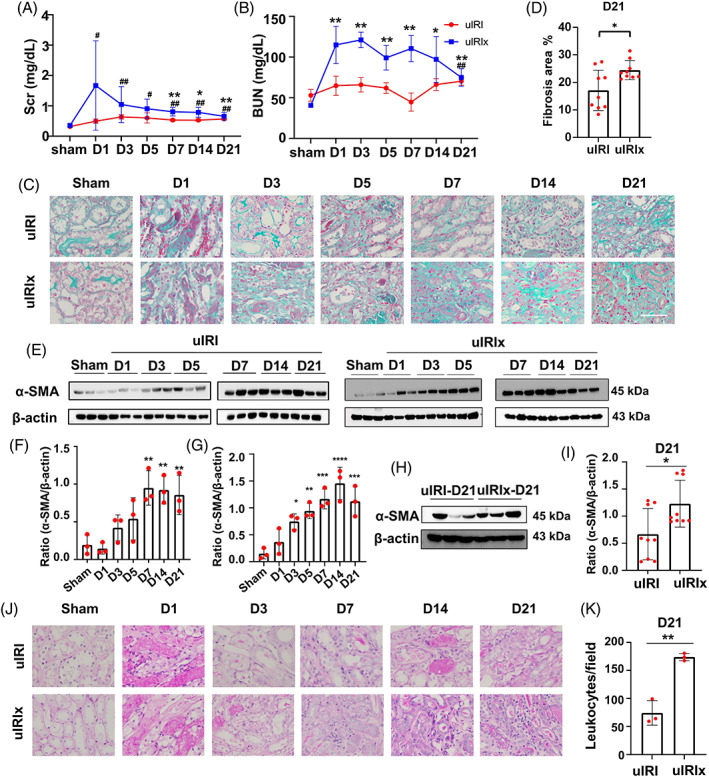
Ischemia-reperfusion injury (IRI) is a major cause of chronic renal fibrosis. Currently, numerous therapies have shown a minimal effect on the blockade of fibrosis progression. Here, the therapeutic potential of peptide-based TGF-β1 inhibitor P144 in IRI-induced renal fibrosis and the underlying mechanism were analyzed.
The unilateral ischemia-reperfusion injury with the contralateral nephrectomy model was established, and the P144 was administered intravenously 1d/14d after the onset of IRI. The histopathology and immunofluorescence staining were used to detect renal fibrosis and macrophage infiltration. The in vivo fluorescence imaging was used to measure the bio-distribution of P144. The transwell assays were used to observe the migration of macrophages. RT-qPCR and western blot were used to analyze TGF-β1 signaling.
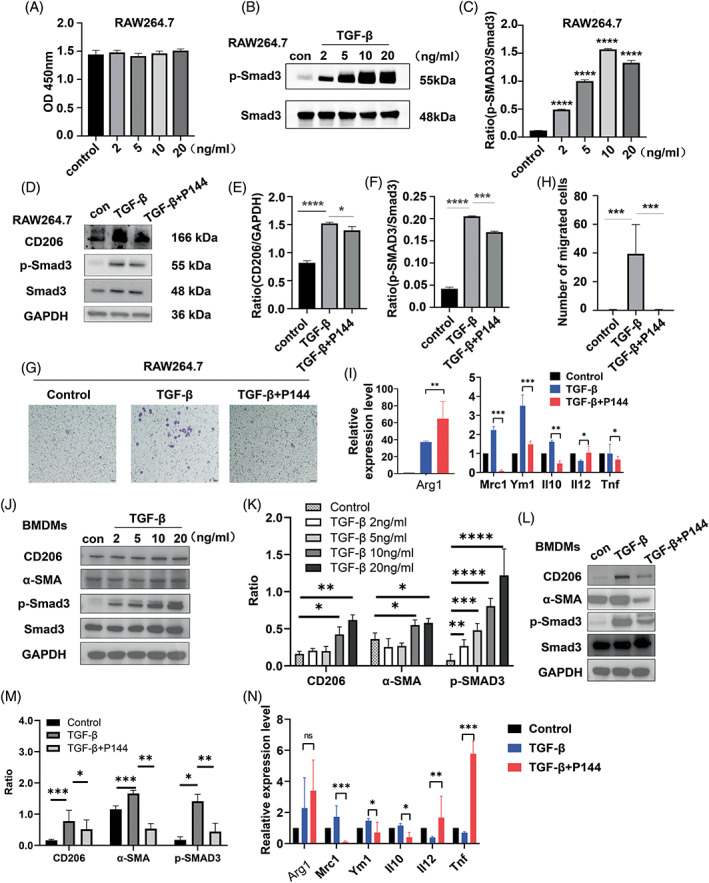
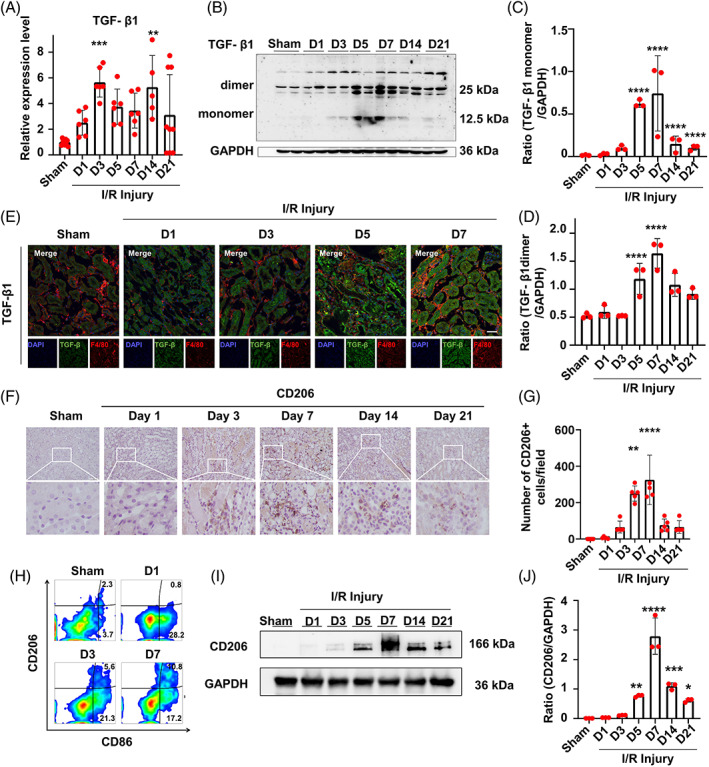
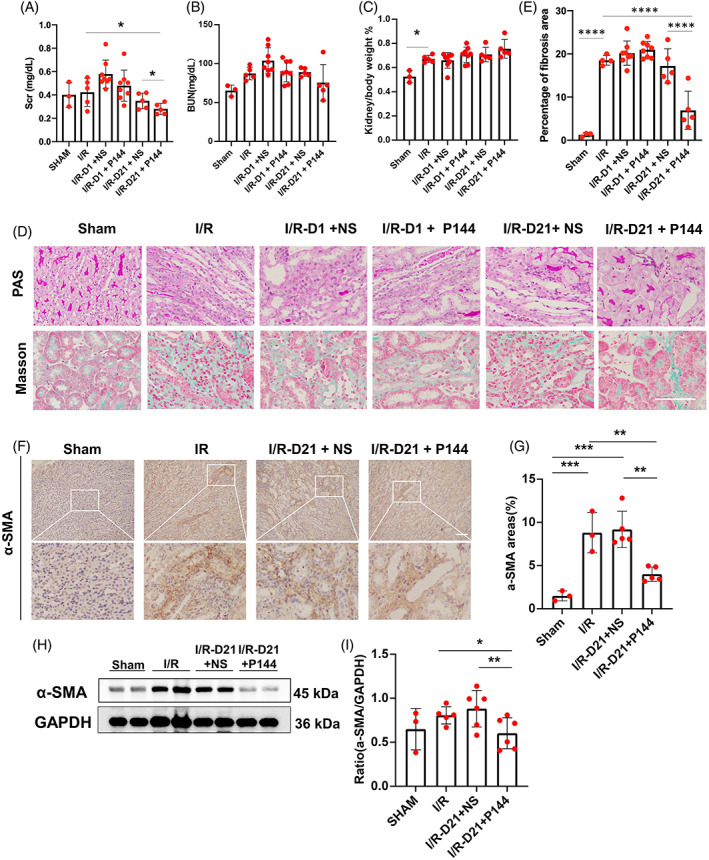
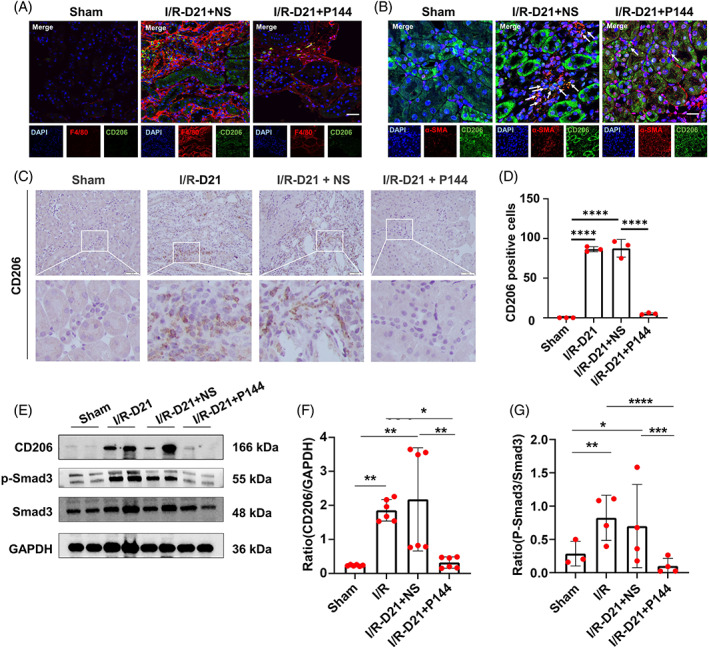
P144 ameliorated the accumulation of extracellular matrix in the kidney and improved the renal function in the unilateral ischemia-reperfusion injury plus contralateral nephrectomy model. Mechanistically, P144 downregulated the TGF-β1-Smad3 signaling at both the transcriptional and translational levels and further reduced the TGF-β1-dependent infiltration of macrophages to the injured kidney. Additionally, P144 blocked the polarization of macrophages to an M2-like phenotype induced by TGF-β1 in vitro, but showed no effect on their proliferation.
Our study showed that the TGF-β1 peptide-based inhibitor P144 decreased renal fibrosis through the blockade of the TGF-β1-Smad3 signaling pathway and the modulation of macrophage polarization, suggesting its potential therapeutic use in IRI-induced renal fibrosis.
缺血再灌注损伤(IRI)是慢性肾纤维化的主要原因。目前,许多疗法对阻止纤维化进展的效果甚微。本研究分析了基于肽的 TGF-β1 抑制剂 P144 在 IRI 诱导的肾纤维化中的治疗潜力及其潜在机制。
建立单侧缺血再灌注损伤伴对侧肾切除术模型,在 IRI 发作后第 1d/14d 静脉给予 P144。采用组织病理学和免疫荧光染色检测肾纤维化和巨噬细胞浸润。采用体内荧光成像技术测量 P144 的生物分布。采用 Transwell 测定观察巨噬细胞的迁移。采用 RT-qPCR 和 Western blot 分析 TGF-β1 信号通路。
P144 改善了单侧缺血再灌注损伤伴对侧肾切除术模型中肾脏细胞外基质的积累,并改善了肾功能。机制上,P144 在转录和翻译水平下调 TGF-β1-Smad3 信号通路,进一步减少 TGF-β1 依赖的巨噬细胞浸润到受损肾脏。此外,P144 阻断了 TGF-β1 在体外诱导的巨噬细胞向 M2 样表型的极化,但对其增殖没有影响。
本研究表明,基于 TGF-β1 的肽抑制剂 P144 通过阻断 TGF-β1-Smad3 信号通路和调节巨噬细胞极化来减少肾纤维化,提示其在 IRI 诱导的肾纤维化中的潜在治疗用途。