Department of Electrical Engineering, Stanford University, Stanford, California, USA.
Department of Radiology, Stanford University, Stanford, California, USA.
Magn Reson Med. 2022 Oct;88(4):1673-1689. doi: 10.1002/mrm.29309. Epub 2022 Jun 28.
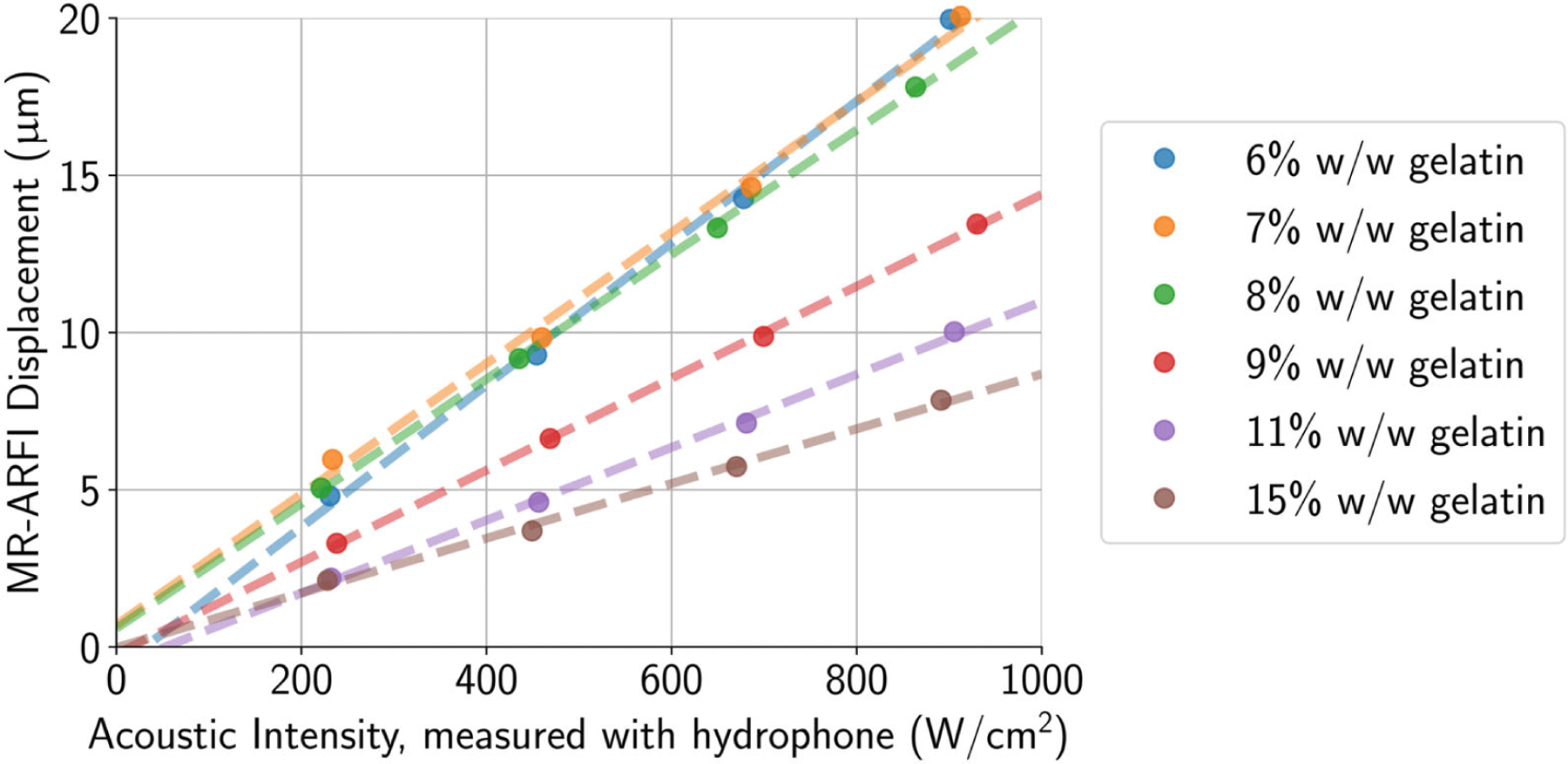
Magnetic resonance acoustic radiation force imaging (MR-ARFI) enables focal spot localization during nonablative transcranial ultrasound therapies. As the acoustic radiation force is proportional to the applied acoustic intensity, measured MR-ARFI displacements could potentially be used to estimate the acoustic intensity at the target. However, variable brain stiffness is an obstacle. The goal of this study was to develop and assess a method to accurately estimate the acoustic intensity at the focus using MR-ARFI displacements in combination with viscoelastic properties obtained with multifrequency MR elastography (MRE).
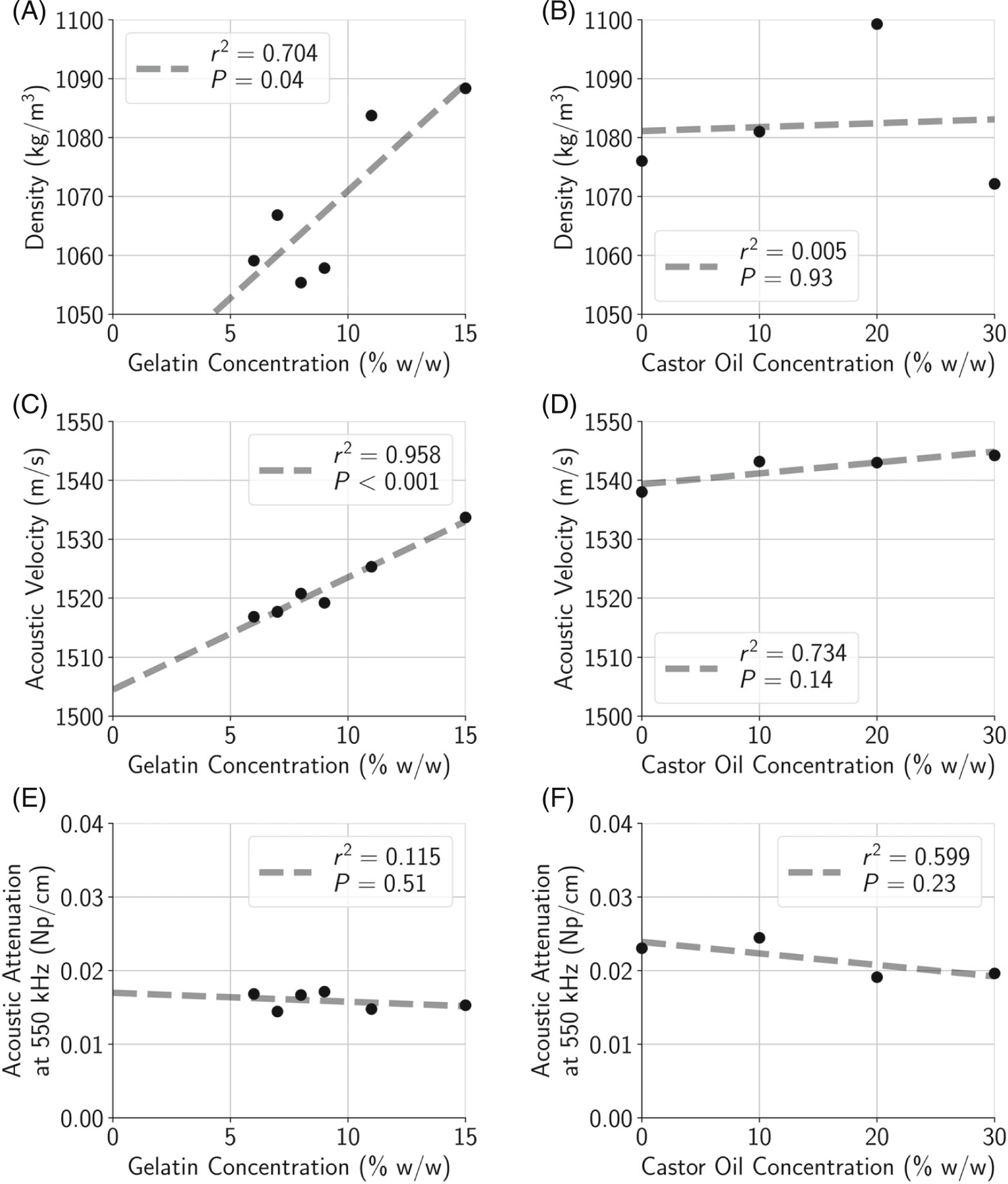
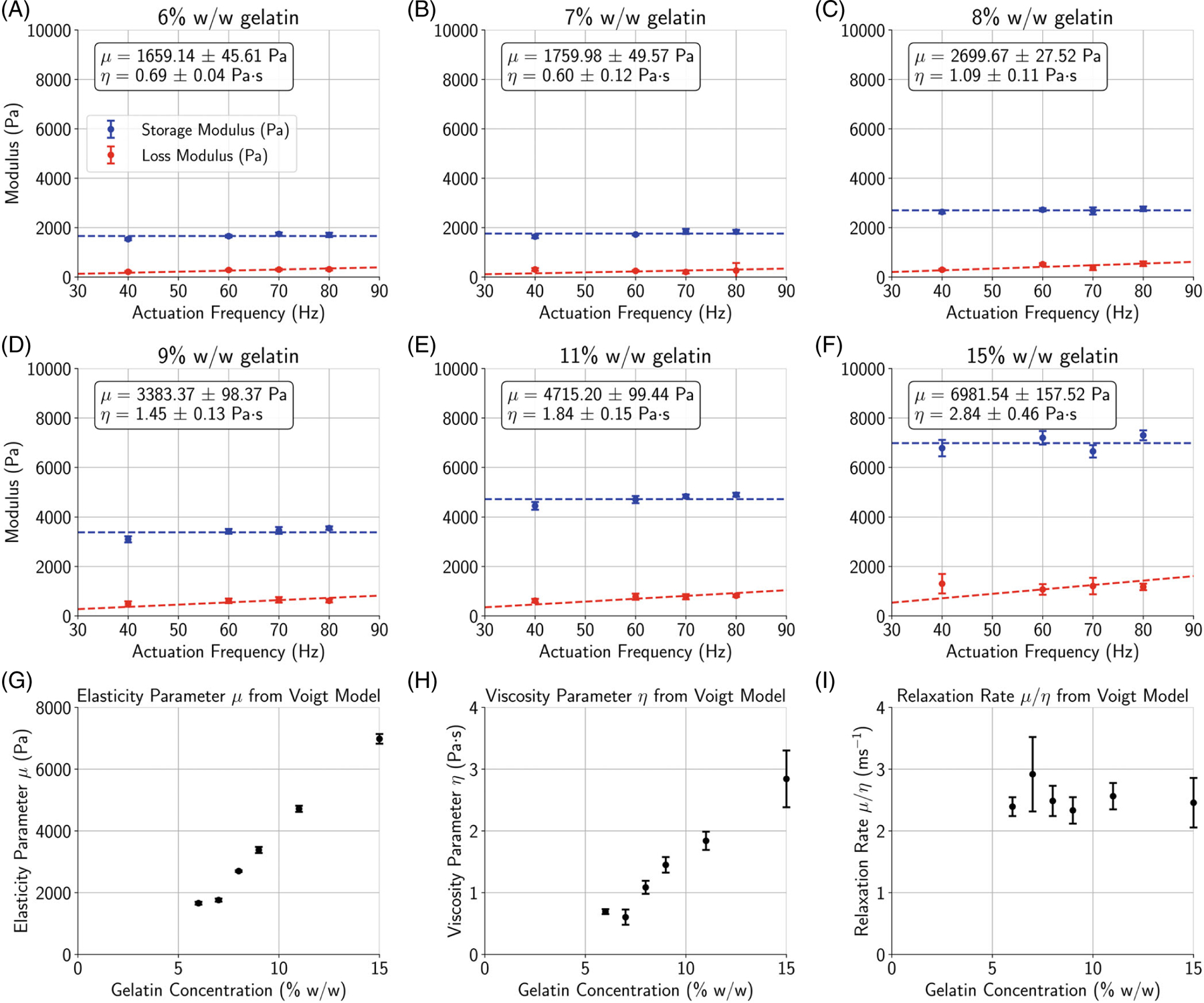
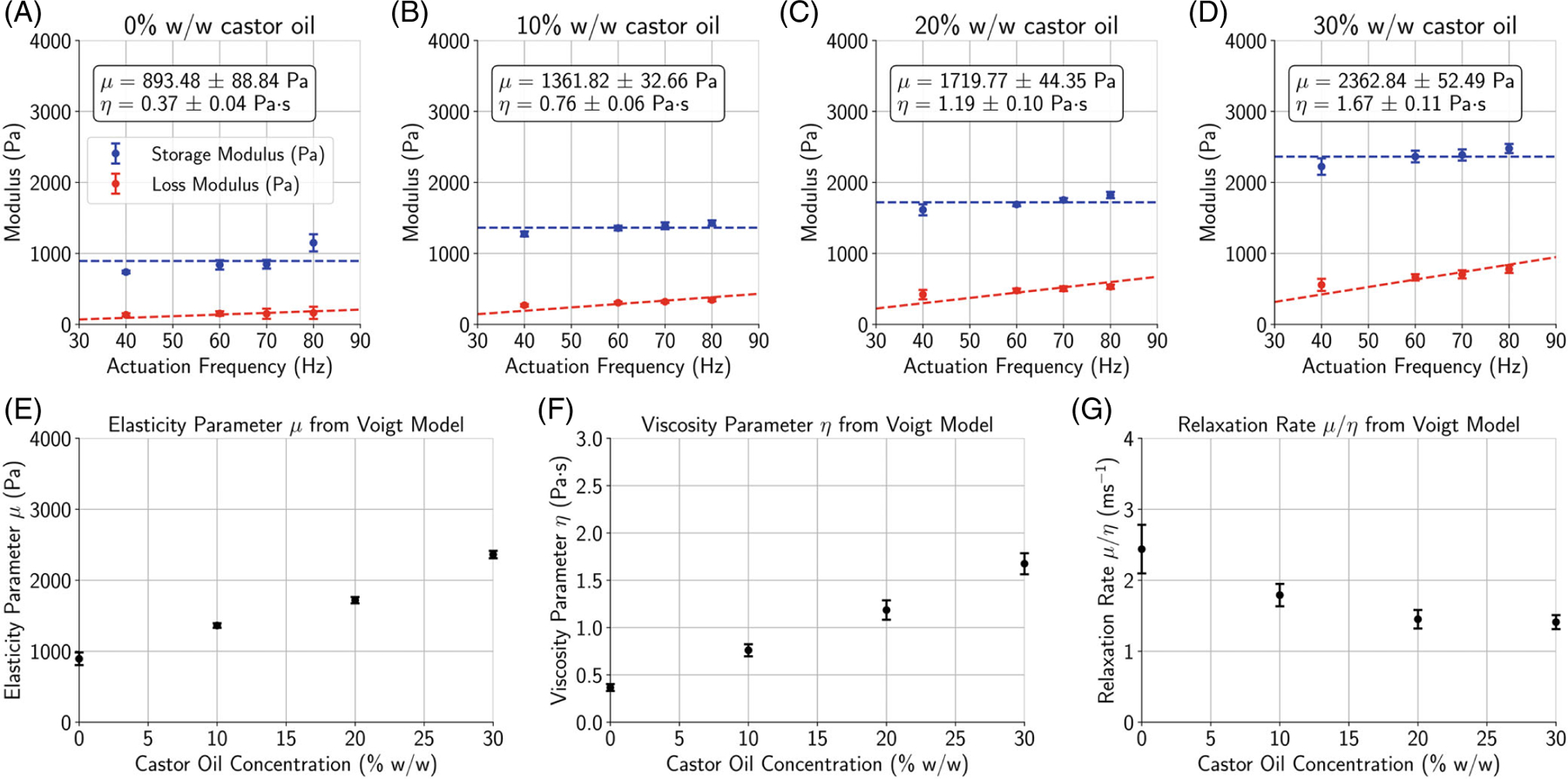
Phantoms with a range of viscoelastic properties were fabricated, and MR-ARFI displacements were acquired within each phantom using multiple acoustic intensities. Voigt model parameters were estimated for each phantom based on storage and loss moduli measured using multifrequency MRE, and these were used to predict the relationship between acoustic intensity and measured displacement.
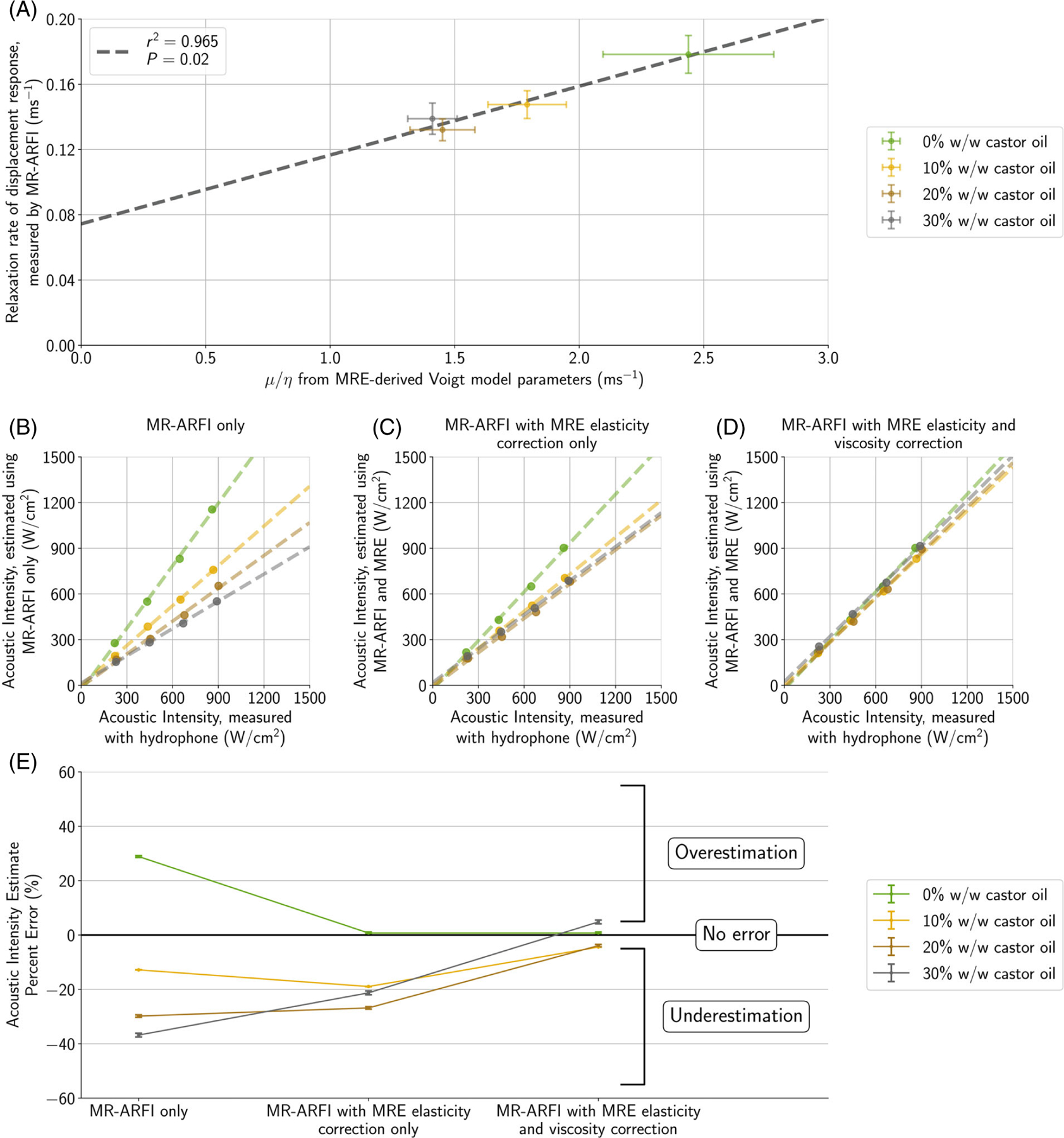
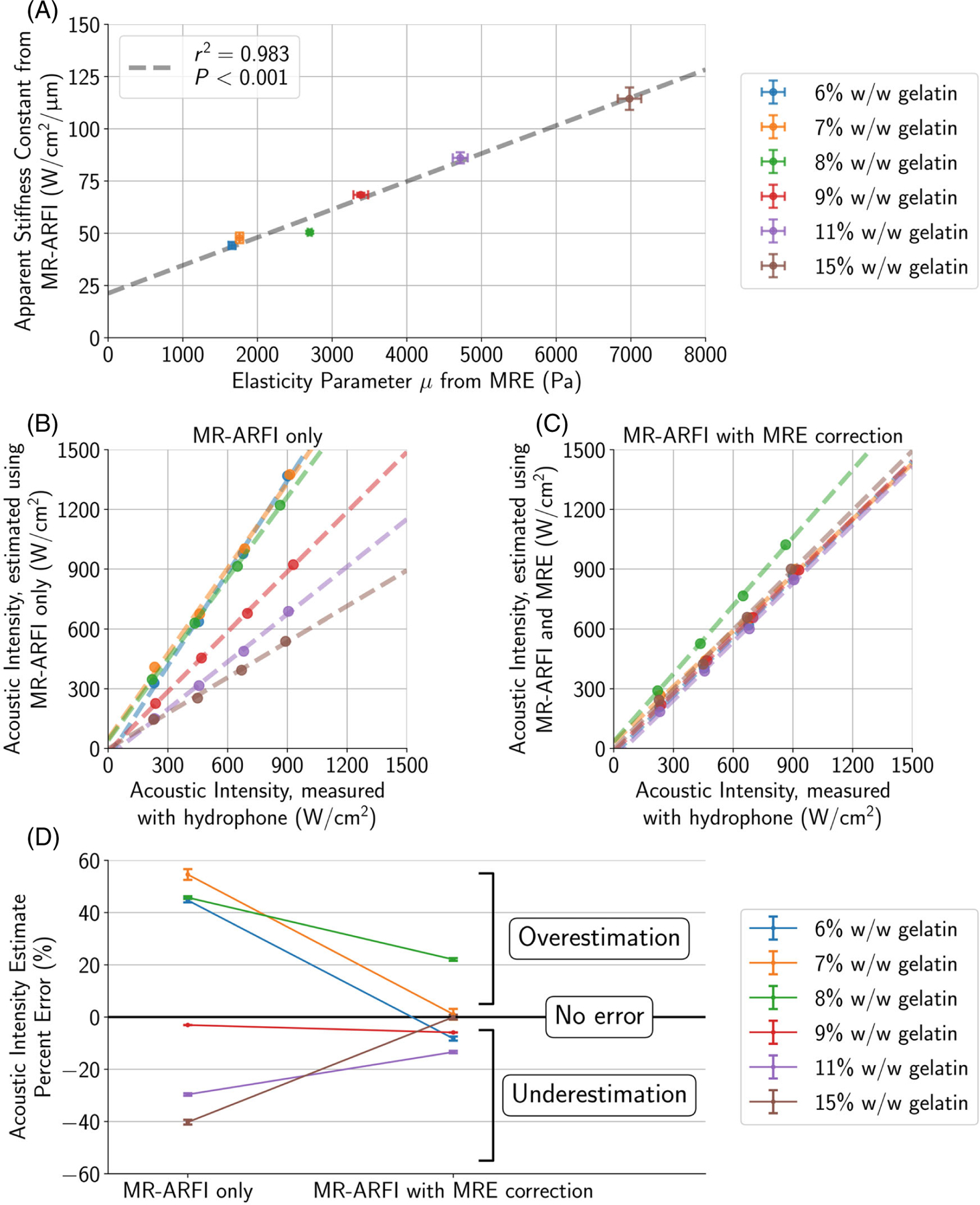
Using assumed viscoelastic properties, MR-ARFI displacements alone could not accurately estimate acoustic intensity across phantoms. For example, acoustic intensities were underestimated in phantoms stiffer than the assumed stiffness and overestimated in phantoms softer than the assumed stiffness. This error was greatly reduced using individualized viscoelasticity measurements obtained from MRE.
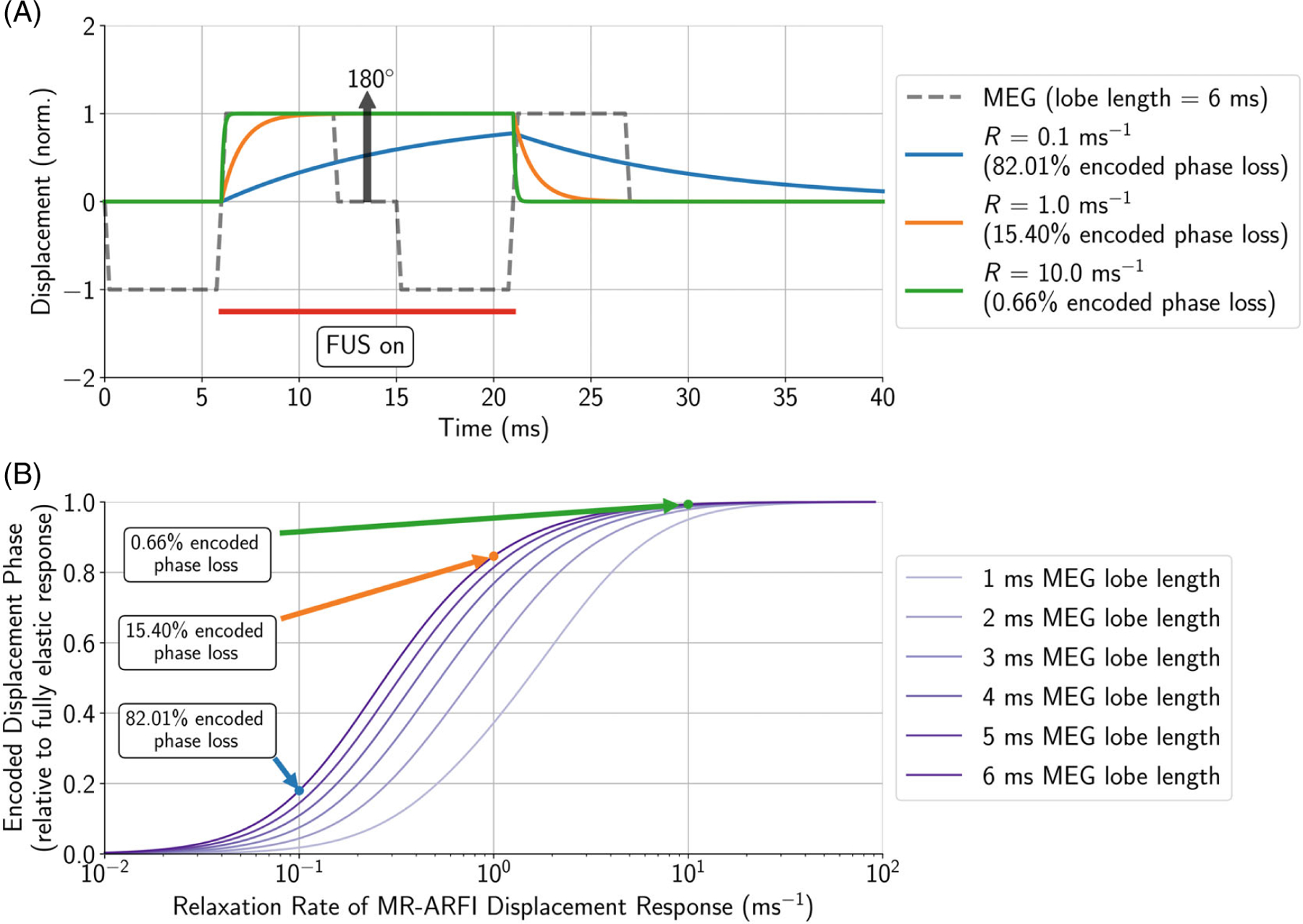
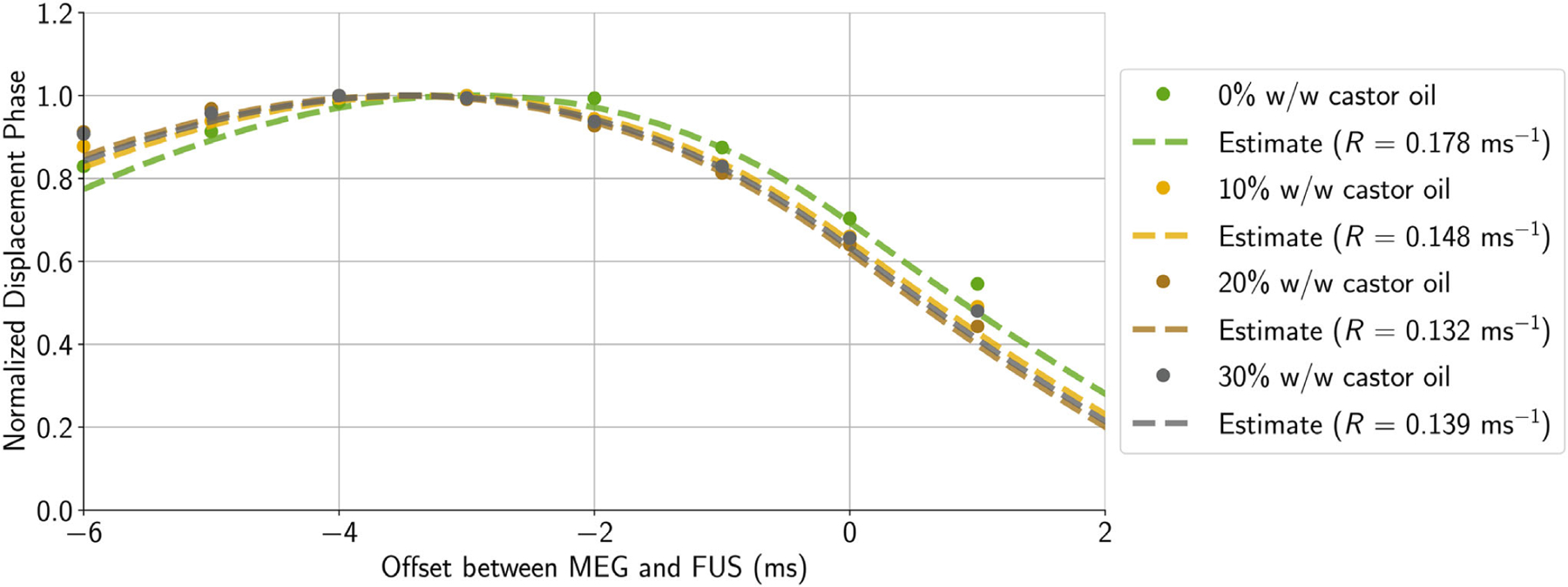
We demonstrated that viscoelasticity information from MRE could be used in combination with MR-ARFI displacements to obtain more accurate estimates of acoustic intensity. Additionally, Voigt model viscosity parameters were found to be predictive of the relaxation rate of each phantom's time-varying displacement response, which could be used to optimize patient-specific MR-ARFI pulse sequences.
磁共振声辐射力成像(MR-ARFI)可实现非消融性经颅超声治疗中的焦点定位。由于声辐射力与施加的声强成正比,因此测量得到的 MR-ARFI 位移可能可用于估计目标处的声强。然而,可变的大脑硬度是一个障碍。本研究的目的是开发并评估一种方法,该方法可结合使用多频磁共振弹性成像(MRE)获得的粘弹性特性,通过 MR-ARFI 位移来准确估计焦点处的声强。
制作了具有一系列粘弹性特性的体模,并在每个体模中使用多种声强获取 MR-ARFI 位移。根据使用多频 MRE 测量的存储和损耗模量,为每个体模估计 Voigt 模型参数,并使用这些参数来预测声强与测量位移之间的关系。
仅使用假设的粘弹性特性,MR-ARFI 位移无法准确地跨体模估计声强。例如,在比假设硬度硬的体模中,声强被低估,而在比假设硬度软的体模中,声强被高估。使用从 MRE 获得的个体化粘弹性测量大大降低了这种误差。
我们证明了 MRE 的粘弹性信息可与 MR-ARFI 位移结合使用,以获得更准确的声强估计值。此外,还发现 Voigt 模型粘性参数可预测每个体模时变位移响应的弛豫率,这可用于优化特定于患者的 MR-ARFI 脉冲序列。