Department of Bioengineering and Biotechnology, Birla Institute of Technology (BIT), Mesra, Ranchi, 835215, Jharkhand, India; Department of Biotechnology, Sun Pharmaceutical Industries Ltd., Tandalja, Vadodara, 390012, Gujarat, India.
Department of Chemistry, University of Konstanz, Germany.
Comput Biol Med. 2022 Aug;147:105758. doi: 10.1016/j.compbiomed.2022.105758. Epub 2022 Jun 20.
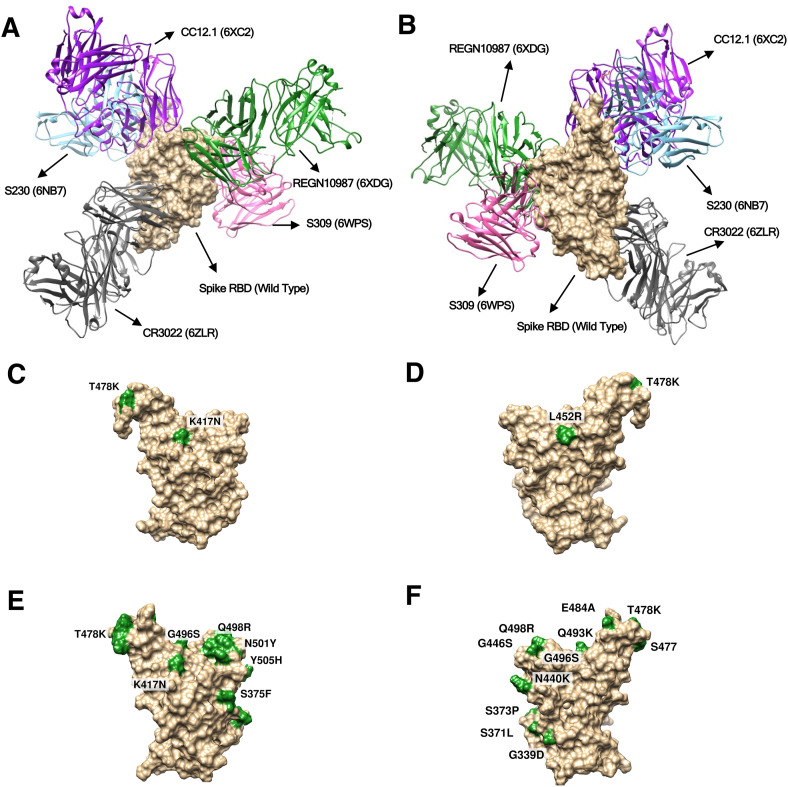
The vaccines used against SARS-CoV-2 by now have been able to develop some neutralising antibodies in the vaccinated population and their effectiveness has been challenged by the emergence of the new strains with numerous mutations in the spike protein of SARS-CoV-2. Since S protein is the major immunogenic protein of the virus which contains Receptor Binding Domain (RBD) that interacts with the human Angiotensin-Converting Enzyme 2 (ACE2) receptors, any mutations in this region should affect the neutralisation potential of the antibodies leading to the immune evasion. Several variants of concern of the virus have emerged so far, amongst which the most critical are Delta and recently reported Omicron. In this study, we have mapped and reported mutations on the modelled RBD and evaluated binding affinities of various human antibodies with it.
Docking and molecular dynamics simulation studies have been used to explore the effect of mutations on the structure of RBD and RBD-antibody interaction.
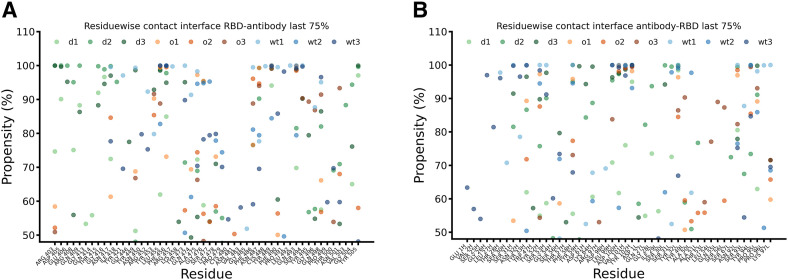
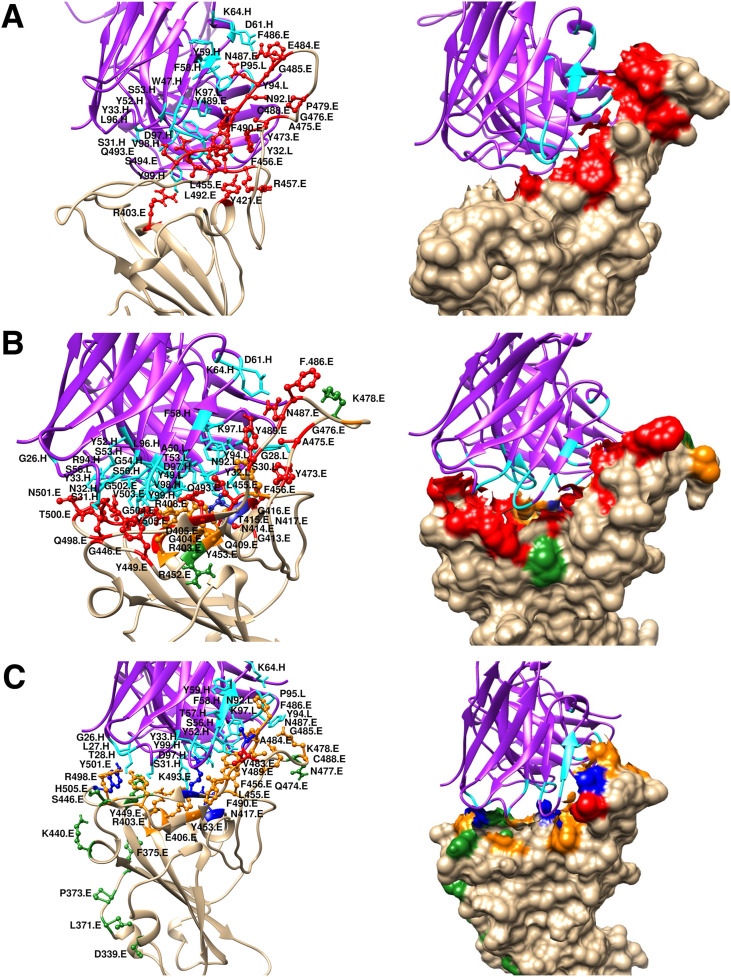
These analyses show that the mutations mostly at the interface of a nearby region lower the binding affinity of the antibody by ten to forty percent, with a downfall in the number of interactions formed as a whole. It implies the generation of immune escape variants.
Notable mutations and their effect was characterised that explain the structural basis of antibody efficacy in Delta and a compromised neutralisation effect for the Omicron variant. Thus, our results pave the way for robust vaccine design that can be effective for many variants.
目前,针对 SARS-CoV-2 的疫苗已经能够在接种人群中产生一些中和抗体,但其有效性受到了新出现的具有大量刺突蛋白突变的新菌株的挑战。由于 S 蛋白是病毒的主要免疫原性蛋白,其中包含与人类血管紧张素转换酶 2(ACE2)受体相互作用的受体结合域(RBD),该区域的任何突变都应该会影响抗体的中和潜力,从而导致免疫逃逸。迄今为止,已经出现了几种令人关注的病毒变体,其中最关键的是 Delta 和最近报道的 Omicron。在这项研究中,我们对建模的 RBD 上的突变进行了映射和报告,并评估了各种人类抗体与之的结合亲和力。
对接和分子动力学模拟研究用于探索突变对 RBD 结构和 RBD-抗体相互作用的影响。
这些分析表明,大多数突变主要位于附近区域的界面处,使抗体的结合亲和力降低了 10% 到 40%,整体形成的相互作用数量减少。这意味着产生了免疫逃避变体。
对突变及其影响进行了特征描述,解释了 Delta 中抗体功效的结构基础以及对 Omicron 变体的中和效果受损。因此,我们的结果为有效的疫苗设计铺平了道路,该设计对许多变体都有效。