Division of Gastroenterology, Brigham and Women's Hospital, Harvard Medical School, Boston, MA 02115, USA.
Department of Mechanical Engineering, Massachusetts Institute of Technology, Cambridge, MA 02139, USA.
Sci Transl Med. 2022 Jun 29;14(651):eabl4135. doi: 10.1126/scitranslmed.abl4135.
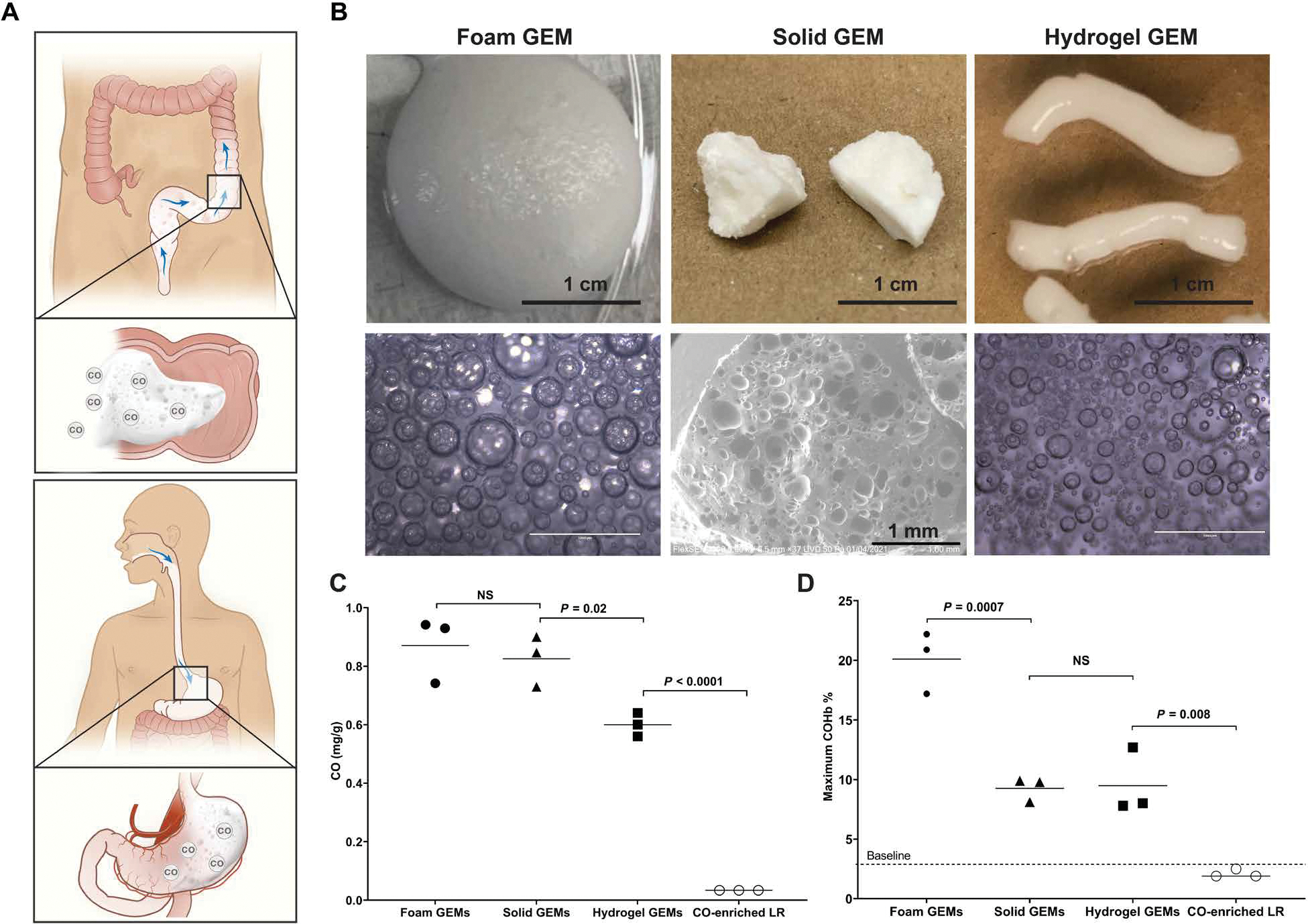
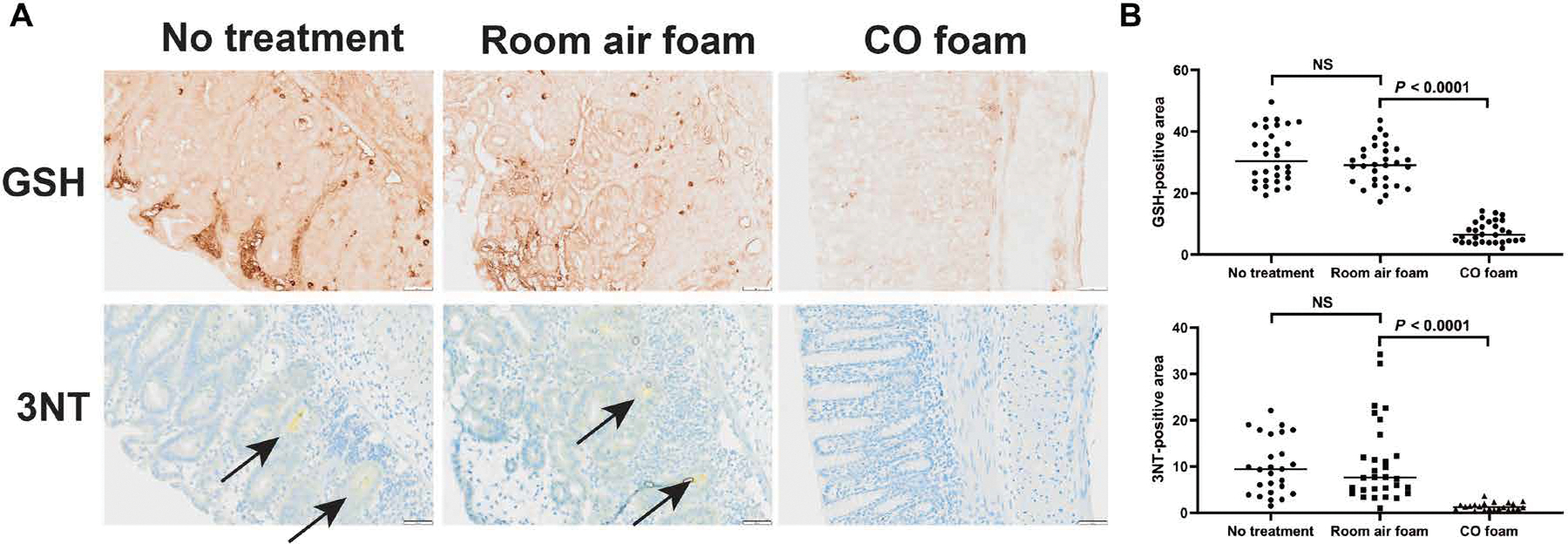
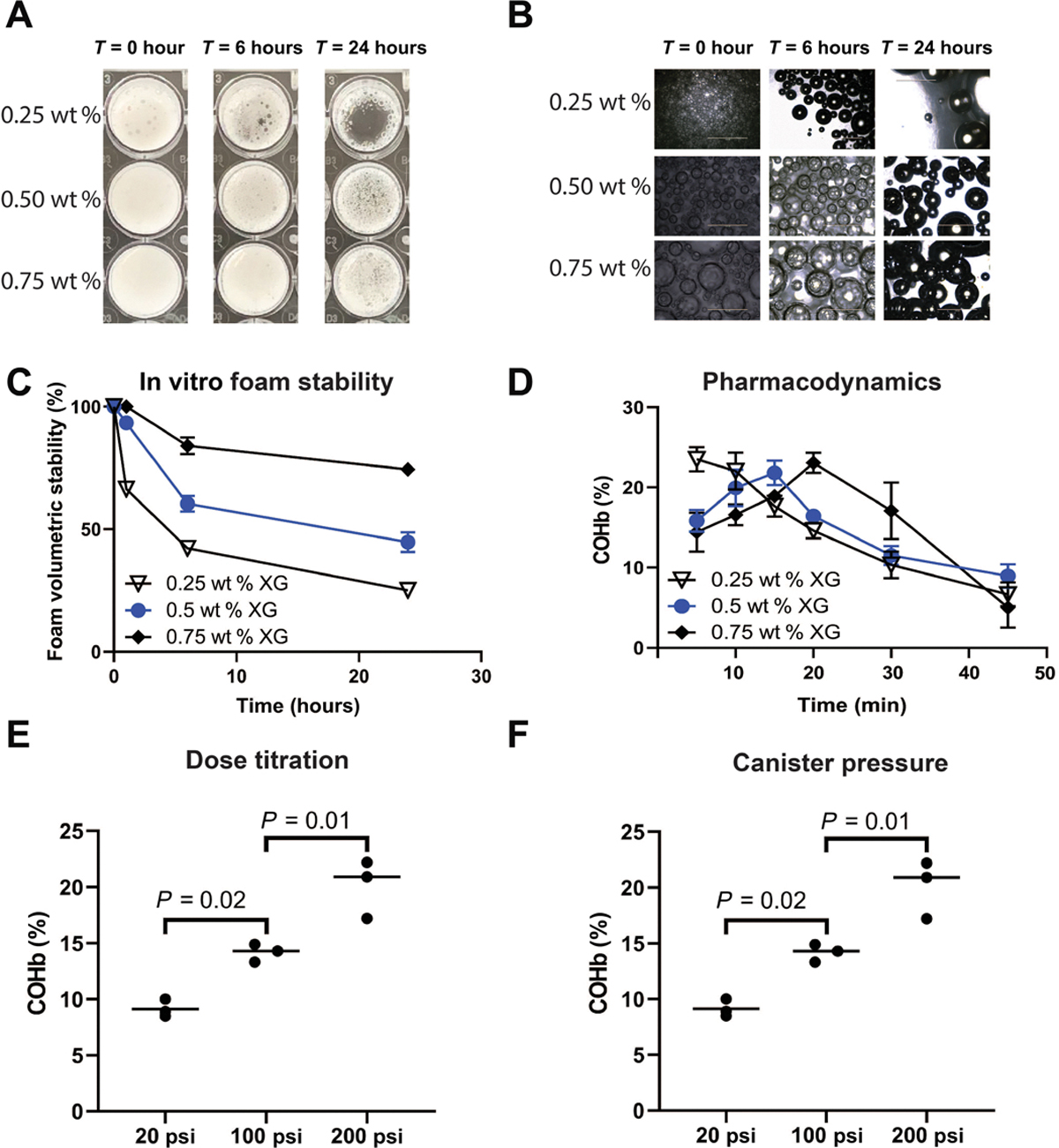
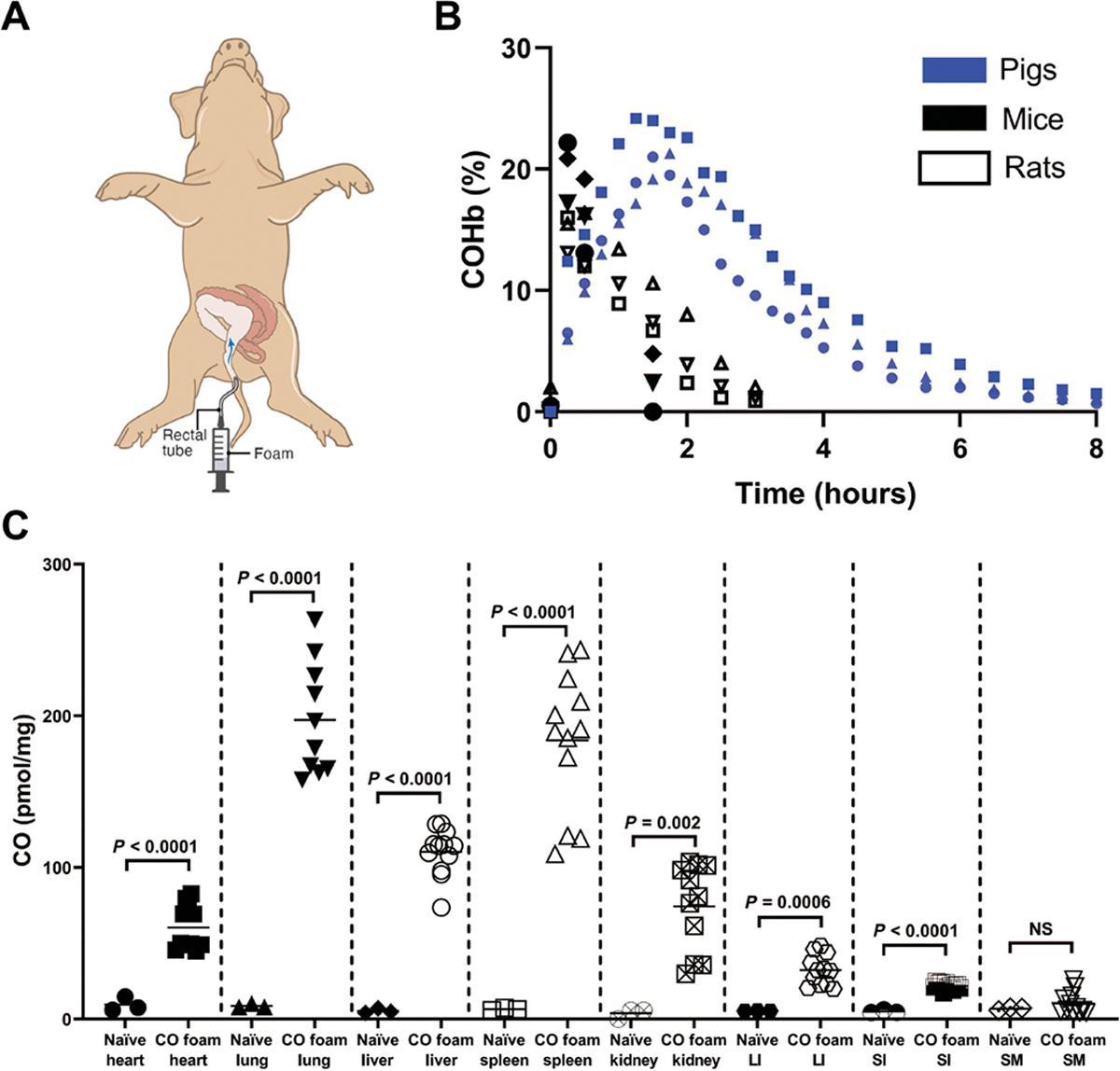
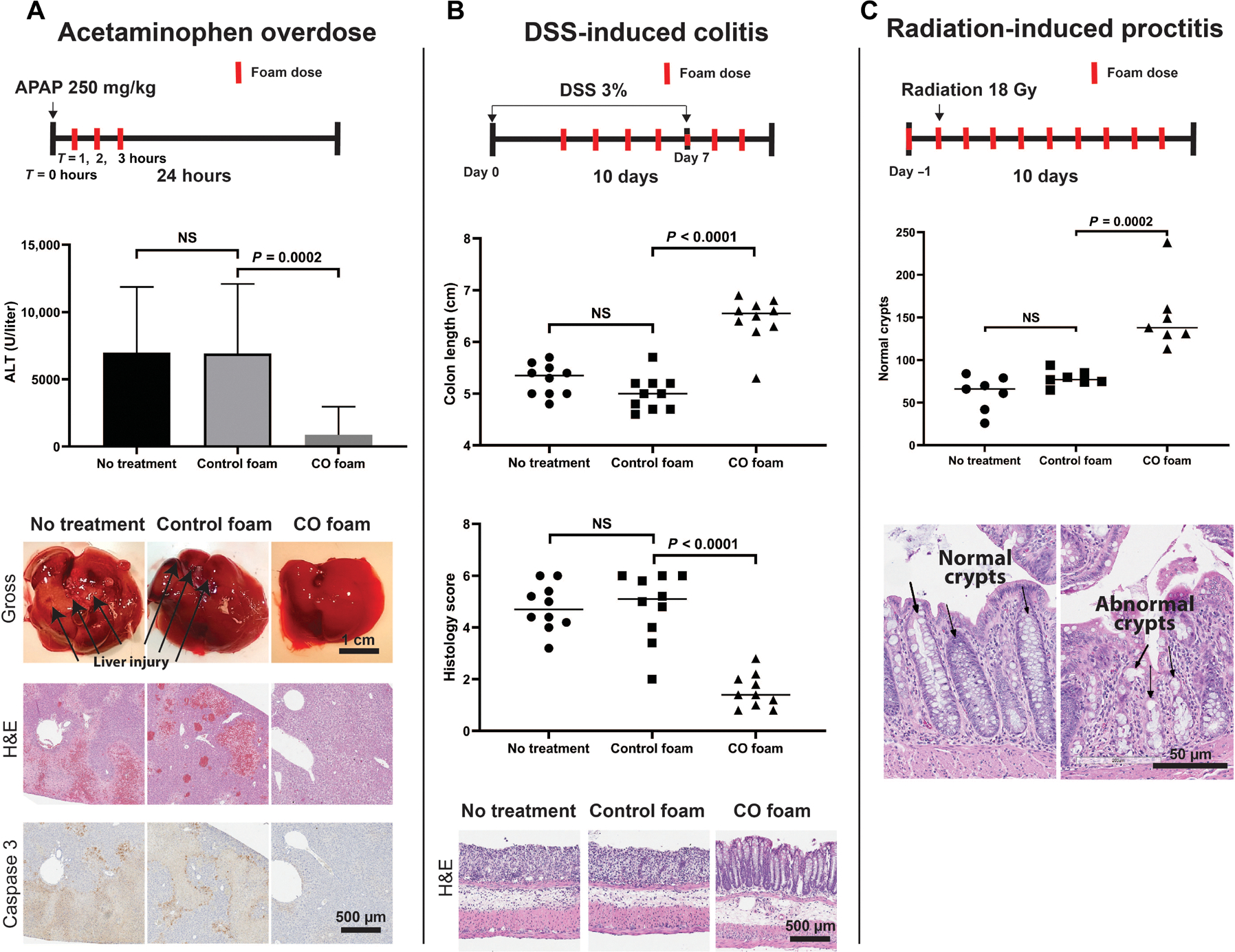
Carbon monoxide (CO) has long been considered a toxic gas but is now a recognized bioactive gasotransmitter with potent immunomodulatory effects. Although inhaled CO is currently under investigation for use in patients with lung disease, this mode of administration can present clinical challenges. The capacity to deliver CO directly and safely to the gastrointestinal (GI) tract could transform the management of diseases affecting the GI mucosa such as inflammatory bowel disease or radiation injury. To address this unmet need, inspired by molecular gastronomy techniques, we have developed a family of gas-entrapping materials (GEMs) for delivery of CO to the GI tract. We show highly tunable and potent delivery of CO, achieving clinically relevant CO concentrations in vivo in rodent and swine models. To support the potential range of applications of foam GEMs, we evaluated the system in three distinct disease models. We show that a GEM containing CO dose-dependently reduced acetaminophen-induced hepatocellular injury, dampened colitis-associated inflammation and oxidative tissue injury, and mitigated radiation-induced gut epithelial damage in rodents. Collectively, foam GEMs have potential paradigm-shifting implications for the safe therapeutic use of CO across a range of indications.
一氧化碳(CO)长期以来一直被认为是一种有毒气体,但现在已被认为是一种具有强大免疫调节作用的生物活性气体递质。虽然吸入 CO 目前正在研究用于治疗肺部疾病,但这种给药方式可能会带来临床挑战。如果能够将 CO 直接且安全地输送到胃肠道(GI),则可能会改变对影响 GI 黏膜的疾病(如炎症性肠病或放射性损伤)的治疗方式。为了满足这一未满足的需求,受分子美食学技术的启发,我们开发了一系列用于将 CO 输送到胃肠道的气体捕获材料(GEM)。我们展示了 CO 的高度可调且强效的输送,在啮齿动物和猪模型中实现了具有临床相关性的 CO 浓度。为了支持泡沫 GEM 潜在的应用范围,我们在三个不同的疾病模型中评估了该系统。我们发现,含有 CO 的 GEM 可剂量依赖性地减轻对乙酰氨基酚引起的肝细胞损伤,减轻结肠炎相关的炎症和氧化组织损伤,并减轻辐射引起的肠道上皮损伤。总的来说,泡沫 GEM 具有改变范式的潜力,可在一系列适应症中安全地治疗 CO。