University of Groningen, University Medical Center Groningen, Department of Cardiology, 9700 RB Groningen, the Netherlands; Department of Cardiology, Division of Heart & Lungs, University Medical Center Utrecht, University of Utrecht, Utrecht, the Netherlands.
University of Groningen, University Medical Center Groningen, Department of Cardiology, 9700 RB Groningen, the Netherlands; Department of Cardiology, Division of Heart & Lungs, University Medical Center Utrecht, University of Utrecht, Utrecht, the Netherlands.
STAR Protoc. 2022 Jun 17;3(3):101471. doi: 10.1016/j.xpro.2022.101471. eCollection 2022 Sep 16.
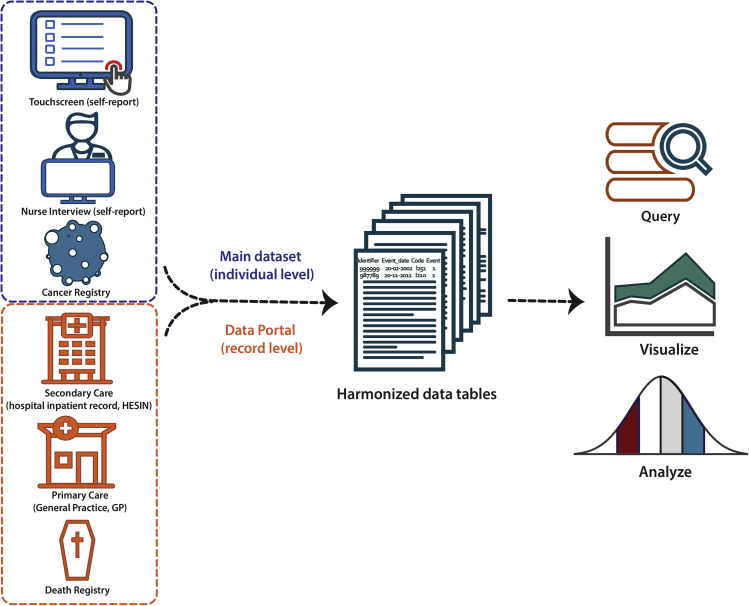
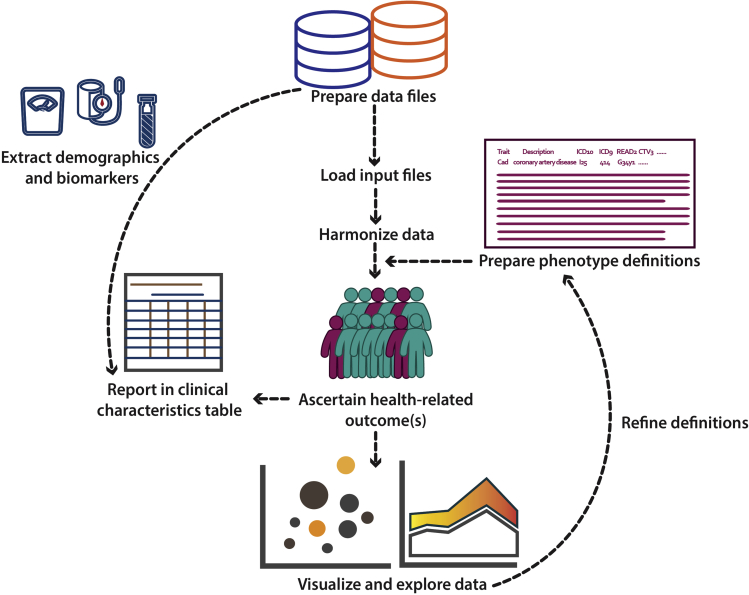
The complexity and volume of data associated with population-based cohorts means that generating health-related outcomes can be challenging. Using one such cohort, the UK Biobank-a major open access resource-we present a protocol to efficiently integrate the main dataset and record-level data files, to harmonize and process the data using an R package named "ukbpheno". We describe how to use the package to generate binary phenotypes in a standardized and machine-actionable manner. For complete details on the use and execution of this protocol, please refer to Yeung et al. (2022).
基于人群的队列所涉及的数据的复杂性和数量意味着生成与健康相关的结果可能具有挑战性。使用这样的一个队列,即英国生物银行(一个主要的开放获取资源),我们提出了一个方案,以有效地整合主要数据集和记录级别的数据文件,使用名为“ukbpheno”的 R 包来协调和处理数据。我们描述了如何使用该包以标准化和机器可操作的方式生成二进制表型。有关使用和执行此方案的完整详细信息,请参见 Yeung 等人(2022 年)。