Department of Radiology, University College London Hospital NHS Foundation Trust, London, UK.
Division of Surgery & Interventional Science, University College London, 3rd Floor, Charles Bell House, 43-45 Foley St., W1W 7TS, London, UK.
Eur Radiol. 2023 Jan;33(1):461-471. doi: 10.1007/s00330-022-08947-5. Epub 2022 Jun 30.
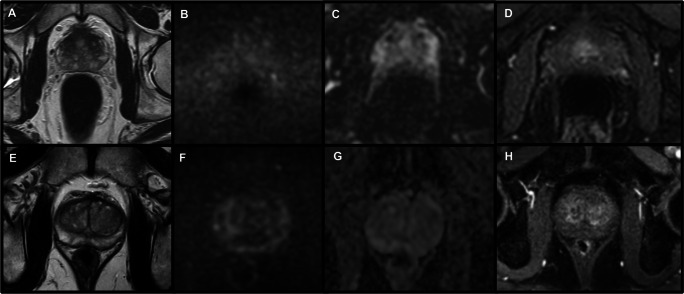
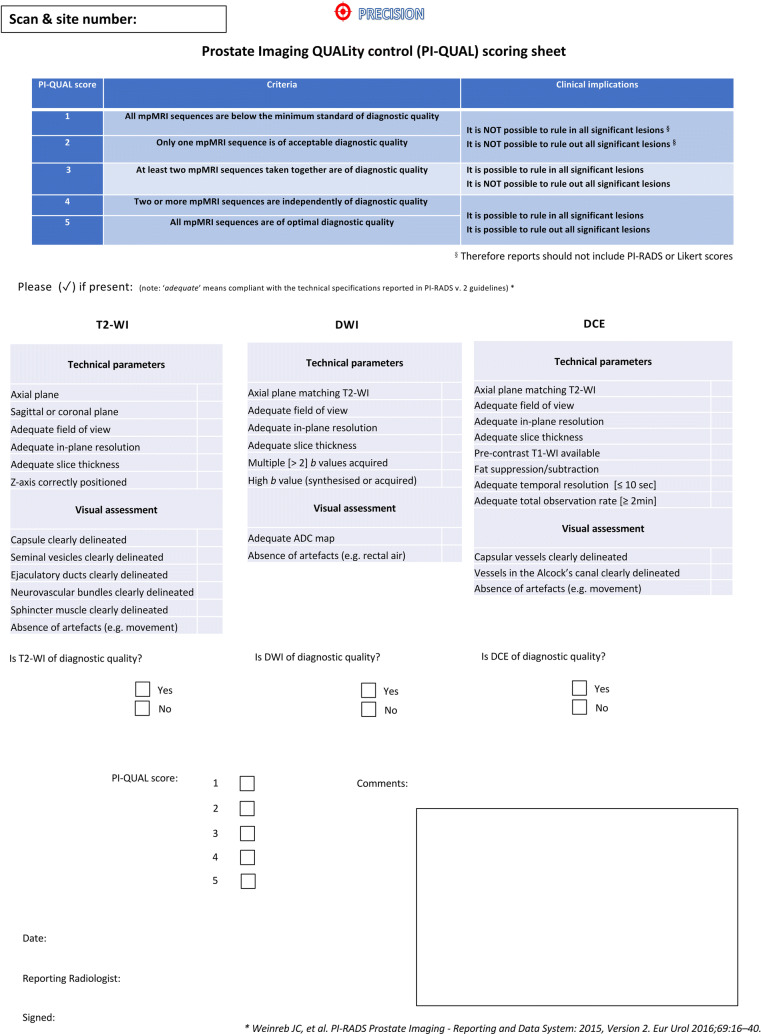
The Prostate Imaging Quality (PI-QUAL) score is a new metric to evaluate the diagnostic quality of multiparametric magnetic resonance imaging (MRI) of the prostate. This study assesses the impact of an intervention, namely a prostate MRI quality training lecture, on the participant's ability to apply PI-QUAL.
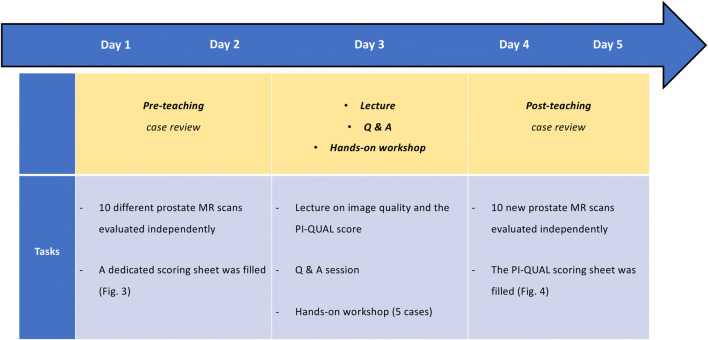
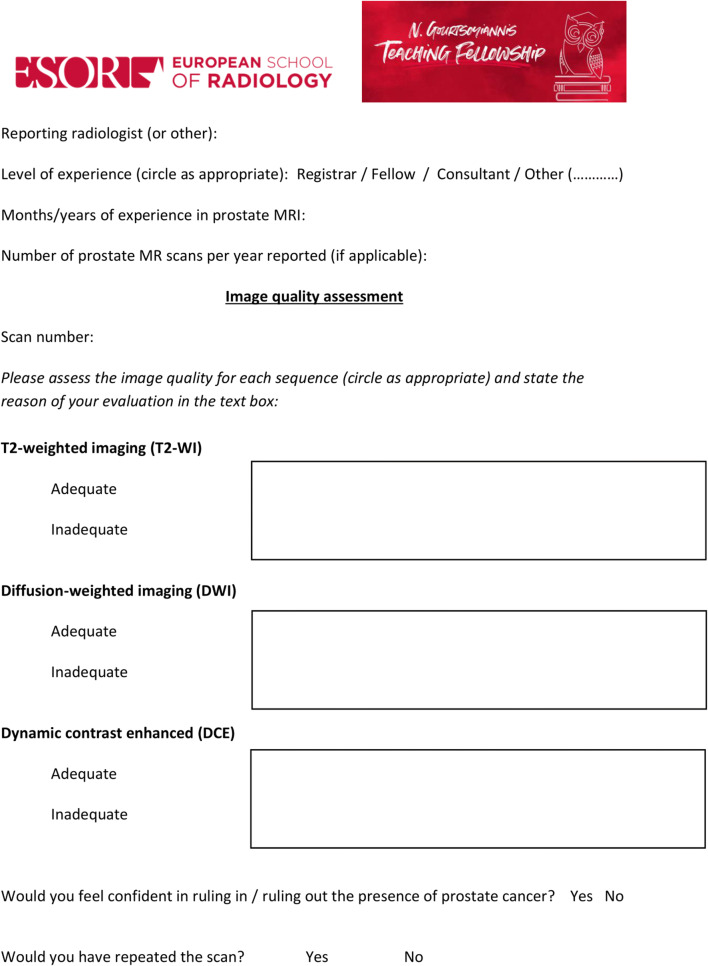
Sixteen participants (radiologists, urologists, physicists, and computer scientists) of varying experience in reviewing diagnostic prostate MRI all assessed the image quality of ten examinations from different vendors and machines. Then, they attended a dedicated lecture followed by a hands-on workshop on MRI quality assessment using the PI-QUAL score. Five scans assessed by the participants were evaluated in the workshop using the PI-QUAL score for teaching purposes. After the course, the same participants evaluated the image quality of a new set of ten scans applying the PI-QUAL score. Results were assessed using receiver operating characteristic analysis. The reference standard was the PI-QUAL score assessed by one of the developers of PI-QUAL.
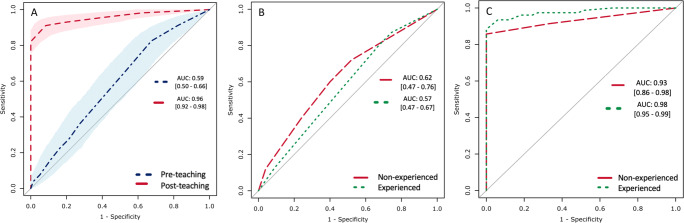
There was a significant improvement in average area under the curve for the evaluation of image quality from baseline (0.59 [95 % confidence intervals: 0.50-0.66]) to post-teaching (0.96 [0.92-0.98]), an improvement of 0.37 [0.21-0.41] (p < 0.001).
A teaching course (dedicated lecture + hands-on workshop) on PI-QUAL significantly improved the application of this scoring system to assess the quality of prostate MRI examinations.
• A significant improvement in the application of PI-QUAL for the assessment of prostate MR image quality was observed after an educational intervention. • Appropriate training on image quality can be delivered to those involved in the acquisition and interpretation of prostate MRI. • Further investigation will be needed to understand the impact on improving the acquisition of high-quality diagnostic prostate MR examinations.
前列腺成像质量(PI-QUAL)评分是一种新的指标,用于评估前列腺多参数磁共振成像(MRI)的诊断质量。本研究评估了一种干预措施,即前列腺 MRI 质量培训讲座,对参与者应用 PI-QUAL 评分的能力的影响。
16 名参与者(放射科医生、泌尿科医生、物理学家和计算机科学家)具有不同的诊断前列腺 MRI 审查经验,他们评估了来自不同供应商和机器的 10 项检查的图像质量。然后,他们参加了一个专门的讲座,随后进行了一个使用 PI-QUAL 评分进行 MRI 质量评估的实践工作坊。在工作坊中,使用 PI-QUAL 评分评估了参与者评估的 5 个扫描,用于教学目的。课程结束后,同一组参与者使用 PI-QUAL 评分评估了一组新的 10 个扫描的图像质量。结果使用受试者工作特征分析进行评估。参考标准是 PI-QUAL 评分的一位开发者评估的 PI-QUAL 评分。
从基线(0.59 [95%置信区间:0.50-0.66])到教学后(0.96 [0.92-0.98]),评估图像质量的平均曲线下面积有显著提高,提高了 0.37 [0.21-0.41](p < 0.001)。
PI-QUAL 的教学课程(专门讲座+实践工作坊)显著提高了该评分系统在评估前列腺 MRI 检查质量方面的应用。
• 在教育干预后,观察到 PI-QUAL 用于评估前列腺 MRI 图像质量的应用有显著提高。
• 可以向参与前列腺 MRI 获取和解释的人员提供有关图像质量的适当培训。
• 需要进一步研究,以了解其对提高高质量诊断性前列腺 MRI 检查获取的影响。