Molecular and Clinical Sciences Research Institute, St George's University of London, London, UK.
Molecular and Clinical Sciences Research Institute, St George's University of London, London, UK.
Curr Opin Genet Dev. 2022 Aug;75:101936. doi: 10.1016/j.gde.2022.101936. Epub 2022 Jun 27.
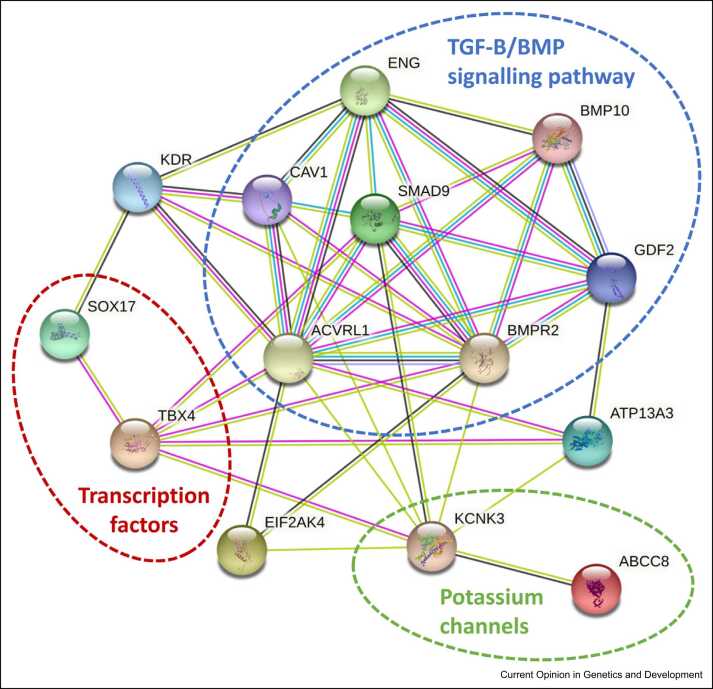
Until recently, the molecular aetiology of paediatric pulmonary hypertension (PH) was relatively poorly understood. While the TGF-β/BMP pathway was recognised as central to disease progression, genetic analyses in children were largely confined to targeted screening of risk genes in small cohorts, with clinical management extrapolated from adult data. In recent years, next-generation sequencing has highlighted notable differences in the genetic architecture underlying childhood-onset cases, with a higher genetic burden in children partly explained by comorbidities such as congenital heart disease. Here, we review recent genetic advances in paediatric PH and highlight important risk factors such as dysregulation of the transcription factors SOX17 and TBX4. Given the poorer prognosis in paediatric cases, molecular diagnosis offers a vital tool to enhance clinical care of children with PH.
直到最近,儿科肺动脉高压(PH)的分子病因学还相对了解较少。虽然 TGF-β/BMP 通路被认为是疾病进展的核心,但儿童的遗传分析主要局限于对小队列中风险基因的靶向筛选,临床管理则从成人数据中推断而来。近年来,下一代测序技术强调了儿童发病病例遗传结构的显著差异,儿童的遗传负担较高,部分原因是合并症如先天性心脏病。在这里,我们回顾了儿科 PH 的最新遗传进展,并强调了重要的危险因素,如转录因子 SOX17 和 TBX4 的失调。鉴于儿科病例的预后较差,分子诊断为提高 PH 患儿的临床护理提供了重要工具。