West China School of Public Health and West China Fourth Hospital, Sichuan University, Chengdu, 610041, China.
State Key Laboratory of Biotherapy and Cancer Center, West China Hospital, Sichuan University, Chengdu, 610041, China.
Signal Transduct Target Ther. 2022 Jun 30;7(1):206. doi: 10.1038/s41392-022-01070-3.
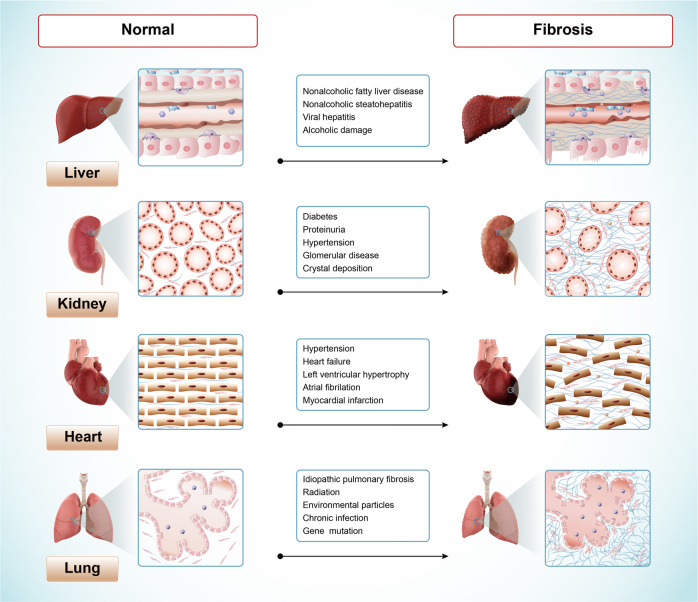
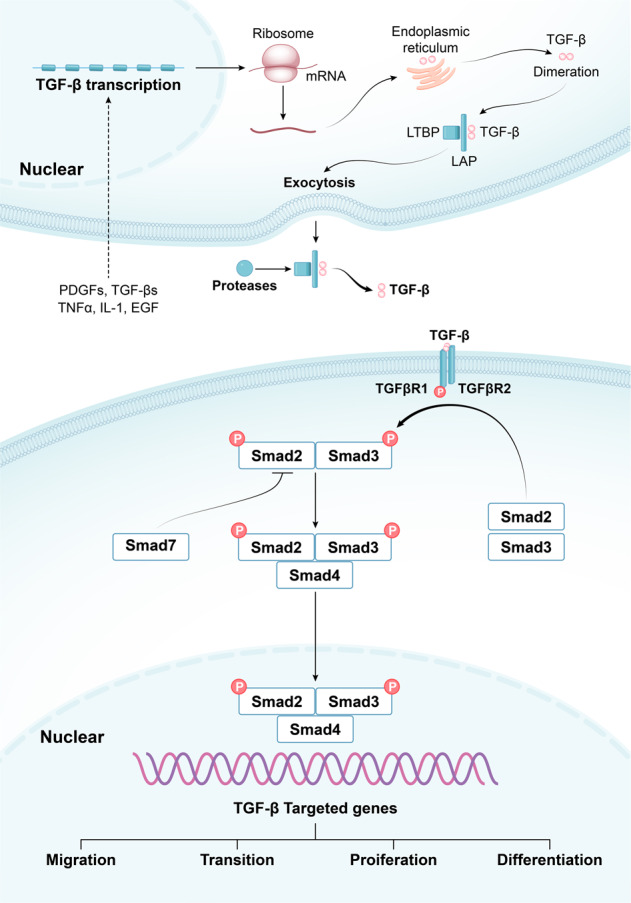
Fibrosis is characterized by the excessive extracellular matrix deposition due to dysregulated wound and connective tissue repair response. Multiple organs can develop fibrosis, including the liver, kidney, heart, and lung. Fibrosis such as liver cirrhosis, idiopathic pulmonary fibrosis, and cystic fibrosis caused substantial disease burden. Persistent abnormal activation of myofibroblasts mediated by various signals, such as transforming growth factor, platelet-derived growth factor, and fibroblast growh factor, has been recongized as a major event in the occurrence and progression of fibrosis. Although the mechanisms driving organ-specific fibrosis have not been fully elucidated, drugs targeting these identified aberrant signals have achieved potent anti-fibrotic efficacy in clinical trials. In this review, we briefly introduce the aetiology and epidemiology of several fibrosis diseases, including liver fibrosis, kidney fibrosis, cardiac fibrosis, and pulmonary fibrosis. Then, we summarise the abnormal cells (epithelial cells, endothelial cells, immune cells, and fibroblasts) and their interactions in fibrosis. In addition, we also focus on the aberrant signaling pathways and therapeutic targets that regulate myofibroblast activation, extracellular matrix cross-linking, metabolism, and inflammation in fibrosis. Finally, we discuss the anti-fibrotic drugs based on their targets and clinical trials. This review provides reference for further research on fibrosis mechanism, drug development, and clinical trials.
纤维化的特征是由于失调的创伤和结缔组织修复反应导致细胞外基质过度沉积。多个器官都可能发生纤维化,包括肝脏、肾脏、心脏和肺部。肝硬化、特发性肺纤维化和囊性纤维化等纤维化疾病给患者带来了巨大的疾病负担。持续异常的肌成纤维细胞激活是纤维化发生和进展的主要事件,这种激活由多种信号介导,如转化生长因子、血小板衍生生长因子和成纤维细胞生长因子等。尽管导致器官特异性纤维化的机制尚未完全阐明,但针对这些已鉴定的异常信号的药物在临床试验中已显示出强大的抗纤维化疗效。在这篇综述中,我们简要介绍了几种纤维化疾病的病因学和流行病学,包括肝纤维化、肾纤维化、心脏纤维化和肺纤维化。然后,我们总结了纤维化过程中异常细胞(上皮细胞、内皮细胞、免疫细胞和成纤维细胞)及其相互作用。此外,我们还重点介绍了调节肌成纤维细胞激活、细胞外基质交联、代谢和炎症的异常信号通路和治疗靶点。最后,我们根据靶点和临床试验讨论了抗纤维化药物。本文为纤维化机制、药物开发和临床试验的进一步研究提供了参考。