Department of Gastroenterological Chemotherapy, Cancer Institute Hospital of Japanese Foundation for Cancer Research, 3-8-31 Ariake, Koto-ku, Tokyo, 135-8550, Japan.
Palliative and Supportive Care Center, Osaka University Hospital, Osaka, Japan.
Sci Rep. 2022 Jun 30;12(1):11007. doi: 10.1038/s41598-022-13801-1.
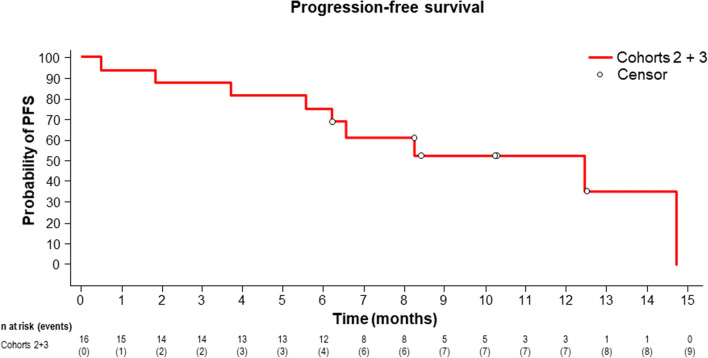
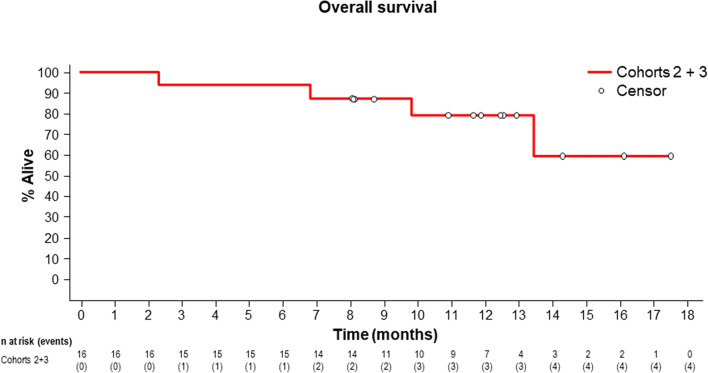
Andecaliximab (ADX) is a monoclonal antibody that inhibits matrix metalloproteinase 9 (MMP9), an extracellular enzyme involved in matrix remodeling, tumor growth, and metastasis. In preclinical models, MMP9 inhibitors have been shown to enhance the cytotoxic effects of chemotherapeutic agents and to suppress distant metastasis. In this phase Ib, multicenter study, the safety and efficacy of ADX combined with S-1 plus cisplatin (SP) or S-1 plus oxaliplatin (SOX) as a first-line treatment were evaluated in Japanese patients with advanced gastric or gastroesophageal junction (GEJ) adenocarcinoma. ADX was administrated at a dose of 800 mg every 2 weeks for the SP cohort and 1200 mg every three weeks for the SOX cohort. As of December 2019, 16 patients were enrolled (six patients in the SP cohort and 10 patients in the SOX cohort). Peripheral sensory neuropathy (69%), anorexia (63%), nausea (56%), and decreased neutrophil counts (44%) were the most common adverse events (AEs). The grade 3 or higher AEs attributed to ADX were stomatitis and abnormal hepatic function (each one patient) in the SP cohort and decreased neutrophil counts (two patients) in the SOX cohort. The objective response rate in 11 patients with measurable target lesions was 73% (8/11), based on the investigator's evaluation. Median progression-free survival was11.9 months (90% confidence interval, 5.6-16.6), and median overall survival was not reached. In conclusion, ADX combined with S-1 plus platinum demonstrated a manageable safety profile and promising clinical activity in the first-line treatment of patients with advanced gastric or GEJ adenocarcinoma.Clinical Trial Registration information: ClinicalTrials.gov Identifier: NCT02862535 (11/08/2016) and protocol ID: GS-US-296-1884.
安可达西利单抗(ADX)是一种单克隆抗体,可抑制基质金属蛋白酶 9(MMP9),后者是一种参与基质重塑、肿瘤生长和转移的细胞外酶。在临床前模型中,MMP9 抑制剂已被证明可增强化疗药物的细胞毒性作用,并抑制远处转移。在这项 Ib 期、多中心研究中,评估了 ADX 联合 S-1 加顺铂(SP)或 S-1 加奥沙利铂(SOX)作为一线治疗方案在日本晚期胃或胃食管交界(GEJ)腺癌患者中的安全性和疗效。ADX 的剂量为每 2 周 800mg(SP 队列)或每 3 周 1200mg(SOX 队列)。截至 2019 年 12 月,共纳入 16 例患者(SP 队列 6 例,SOX 队列 10 例)。最常见的不良反应(AE)为周围感觉神经病变(69%)、厌食(63%)、恶心(56%)和中性粒细胞计数减少(44%)。SP 队列中 ADX 引起的 3 级或更高级别的 AE 为口腔炎和肝功能异常(各 1 例),SOX 队列中为中性粒细胞计数减少(2 例)。根据研究者评估,11 例可测量靶病灶患者的客观缓解率为 73%(8/11)。中位无进展生存期为 11.9 个月(90%置信区间,5.6-16.6),中位总生存期未达到。总之,ADX 联合 S-1 加铂类药物在晚期胃或 GEJ 腺癌患者的一线治疗中显示出可管理的安全性和有希望的临床活性。临床试验注册信息:ClinicalTrials.gov 标识符:NCT02862535(2016 年 11 月 8 日)和方案 ID:GS-US-296-1884。