Zhang Yulong, Li Na, Chang Zhiguang, Wang Huabin, Pei Hanzhong, Zhang Dengyang, Zhang Qi, Huang Junbin, Guo Yao, Zhao Yuming, Pan Yihang, Chen Chun, Chen Yun
Edmond H. Fischer Translational Medical Research Laboratory, Scientific Research Center, The Seventh Affiliated Hospital, Sun Yat-Sen University, Shenzhen, China.
Department of Pediatrics, The Seventh Affiliated Hospital of Sun Yat-Sen University, Shenzhen, China.
Front Oncol. 2022 Jun 14;12:931527. doi: 10.3389/fonc.2022.931527. eCollection 2022.
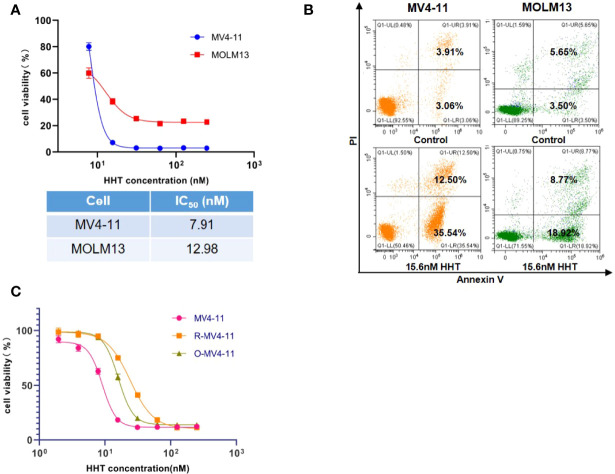
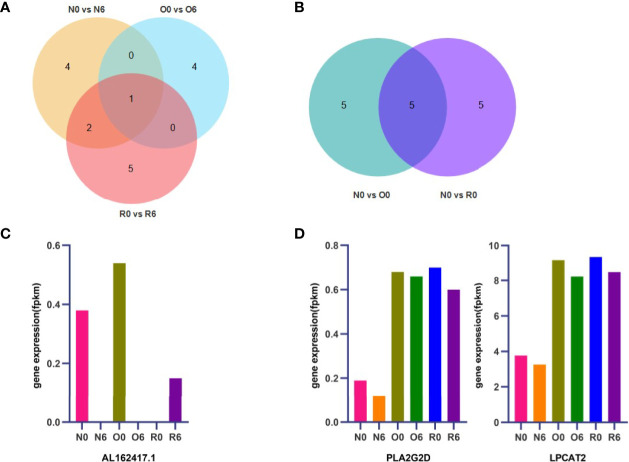
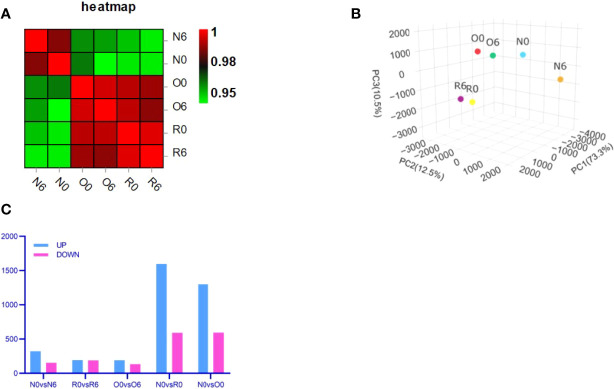
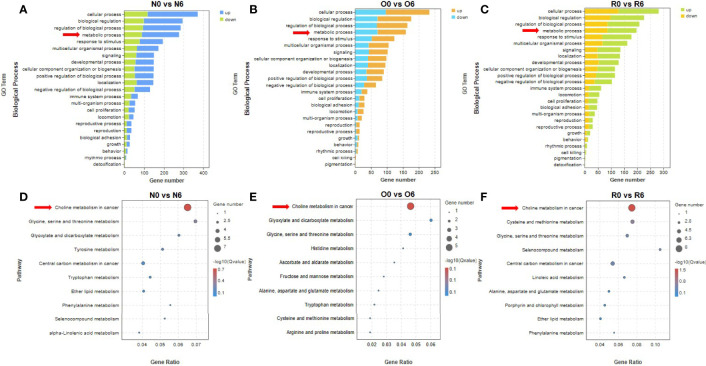
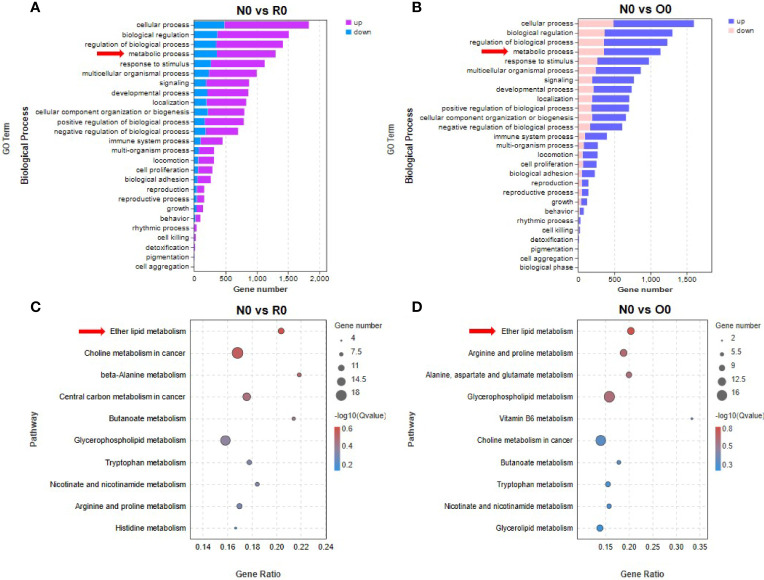
Acute myeloid leukemia (AML) is a hematologic malignancy. The overall prognosis is poor and therapeutic strategies still need to be improved. Studies have found that abnormalities in metabolisms promote the survival of AML cells. In recent years, an increasing number of studies have reported the effectiveness of a protein synthesis inhibitor, homoharringtonine (HHT), for the treatment of AML. In this study, we demonstrated that HHT effectively inhibited AML cells, especially MV4-11, a cell line representing human AML carrying the poor prognostic marker FLT3-ITD. We analyzed the transcriptome of MV4-11 cells treated with HHT, and identified the affected metabolic pathways including the choline metabolism process. In addition, we generated a line of MV4-11 cells that were resistant to HHT. The transcriptome analysis showed that the resistant mechanism was closely related to the ether lipid metabolism pathway. The key genes involved in these processes were , , and by multiple intergroup comparison and Venn analysis. In conclusion, we found that the treatment of HHT significantly changed metabolic signatures of AML cells, which may contribute to the precise clinical use of HHT and the development of novel strategies to treat HHT-resistant AML.
急性髓系白血病(AML)是一种血液系统恶性肿瘤。其总体预后较差,治疗策略仍需改进。研究发现,代谢异常促进了AML细胞的存活。近年来,越来越多的研究报道了蛋白质合成抑制剂高三尖杉酯碱(HHT)治疗AML的有效性。在本研究中,我们证明HHT能有效抑制AML细胞,尤其是MV4-11细胞,这是一种代表携带预后不良标志物FLT3-ITD的人类AML的细胞系。我们分析了用HHT处理的MV4-11细胞的转录组,并确定了受影响的代谢途径,包括胆碱代谢过程。此外,我们构建了对HHT耐药的MV4-11细胞系。转录组分析表明,耐药机制与醚脂代谢途径密切相关。通过多组间比较和维恩分析,参与这些过程的关键基因是 、 和 。总之,我们发现HHT治疗显著改变了AML细胞的代谢特征,这可能有助于HHT的精准临床应用以及治疗HHT耐药AML的新策略的开发。