.
a:1:{s:5:"en_US";s:22:"University of Cagliari";}.
Acta Biomed. 2022 Jul 1;93(3):e2022253. doi: 10.23750/abm.v93i3.13140.
The World Health Organization has placed eating disorders among the priority mental illnesses for children and adolescents given the risk they imply for their health. Recognizing the risk factors associated with this problem can serve as the basis for the design of timely and effective interventions. The objective of the study was to identify the factors associated with eating behavior in adolescents through a systematic review.
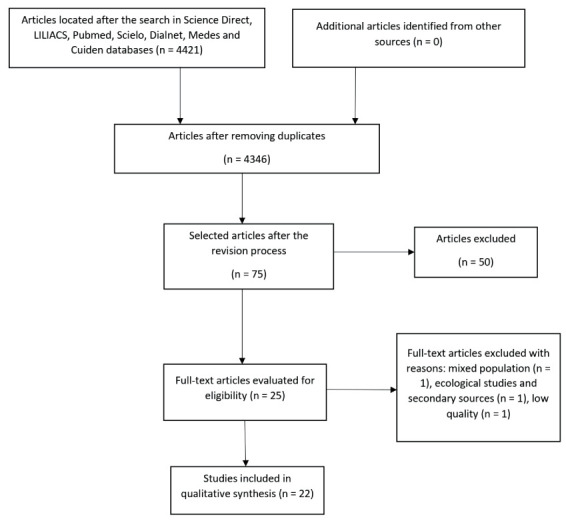
Systematic review. Search of the literature in the bibliographic sources CINAHL, CUIDEN, Pubmed, Dialnet, SCIELO and Science Direct. The search was conducted in October and November 2020. The search terms were Eating Disorders, Food Intake, and Adolescents. The evaluation of the methodological quality was carried out using a specific guide for observational epidemiological studies. A narrative synthesis of the findings was made. Additionally, the vote counting and sign test technique was applied.
25 studies were selected. The associated factors were body dissatisfaction, female gender, depression, low self-esteem, higher BMI that increases the risk of eating disorders.
a high impact of psychological factors was observed. These should be considered in the design of effective interventions to prevent this disease, although the search needs to be broadened to identify larger and more complex studies that allow for a more comprehensive review.
鉴于饮食失调会对儿童和青少年的健康造成风险,世界卫生组织已将其列为儿童和青少年的重点精神疾病之一。认识到与该问题相关的风险因素可以为及时有效的干预措施的设计提供依据。本研究的目的是通过系统评价确定与青少年饮食行为相关的因素。
系统评价。在 CINAHL、CUIDEN、Pubmed、Dialnet、SCIELO 和 Science Direct 等文献来源中进行文献检索。检索于 2020 年 10 月至 11 月进行。检索词为饮食失调、食物摄入和青少年。使用专门针对观察性流行病学研究的指南对方法学质量进行评估。对研究结果进行了叙述性综合。此外,还应用了计点计数和符号检验技术。
共选择了 25 项研究。相关因素包括身体不满、女性性别、抑郁、低自尊、BMI 较高,这会增加饮食失调的风险。
观察到心理因素的高影响。在设计预防这种疾病的有效干预措施时应考虑这些因素,尽管需要扩大搜索范围,以确定更大、更复杂的研究,从而进行更全面的审查。