Zhao Chenxuan, Liao Yong, Rahaman Abdul, Kumar Vijay
School of Engineering, College of Technology and Business, Guangzhou, China.
Center of Scientific Research, Maoming People's Hospital, Maoming, China.
Front Aging Neurosci. 2022 Jun 15;14:892518. doi: 10.3389/fnagi.2022.892518. eCollection 2022.
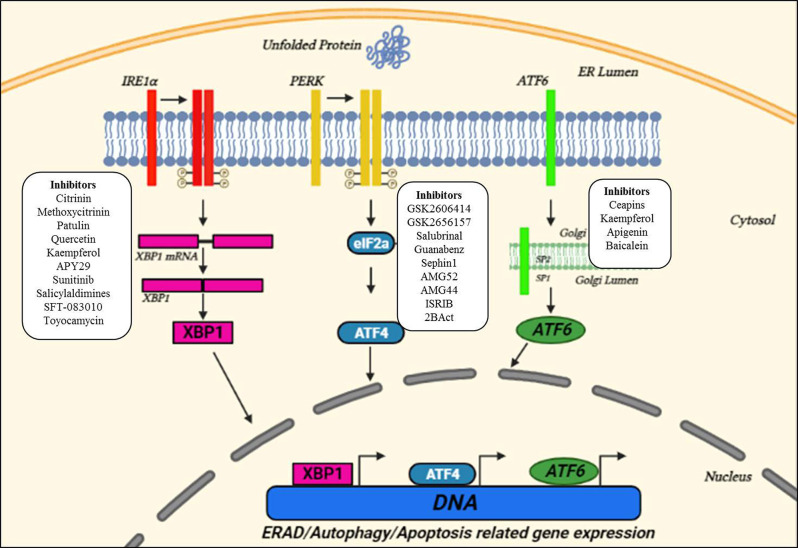
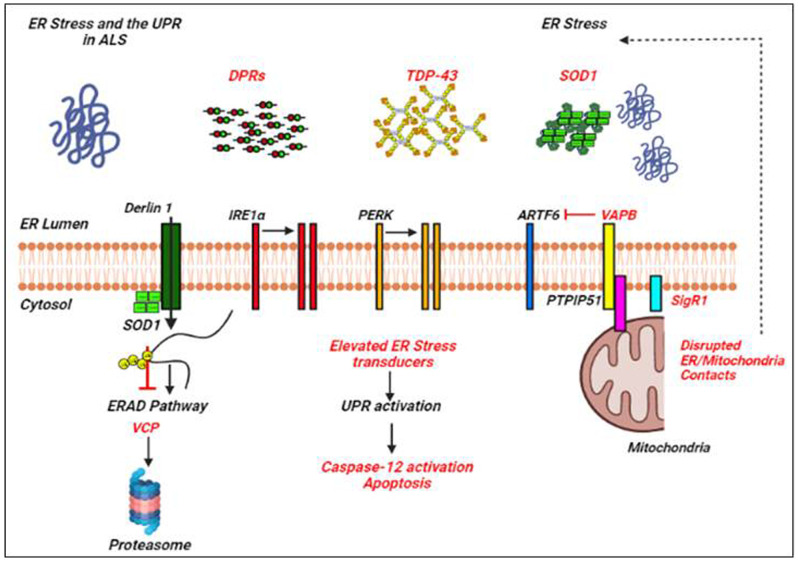
Biological stress due to the aberrant buildup of misfolded/unfolded proteins in the endoplasmic reticulum (ER) is considered a key reason behind many human neurodegenerative diseases. Cells adapted to ER stress through the activation of an integrated signal transduction pathway known as the unfolded protein response (UPR). Amyotrophic lateral sclerosis (ALS) is a neurodegenerative disease characterized by degeneration of the motor system. It has largely been known that ER stress plays an important role in the pathogenesis of ALS through the dysregulation of proteostasis. Moreover, accumulating evidence indicates that ER stress and UPR are important players in TDP-43 pathology. In this mini-review, the complex interplay between ER stress and the UPR in ALS and TDP-43 pathology will be explored by taking into account the studies from and models of ALS. We also discuss therapeutic strategies to control levels of ER stress and UPR signaling components that have contrasting effects on ALS pathogenesis.
内质网(ER)中错误折叠/未折叠蛋白质的异常积累所导致的生物应激被认为是许多人类神经退行性疾病背后的关键原因。细胞通过激活一种称为未折叠蛋白反应(UPR)的综合信号转导途径来适应内质网应激。肌萎缩侧索硬化症(ALS)是一种以运动系统退化为特征的神经退行性疾病。人们普遍认为内质网应激通过蛋白稳态失调在ALS的发病机制中起重要作用。此外,越来越多的证据表明内质网应激和未折叠蛋白反应在TDP-43病理学中起着重要作用。在这篇小型综述中,我们将结合来自ALS模型和 模型的研究,探讨内质网应激和未折叠蛋白反应在ALS和TDP-43病理学中的复杂相互作用。我们还将讨论控制内质网应激水平和未折叠蛋白反应信号成分的治疗策略,这些成分对ALS发病机制有相反的影响。