Karpinska Barbara, Razak Nurhayati, Shaw Daniel S, Plumb William, Van De Slijke Eveline, Stephens Jennifer, De Jaeger Geert, Murcha Monika W, Foyer Christine H
School of Biosciences, College of Life and Environmental Sciences, University of Birmingham, Birmingham, United Kingdom.
Centre for Plant Sciences, School of Biology, Faculty of Biological Sciences, University of Leeds, Leeds, United Kingdom.
Front Plant Sci. 2022 Jun 16;13:875799. doi: 10.3389/fpls.2022.875799. eCollection 2022.
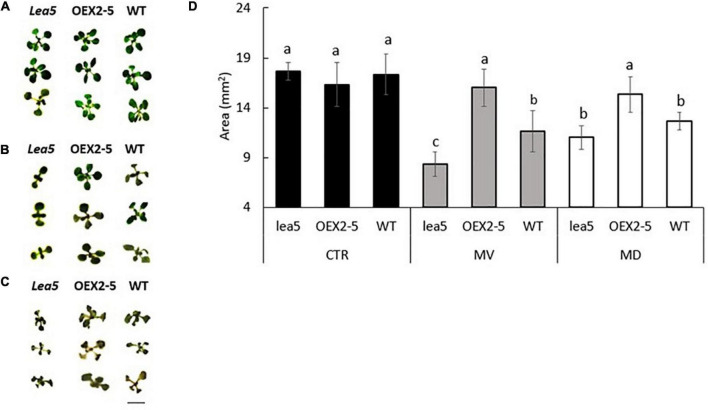
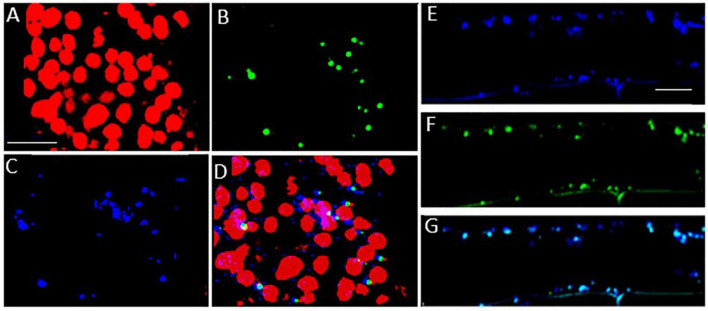
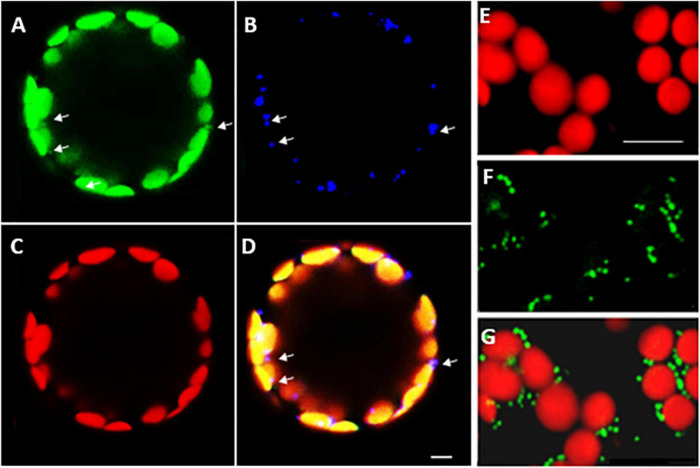
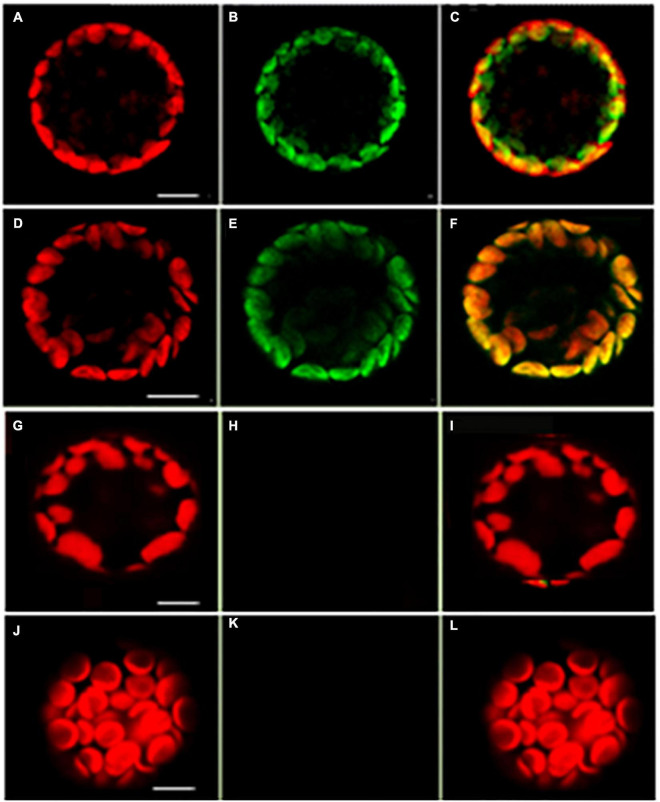
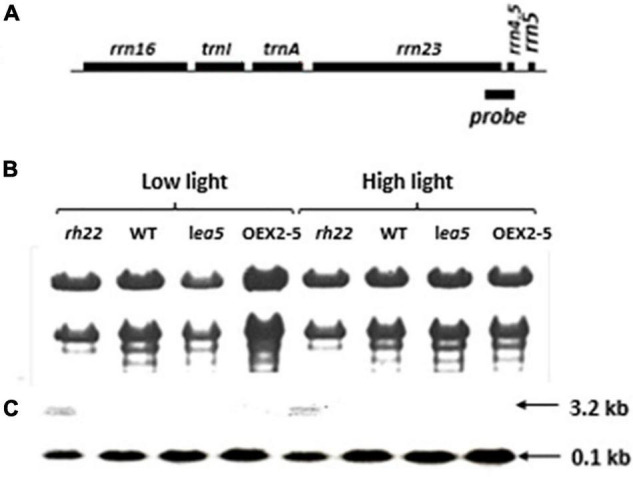
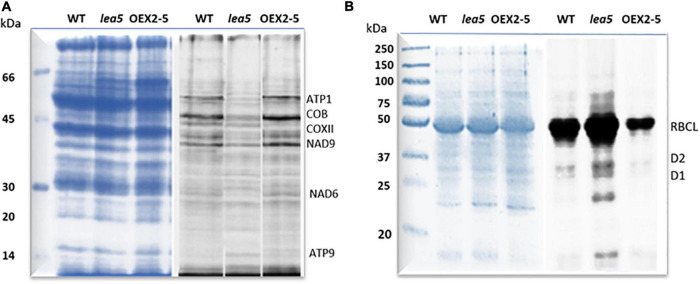
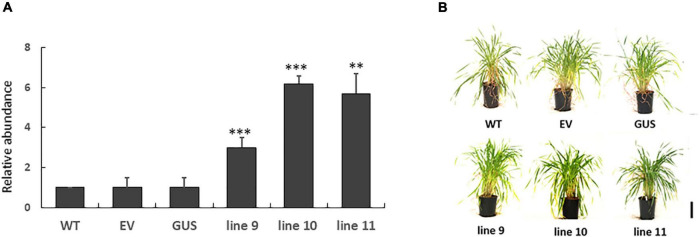
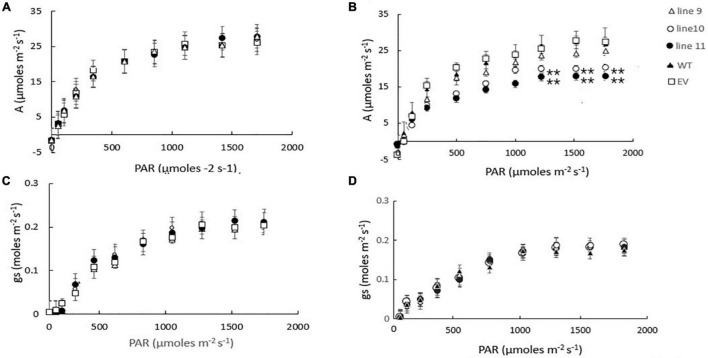
The late embryogenesis abundant (LEA)5 protein is predominantly expressed in Arabidopsis leaves in the dark, the levels of transcripts decreasing rapidly upon illumination. LEA5 is important in plant responses to environmental stresses but the mechanisms involved have not been elucidated. We therefore explored LEA5 functions in Arabidopsis mutants () and transgenic Arabidopsis plants constitutively expressing LEA5 (OEX 2-5), as well as in transgenic barley lines expressing the Arabidopsis gene. The OEX 2-5 plants grew better than controls and mutants in the presence of the prooxidants methyl viologen and menadione. Confocal microscopy of Arabidopsis mesophyll protoplasts expressing a LEA5-YFP fusion protein demonstrated that LEA5 could be localized to chloroplasts as well as mitochondria in Arabidopsis protoplasts. Tandem affinity purification (TAP) analysis revealed LEA5 interacts with the chloroplast DEAD-box ATP-dependent RNA helicase 22 (RH22) in Arabidopsis cells. Split YFP analysis confirmed the interaction between RH22 and LEA5 in chloroplasts. The abundance of translated protein products in chloroplasts was decreased in transgenic Arabidopsis plants and increased in knockout mutants. Conversely, the abundance of translated mitochondrial protein products was increased in OEX 2-5 plants and decreased in mutants. Mitochondrial electron transport rates were higher in the OEX 2-5 plants than the wild type. The transformed barley lines expressing the Arabidopsis LEA5 had increased seed yields, but they showed a greater drought-induced inhibition of photosynthesis than controls. Taken together, these data demonstrate that LEA5 regulates organellar translation, in order to enhance respiration relative to photosynthesis in response to stress.
胚胎后期丰富(LEA)5蛋白主要在黑暗中的拟南芥叶片中表达,光照后转录本水平迅速下降。LEA5在植物对环境胁迫的反应中很重要,但相关机制尚未阐明。因此,我们在拟南芥突变体()和组成型表达LEA5的转基因拟南芥植株(OEX 2-5)以及表达拟南芥基因的转基因大麦品系中探索了LEA5的功能。在存在促氧化剂甲基紫精和甲萘醌的情况下,OEX 2-5植株比对照和突变体生长得更好。对表达LEA5-YFP融合蛋白的拟南芥叶肉原生质体进行共聚焦显微镜观察表明,LEA5可以定位于拟南芥原生质体中的叶绿体和线粒体。串联亲和纯化(TAP)分析显示,LEA5在拟南芥细胞中与叶绿体DEAD-box ATP依赖性RNA解旋酶22(RH22)相互作用。分裂YFP分析证实了RH22和LEA5在叶绿体中的相互作用。转基因拟南芥植株叶绿体中翻译后的蛋白质产物丰度降低,而在敲除突变体中增加。相反,OEX 2-5植株中线粒体蛋白质产物的丰度增加,而在突变体中降低。OEX 2-5植株的线粒体电子传递速率高于野生型。表达拟南芥LEA5的转基因大麦品系种子产量增加,但它们在干旱诱导下的光合作用抑制比对照更大。综上所述,这些数据表明LEA5调节细胞器翻译,以便在应激反应中相对于光合作用增强呼吸作用。