
《死亡之舞》——中性粒细胞是影响口腔癌结局的相互作用伙伴。
The 'Danse Macabre'-Neutrophils the Interactive Partner Affecting Oral Cancer Outcomes.
机构信息
ACTV Research Group, Division of Basic and Clinical Oral Sciences, Centre for Oral Health Research, Melbourne Dental School, Royal Dental Hospital, The University of Melbourne, Carlton, VIC, Australia.
出版信息
Front Immunol. 2022 Jun 16;13:894021. doi: 10.3389/fimmu.2022.894021. eCollection 2022.
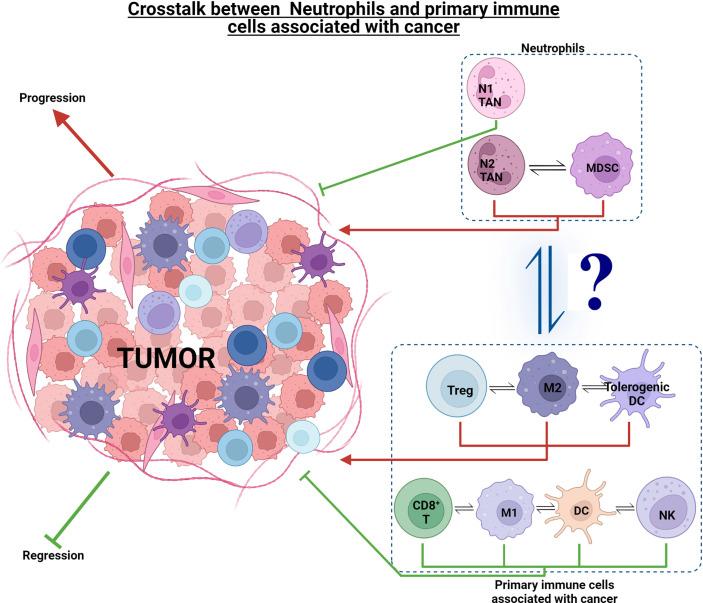
Over the past few decades, tremendous advances in the prevention, diagnosis, and treatment of cancer have taken place. However for head and neck cancers, including oral cancer, the overall survival rate is below 50% and they remain the seventh most common malignancy worldwide. These cancers are, commonly, aggressive, genetically complex, and difficult to treat and the delay, which often occurs between early recognition of symptoms and diagnosis, and the start of treatment of these cancers, is associated with poor prognosis. Cancer development and progression occurs in concert with alterations in the surrounding stroma, with the immune system being an essential element in this process. Despite neutrophils having major roles in the pathology of many diseases, they were thought to have little impact on cancer development and progression. Recent studies are now challenging this notion and placing neutrophils as central interactive players with other immune and tumor cells in affecting cancer pathology. This review focuses on how neutrophils and their sub-phenotypes, N1, N2, and myeloid-derived suppressor cells, both directly and indirectly affect the anti-tumor and pro-tumor immune responses. Emphasis is placed on what is currently known about the interaction of neutrophils with myeloid innate immune cells (such as dendritic cells and macrophages), innate lymphoid cells, natural killer cells, and fibroblasts to affect the tumor microenvironment and progression of oral cancer. A better understanding of this dialog will allow for improved therapeutics that concurrently target several components of the tumor microenvironment, increasing the possibility of constructive and positive outcomes for oral cancer patients. For this review, PubMed, Web of Science, and Google Scholar were searched for manuscripts using keywords and combinations thereof of "oral cancer, OSCC, neutrophils, TANs, MDSC, immune cells, head and neck cancer, and tumor microenvironment" with a focus on publications from 2018 to 2021.
在过去的几十年中,癌症的预防、诊断和治疗取得了巨大的进展。然而,对于头颈部癌症,包括口腔癌,总体存活率低于 50%,它们仍然是全球第七常见的恶性肿瘤。这些癌症通常具有侵袭性、遗传复杂性,并且难以治疗,从早期症状识别到开始治疗的延迟与预后不良有关。癌症的发展和进展与周围基质的改变同时发生,免疫系统是这个过程中的一个重要因素。尽管中性粒细胞在许多疾病的病理学中起主要作用,但它们被认为对癌症的发展和进展影响不大。最近的研究现在正在挑战这一观点,并将中性粒细胞作为与其他免疫和肿瘤细胞相互作用的中心参与者,影响癌症病理学。这篇综述重点介绍了中性粒细胞及其亚群(N1、N2 和髓源性抑制细胞)如何直接和间接地影响抗肿瘤和促肿瘤免疫反应。强调了目前已知的中性粒细胞与髓样先天免疫细胞(如树突状细胞和巨噬细胞)、先天淋巴样细胞、自然杀伤细胞和成纤维细胞相互作用,影响口腔癌的肿瘤微环境和进展。更好地了解这种对话将允许开发同时针对肿瘤微环境的几个成分的改良疗法,增加口腔癌患者获得建设性和积极结果的可能性。为了进行本次综述,使用了“oral cancer、OSCC、neutrophils、TANs、MDSC、immune cells、head and neck cancer 和 tumor microenvironment”等关键词和它们的组合,在 PubMed、Web of Science 和 Google Scholar 上搜索了 2018 年至 2021 年发表的与口腔癌、头颈癌和肿瘤微环境相关的文献。



 Zotero 插件