Marx Christian, Sonnemann Jürgen, Maddocks Oliver D K, Marx-Blümel Lisa, Beyer Mandy, Hoelzer Doerte, Thierbach René, Maletzki Claudia, Linnebacher Michael, Heinzel Thorsten, Krämer Oliver H
Department of Toxicology, University Medical Center, Johannes Gutenberg University Mainz, Building 905, Mainz, Germany.
Department of Biochemistry, Center for Molecular Biomedicine (CMB), Institute for Biochemistry and Biophysics, Friedrich Schiller University of Jena, Jena, Germany.
Cancer Metab. 2022 Jul 4;10(1):10. doi: 10.1186/s40170-022-00286-9.
Metabolic adaptations can allow cancer cells to survive DNA-damaging chemotherapy. This unmet clinical challenge is a potential vulnerability of cancer. Accordingly, there is an intense search for mechanisms that modulate cell metabolism during anti-tumor therapy. We set out to define how colorectal cancer CRC cells alter their metabolism upon DNA replication stress and whether this provides opportunities to eliminate such cells more efficiently.
We incubated p53-positive and p53-negative permanent CRC cells and short-term cultured primary CRC cells with the topoisomerase-1 inhibitor irinotecan and other drugs that cause DNA replication stress and consequently DNA damage. We analyzed pro-apoptotic mitochondrial membrane depolarization and cell death with flow cytometry. We evaluated cellular metabolism with immunoblotting of electron transport chain (ETC) complex subunits, analysis of mitochondrial mRNA expression by qPCR, MTT assay, measurements of oxygen consumption and reactive oxygen species (ROS), and metabolic flux analysis with the Seahorse platform. Global metabolic alterations were assessed using targeted mass spectrometric analysis of extra- and intracellular metabolites.
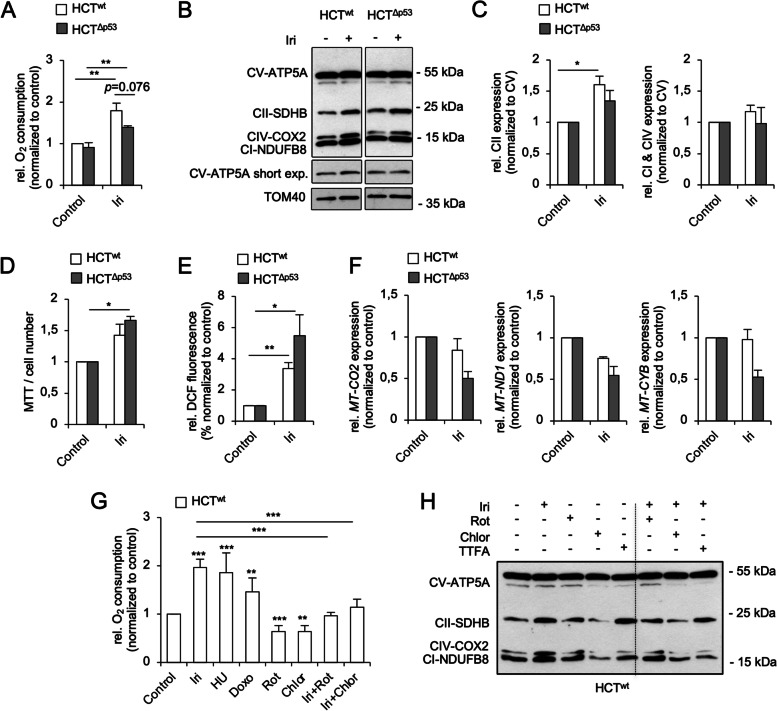
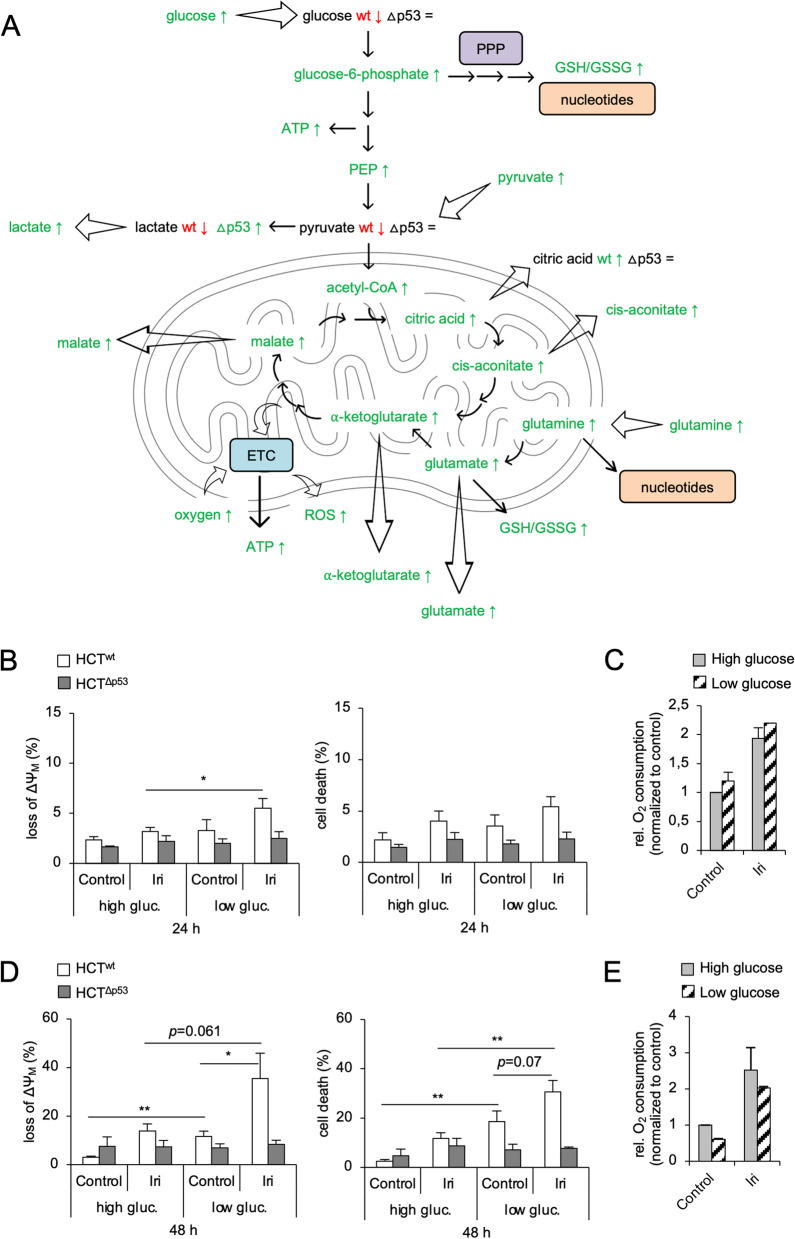
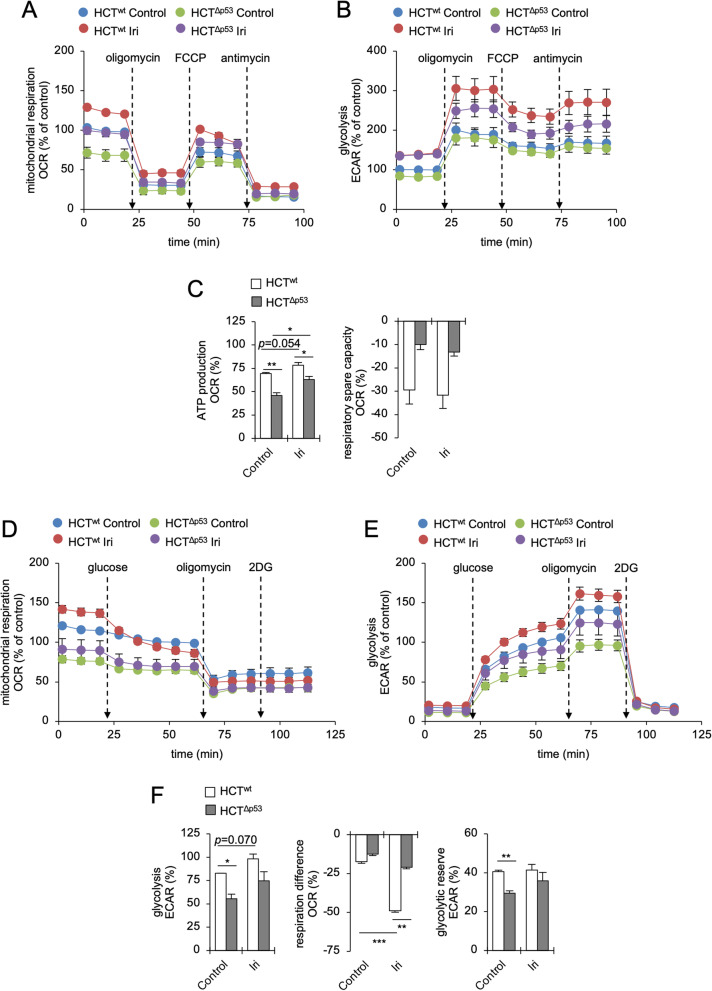
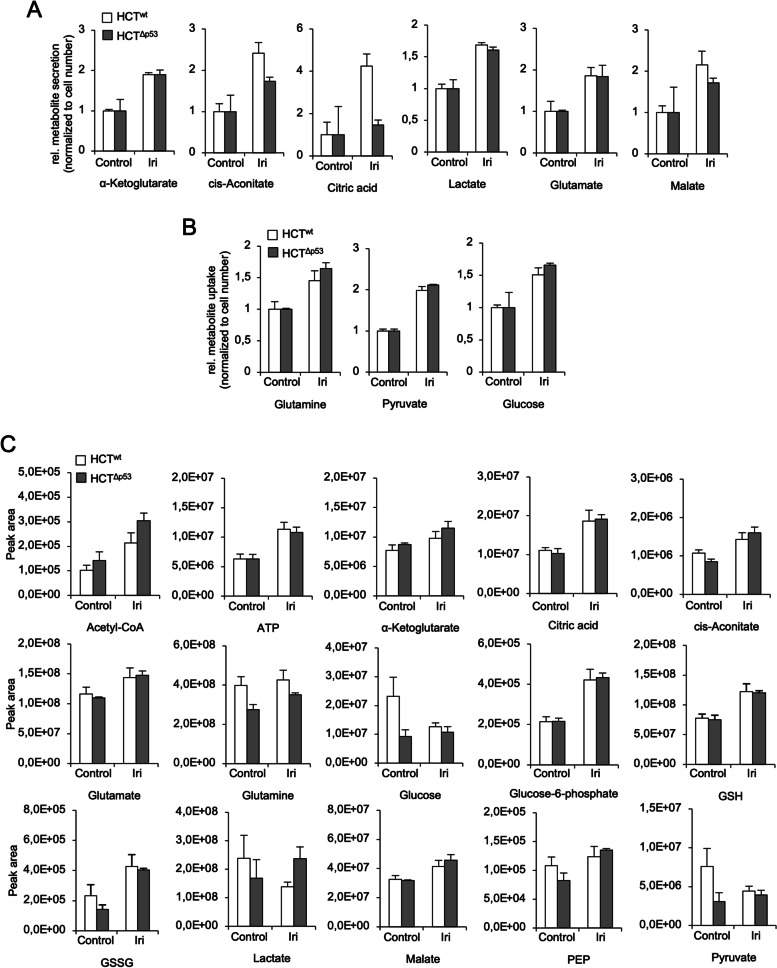
Chemotherapeutics that cause DNA replication stress induce metabolic changes in p53-positive and p53-negative CRC cells. Irinotecan enhances glycolysis, oxygen consumption, mitochondrial ETC activation, and ROS production in CRC cells. This is connected to increased levels of electron transport chain complexes involving mitochondrial translation. Mass spectrometric analysis reveals global metabolic adaptations of CRC cells to irinotecan, including the glycolysis, tricarboxylic acid cycle, and pentose phosphate pathways. P53-proficient CRC cells, however, have a more active metabolism upon DNA replication stress than their p53-deficient counterparts. This metabolic switch is a vulnerability of p53-positive cells to irinotecan-induced apoptosis under glucose-restricted conditions.
Drugs that cause DNA replication stress increase the metabolism of CRC cells. Glucose restriction might improve the effectiveness of classical chemotherapy against p53-positive CRC cells. The topoisomerase-1 inhibitor irinotecan and other chemotherapeutics that cause DNA damage induce metabolic adaptations in colorectal cancer (CRC) cells irrespective of their p53 status. Irinotecan enhances the glycolysis and oxygen consumption in CRC cells to deliver energy and biomolecules necessary for DNA repair and their survival. Compared to p53-deficient cells, p53-proficient CRC cells have a more active metabolism and use their intracellular metabolites more extensively. This metabolic switch creates a vulnerability to chemotherapy under glucose-restricted conditions for p53-positive cells.
代谢适应可使癌细胞在DNA损伤化疗中存活。这一未满足的临床挑战是癌症的潜在弱点。因此,人们正在深入寻找在抗肿瘤治疗期间调节细胞代谢的机制。我们着手确定结直肠癌(CRC)细胞在DNA复制应激时如何改变其代谢,以及这是否提供了更有效地消除此类细胞的机会。
我们用拓扑异构酶-1抑制剂伊立替康和其他导致DNA复制应激并进而导致DNA损伤的药物处理p53阳性和p53阴性的永久性CRC细胞以及短期培养的原发性CRC细胞。我们通过流式细胞术分析促凋亡线粒体膜去极化和细胞死亡。我们通过电子传递链(ETC)复合体亚基的免疫印迹、qPCR分析线粒体mRNA表达、MTT测定、氧消耗和活性氧(ROS)测量以及使用海马平台进行代谢通量分析来评估细胞代谢。使用细胞外和细胞内代谢物的靶向质谱分析评估全局代谢变化。
导致DNA复制应激的化疗药物会在p53阳性和p53阴性的CRC细胞中诱导代谢变化。伊立替康增强CRC细胞中的糖酵解、氧消耗、线粒体ETC激活和ROS产生。这与涉及线粒体翻译的电子传递链复合体水平增加有关。质谱分析揭示了CRC细胞对伊立替康的全局代谢适应,包括糖酵解、三羧酸循环和磷酸戊糖途径。然而,p53功能正常的CRC细胞在DNA复制应激时比其p53缺陷的对应细胞具有更活跃的代谢。这种代谢转换是p53阳性细胞在葡萄糖限制条件下对伊立替康诱导的凋亡的弱点。
导致DNA复制应激的药物会增加CRC细胞的代谢。葡萄糖限制可能会提高经典化疗对p53阳性CRC细胞的有效性。拓扑异构酶-1抑制剂伊立替康和其他导致DNA损伤的化疗药物会在结直肠癌(CRC)细胞中诱导代谢适应,无论其p53状态如何。伊立替康增强CRC细胞中的糖酵解和氧消耗,以提供DNA修复及其存活所需的能量和生物分子。与p53缺陷细胞相比,p53功能正常的CRC细胞具有更活跃的代谢,并更广泛地利用其细胞内代谢物。这种代谢转换使p53阳性细胞在葡萄糖限制条件下易受化疗影响。