Varghese Elizabeth, Samuel Samson Mathews, Líšková Alena, Samec Marek, Kubatka Peter, Büsselberg Dietrich
Department of Physiology and Biophysics, Weill Cornell Medicine-Qatar, Education City, Qatar Foundation, Doha 24144, Qatar.
Department of Obstetrics and Gynecology, Jessenius Faculty of Medicine, Comenius University in Bratislava, 03601 Martin, Slovakia.
Cancers (Basel). 2020 Aug 12;12(8):2252. doi: 10.3390/cancers12082252.
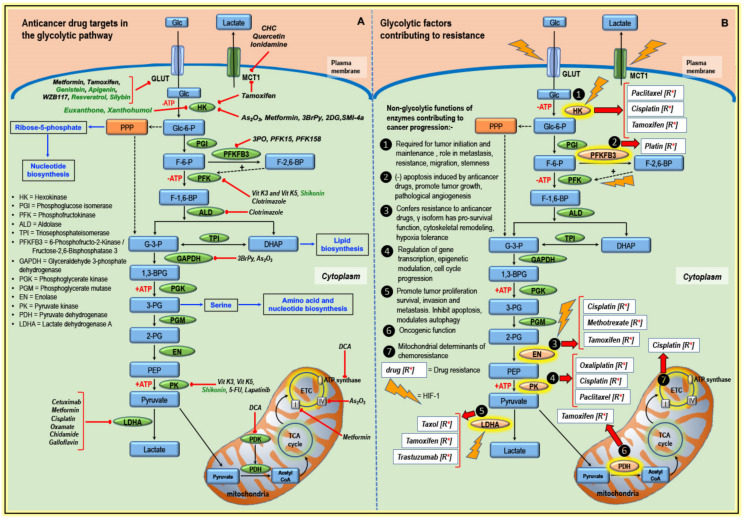
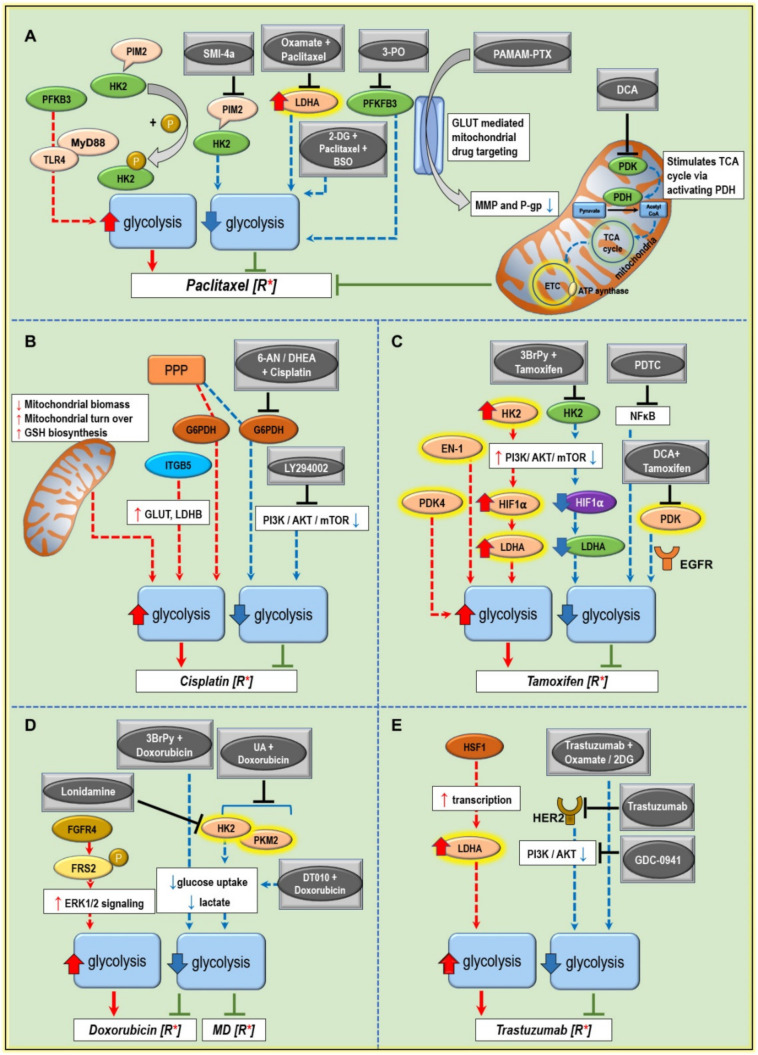
Breast cancer (BC) is the most prevalent cancer in women. BC is heterogeneous, with distinct phenotypical and morphological characteristics. These are based on their gene expression profiles, which divide BC into different subtypes, among which the triple-negative breast cancer (TNBC) subtype is the most aggressive one. The growing interest in tumor metabolism emphasizes the role of altered glucose metabolism in driving cancer progression, response to cancer treatment, and its distinct role in therapy resistance. Alterations in glucose metabolism are characterized by increased uptake of glucose, hyperactivated glycolysis, decreased oxidative phosphorylation (OXPHOS) component, and the accumulation of lactate. These deviations are attributed to the upregulation of key glycolytic enzymes and transporters of the glucose metabolic pathway. Key glycolytic enzymes such as hexokinase, lactate dehydrogenase, and enolase are upregulated, thereby conferring resistance towards drugs such as cisplatin, paclitaxel, tamoxifen, and doxorubicin. Besides, drug efflux and detoxification are two energy-dependent mechanisms contributing to resistance. The emergence of resistance to chemotherapy can occur at an early or later stage of the treatment, thus limiting the success and outcome of the therapy. Therefore, understanding the aberrant glucose metabolism in tumors and its link in conferring therapy resistance is essential. Using combinatory treatment with metabolic inhibitors, for example, 2-deoxy-D-glucose (2-DG) and metformin, showed promising results in countering therapy resistance. Newer drug designs such as drugs conjugated to sugars or peptides that utilize the enhanced expression of tumor cell glucose transporters offer selective and efficient drug delivery to cancer cells with less toxicity to healthy cells. Last but not least, naturally occurring compounds of plants defined as phytochemicals manifest a promising approach for the eradication of cancer cells via suppression of essential enzymes or other compartments associated with glycolysis. Their benefits for human health open new opportunities in therapeutic intervention, either alone or in combination with chemotherapeutic drugs. Importantly, phytochemicals as efficacious instruments of anticancer therapy can suppress events leading to chemoresistance of cancer cells. Here, we review the current knowledge of altered glucose metabolism in contributing to resistance to classical anticancer drugs in BC treatment and various ways to target the aberrant metabolism that will serve as a promising strategy for chemosensitizing tumors and overcoming resistance in BC.
乳腺癌(BC)是女性中最常见的癌症。乳腺癌具有异质性,具有独特的表型和形态特征。这些特征基于其基因表达谱,该谱将乳腺癌分为不同亚型,其中三阴性乳腺癌(TNBC)亚型是最具侵袭性的。对肿瘤代谢的兴趣日益浓厚,这凸显了葡萄糖代谢改变在推动癌症进展、对癌症治疗的反应及其在治疗耐药性中的独特作用。葡萄糖代谢的改变表现为葡萄糖摄取增加、糖酵解过度激活、氧化磷酸化(OXPHOS)成分减少以及乳酸积累。这些偏差归因于葡萄糖代谢途径中关键糖酵解酶和转运蛋白的上调。关键糖酵解酶如己糖激酶、乳酸脱氢酶和烯醇化酶上调,从而赋予对顺铂、紫杉醇、他莫昔芬和阿霉素等药物的耐药性。此外,药物外排和解毒是导致耐药性的两种能量依赖性机制。化疗耐药性可在治疗的早期或晚期出现,从而限制了治疗的成功率和效果。因此,了解肿瘤中异常的葡萄糖代谢及其与赋予治疗耐药性的联系至关重要。例如,使用与代谢抑制剂如2-脱氧-D-葡萄糖(2-DG)和二甲双胍联合治疗,在对抗治疗耐药性方面显示出有希望的结果。新型药物设计,如与糖或肽缀合的药物,利用肿瘤细胞葡萄糖转运蛋白的增强表达,为癌细胞提供选择性和高效的药物递送,对健康细胞的毒性较小。最后但同样重要的是,被定义为植物化学物质的植物天然化合物显示出一种有前景的方法,即通过抑制与糖酵解相关的必需酶或其他部分来根除癌细胞。它们对人类健康的益处为单独或与化疗药物联合的治疗干预开辟了新机会。重要的是,植物化学物质作为抗癌治疗的有效工具,可以抑制导致癌细胞化疗耐药的事件。在这里,我们综述了目前关于葡萄糖代谢改变在乳腺癌治疗中导致对经典抗癌药物耐药性方面的知识,以及针对异常代谢的各种方法,这些方法将作为使肿瘤对化疗敏感并克服乳腺癌耐药性的有前景策略。