Healthcare Excellence Canada, Ottawa, Ontario, Canada
Health Quality Programs, Queen's University, Kingston, Ontario, Canada.
BMJ Open Qual. 2022 Jul;11(3). doi: 10.1136/bmjoq-2021-001581.
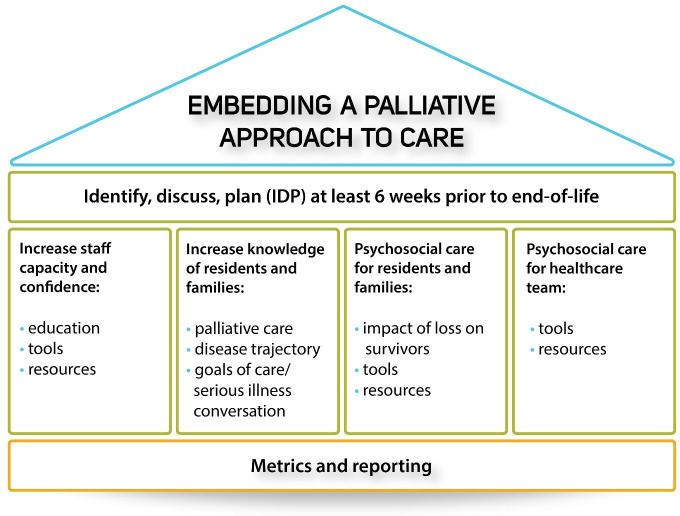
Embedding a Palliative Approach to Care (EPAC) is a model that helps shift the culture in long-term care (LTC) so that residents who could benefit from palliative care are identified early. Healthcare Excellence Canada supported the implementation of EPAC in seven teams from across Canada between August 2018 and September 2019.
To identify effective strategies for supporting the early identification of palliative care needs to improve the quality of life of residents in LTC.
Training methods on the EPAC model included a combination of face-to-face education (national and regional workshops), online learning (webinars and access to an online platform) and expert coaching. Each team adapted EPAC based on their organisational context and jurisdictional requirements for advance care planning.
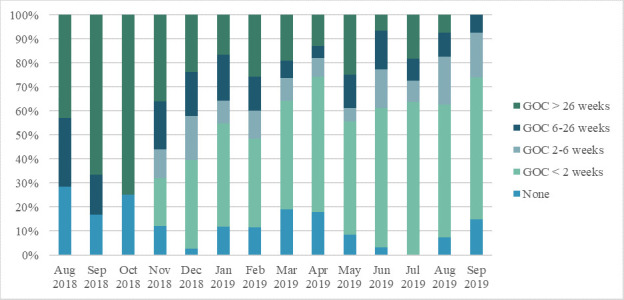
Teams tracked their progress by collecting monthly data on the number of residents who died, date of their most recent goals of care (GOCs) conversation, location of death and number of emergency department (ED) transfers in the last 3 months of life. Teams also shared their implementation strategies including successes, barriers and lessons.
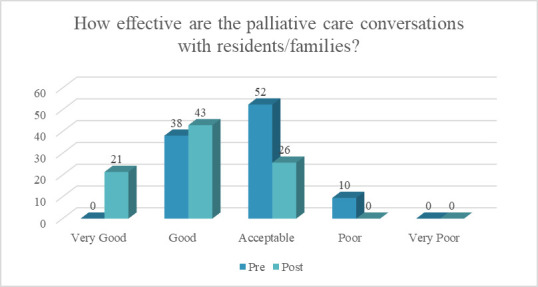
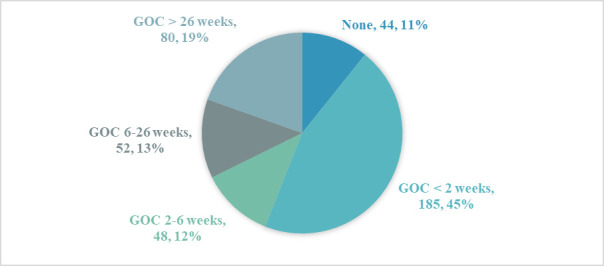
Implementation of EPAC required leadership support and dedicated time for changing how palliative care is perceived in LTC. Based on 409 resident deaths, 89% (365) had documented GOC conversations; 78% (318) had no transfers to the ED within the last 3 months of life; and 81% (333) died at home. A monthly review of the results showed that teams were having earlier GOC conversations with residents. Teams also reported improvements in the quality of care provided to residents and their families.
EPAC was successfully adapted and adopted to the organisational contexts of homes participating in the collaborative.
“将姑息治疗方法融入护理(EPAC)”是一种模式,有助于改变长期护理(LTC)的文化,以便尽早识别那些可能受益于姑息治疗的居民。加拿大卓越医疗保健中心支持在 2018 年 8 月至 2019 年 9 月期间,在加拿大的七个团队中实施 EPAC。
确定支持早期识别姑息治疗需求的有效策略,以提高长期护理居民的生活质量。
EPAC 模型的培训方法包括面对面教育(国家和区域研讨会)、在线学习(网络研讨会和在线平台访问)和专家辅导的结合。每个团队都根据其组织背景和区域内的预先护理计划要求,对 EPAC 进行了调整。
各团队通过每月收集死亡居民人数、最近一次关怀目标(GOC)对话日期、死亡地点以及生命最后 3 个月内急诊部(ED)转院次数的数据,来跟踪其进展。团队还分享了实施策略,包括成功、障碍和经验教训。
EPAC 的实施需要领导层的支持和投入时间,以改变人们对长期护理中姑息治疗的看法。根据 409 名居民的死亡情况,89%(365 人)有记录的 GOC 对话;78%(318 人)生命最后 3 个月内没有转到 ED;81%(333 人)在家中去世。每月对结果进行审查表明,团队与居民进行了更早的 GOC 对话。团队还报告说,向居民及其家属提供的护理质量有所提高。
EPAC 成功地适应并采用了参与合作的家庭的组织背景。