Department of Biosciences, Biotechnologies and Biopharmaceutics, University of Bari "Aldo Moro", Bari, Italy.
Center for Synaptic Neuroscience and Technology, Istituto Italiano di Tecnologia, Genova, Italy.
Cell Death Dis. 2022 Jul 5;13(7):582. doi: 10.1038/s41419-022-05025-y.
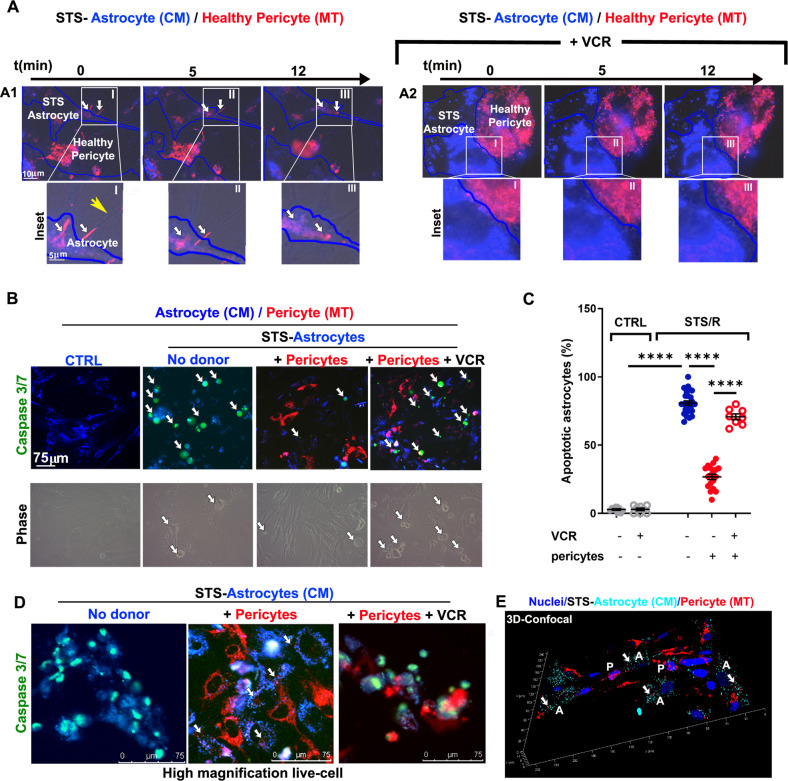
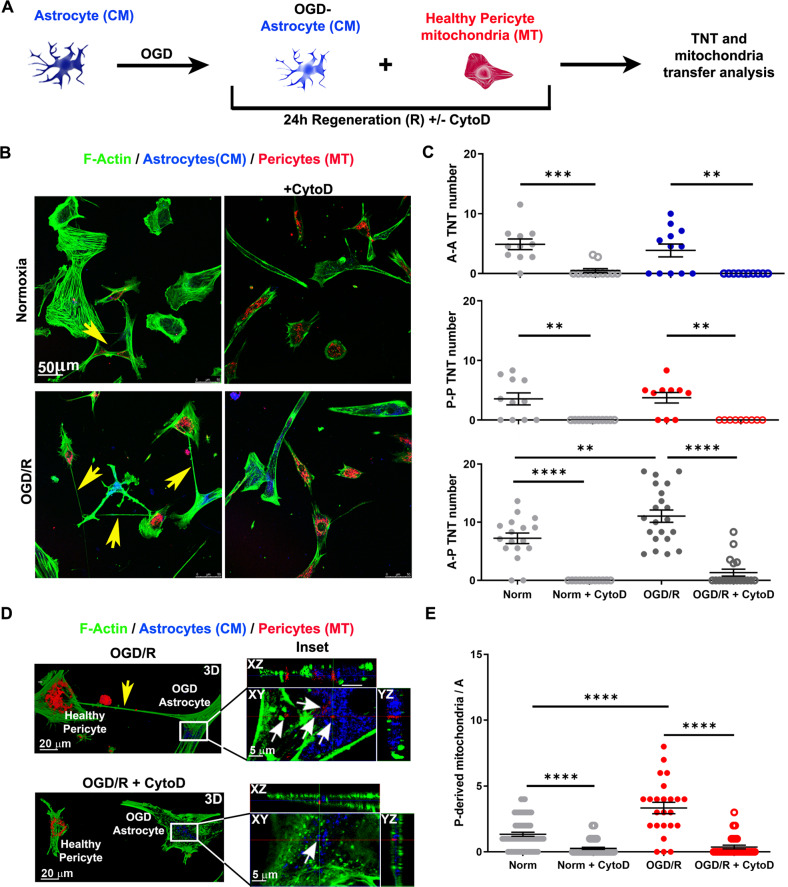
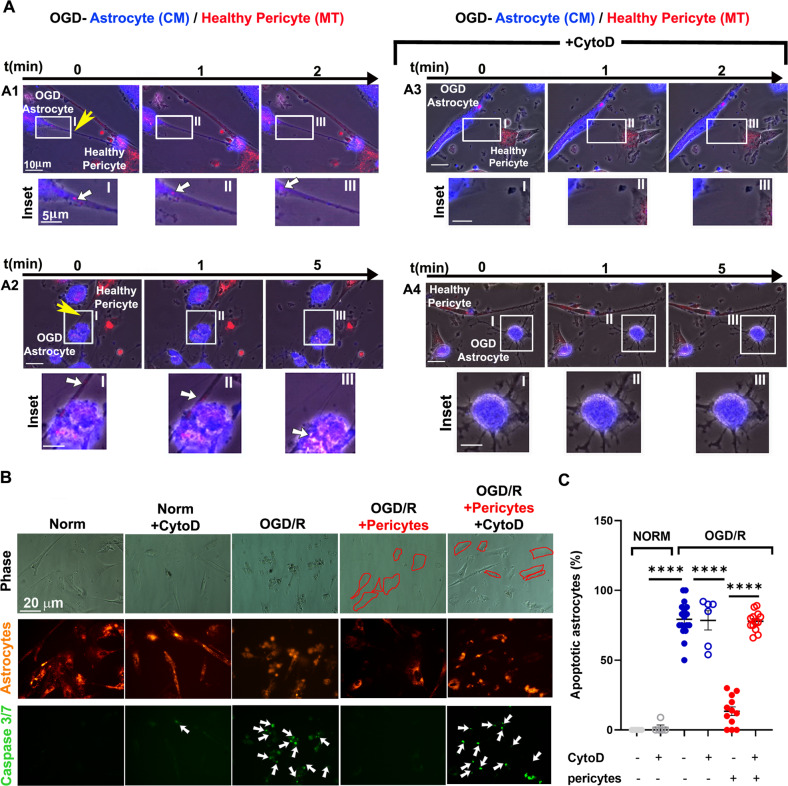
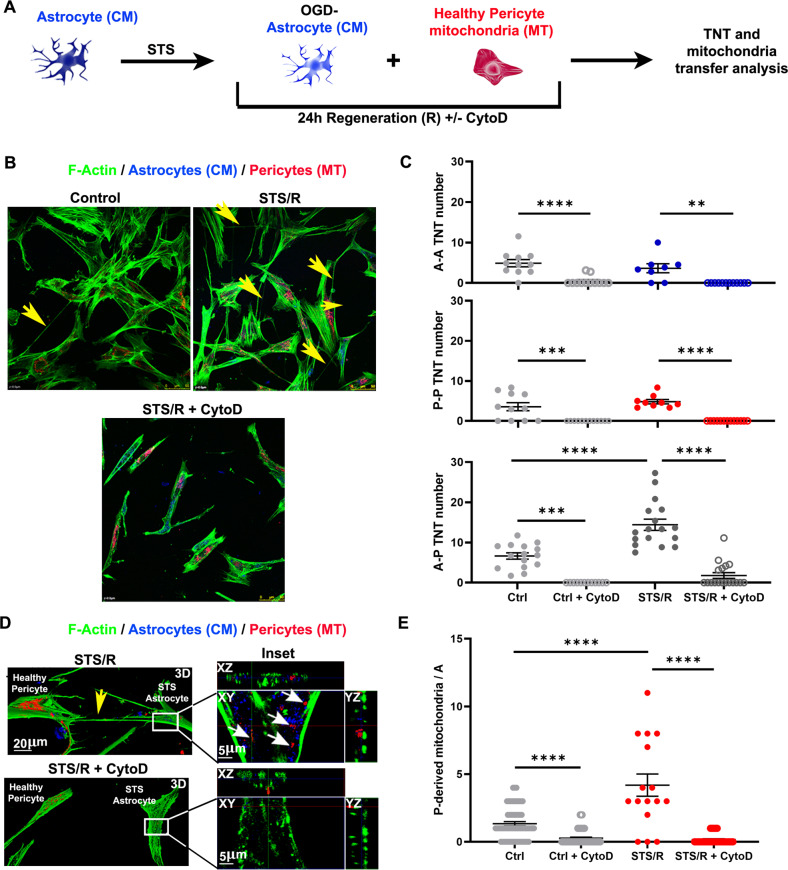
Crosstalk mechanisms between pericytes, endothelial cells, and astrocytes preserve integrity and function of the blood-brain-barrier (BBB) under physiological conditions. Long intercellular channels allowing the transfer of small molecules and organelles between distant cells called tunneling nanotubes (TNT) represent a potential substrate for energy and matter exchanges between the tripartite cellular compartments of the BBB. However, the role of TNT across BBB cells under physiological conditions and in the course of BBB dysfunction is unknown. In this work, we analyzed the TNT's role in the functional dialog between human brain endothelial cells, and brain pericytes co-cultured with human astrocytes under normal conditions or after exposure to ischemia/reperfusion, a condition in which BBB breakdown occurs, and pericytes participate in the BBB repair. Using live time-lapse fluorescence microscopy and laser-scanning confocal microscopy, we found that astrocytes form long TNT with pericytes and endothelial cells and receive functional mitochondria from both cell types through this mechanism. The mitochondrial transfer also occurred in multicellular assembloids of human BBB that reproduce the three-dimensional architecture of the BBB. Under conditions of ischemia/reperfusion, TNT formation is upregulated, and astrocytes exposed to oxygen-glucose deprivation were rescued from apoptosis by healthy pericytes through TNT-mediated transfer of functional mitochondria, an effect that was virtually abolished in the presence of TNT-destroying drugs. The results establish a functional role of TNT in the crosstalk between BBB cells and demonstrate that TNT-mediated mitochondrial transfer from pericytes rescues astrocytes from ischemia/reperfusion-induced apoptosis. Our data confirm that the pericytes might play a pivotal role in preserving the structural and functional integrity of BBB under physiological conditions and participate in BBB repair in brain diseases.
缝隙连接在生理条件下,周细胞、内皮细胞和星形胶质细胞之间的串扰机制可以保持血脑屏障 (BBB) 的完整性和功能。长细胞间通道允许小分子和细胞器在称为隧道纳米管 (TNT) 的远距离细胞之间转移,这代表了 BBB 三细胞区室之间能量和物质交换的潜在基质。然而,在生理条件下和 BBB 功能障碍过程中,TNT 在 BBB 细胞之间的作用尚不清楚。在这项工作中,我们分析了 TNT 在正常条件下或在经历缺血/再灌注后,即 BBB 破裂发生且周细胞参与 BBB 修复时,人脑内皮细胞与脑周细胞与人星形胶质细胞共培养时,在人 BBB 细胞之间的功能对话中的作用。使用活细胞延时荧光显微镜和激光扫描共聚焦显微镜,我们发现星形胶质细胞与人脑内皮细胞和周细胞形成长 TNT,并通过这种机制从这两种细胞类型接收功能线粒体。线粒体转移也发生在复制 BBB 三维结构的人 BBB 多细胞聚集体中。在缺血/再灌注条件下,TNT 形成增加,并且通过 TNT 介导的功能线粒体转移,暴露于缺氧葡萄糖剥夺的星形胶质细胞从凋亡中得到健康周细胞的拯救,而在存在 TNT 破坏药物的情况下,这种作用几乎被消除。结果确立了 TNT 在 BBB 细胞之间串扰中的功能作用,并表明 TNT 介导的周细胞中线粒体转移可从缺血/再灌注诱导的星形胶质细胞凋亡中拯救星形胶质细胞。我们的数据证实了周细胞在生理条件下维持 BBB 的结构和功能完整性以及在脑疾病中参与 BBB 修复方面可能发挥关键作用。