Busatto Sara, Morad Golnaz, Guo Peng, Moses Marsha A
Vascular Biology Program Boston Children's Hospital Boston MA USA.
Department of Surgery Boston Children's Hospital and Harvard Medical School Boston MA USA.
FASEB Bioadv. 2021 Jul 23;3(9):665-675. doi: 10.1096/fba.2021-00045. eCollection 2021 Sep.
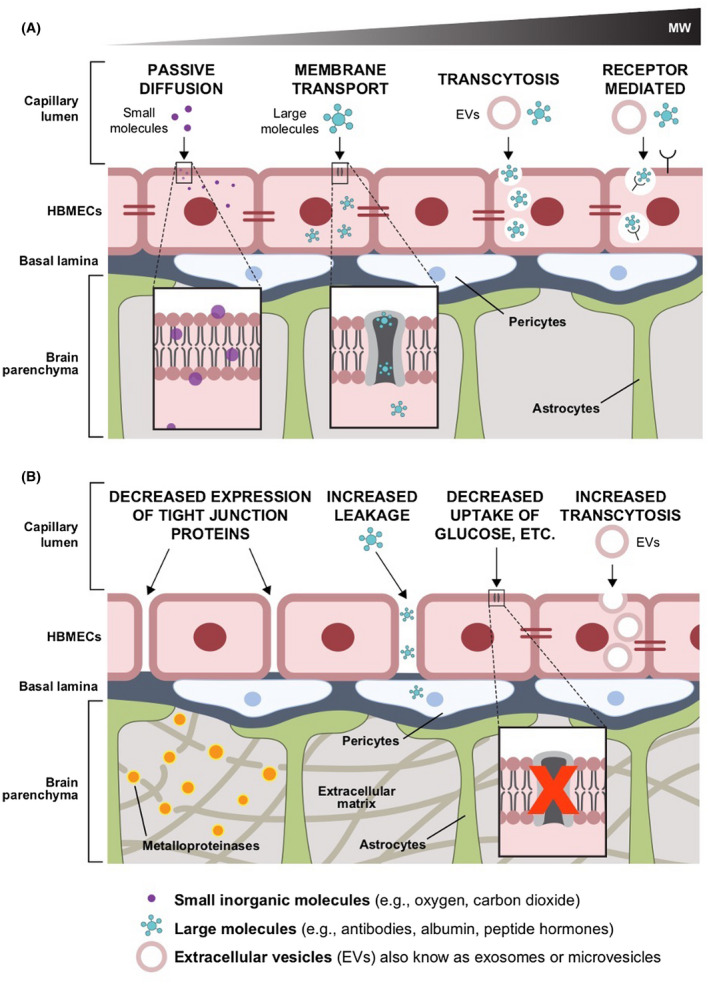
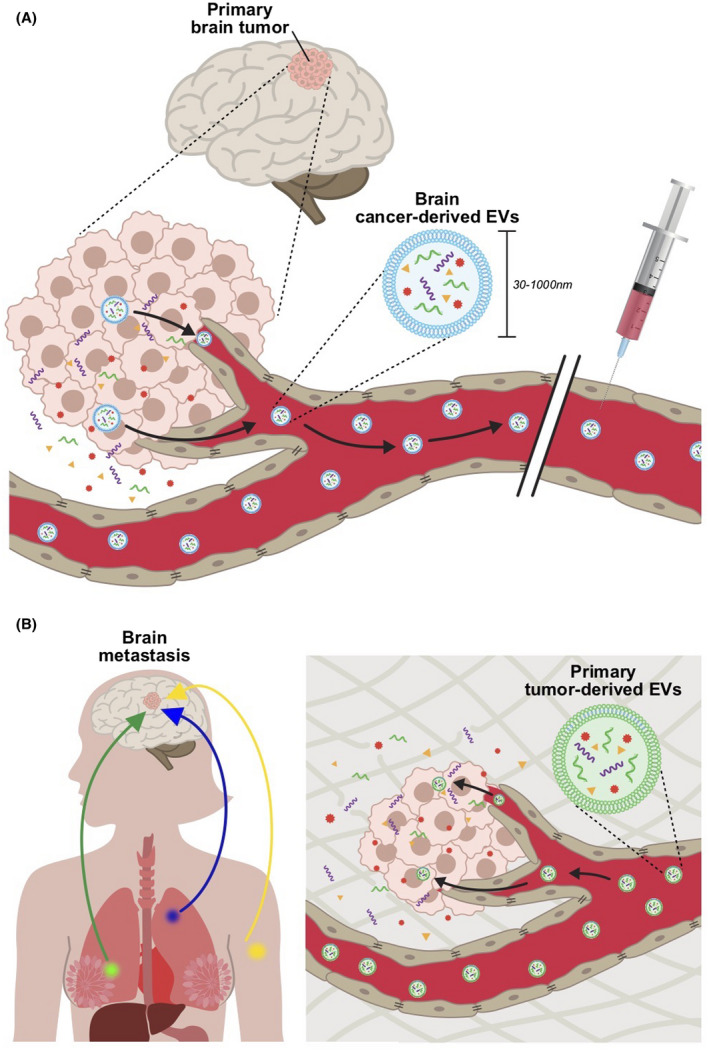
Extracellular vesicles (EVs) are a subclass of biological nanoparticles secreted by most cell types. Once secreted, EVs can travel long distances to deliver their content to target cells thereby playing a key role in cell-to-cell communication and supporting both physiological and pathological processes. In recent years, the functional versatility of EVs has come to be more widely appreciated. Their heterogeneous structure encloses solubilized bioactive cargoes including proteins and nucleic acids. EVs mirror the secreting cell in composition therefore representing a novel source of diagnostic and prognostic biomarkers. Moreover, due to their unique structure, EVs constitute a promising class of biocompatible nanovehicles for drug delivery as well. Importantly, and of burgeoning interest, is the fact that EVs have the intrinsic ability to breach biological barriers including the complex blood-brain barrier (BBB), whose restrictive nature represents a significant therapeutic challenge. EVs have been shown to contribute to the progression of a variety of brain diseases including metastatic brain cancer, neurodegenerative diseases, and acute pathologies including infections and ischemia. In this review, the role of EVs in the maintenance and regulation of the BBB under normal physiological and pathologic conditions are discussed. Applications of EVs as therapeutic and diagnostic tools in the treatment of diseases that affect the central nervous system are presented as are limitations hindering their broad translation and potential solutions to resolve them.
细胞外囊泡(EVs)是大多数细胞类型分泌的一类生物纳米颗粒。一旦分泌出来,EVs 可以远距离运输,将其内含物传递给靶细胞,从而在细胞间通讯中发挥关键作用,并支持生理和病理过程。近年来,EVs 的功能多样性得到了更广泛的认识。它们的异质结构包裹着包括蛋白质和核酸在内的可溶解生物活性物质。EVs 在组成上反映了分泌细胞,因此代表了诊断和预后生物标志物的新来源。此外,由于其独特的结构,EVs 也构成了一类有前途的用于药物递送的生物相容性纳米载体。重要的是,且越来越受关注的是,EVs 具有突破包括复杂血脑屏障(BBB)在内的生物屏障的内在能力,血脑屏障的限制性本质构成了重大的治疗挑战。EVs 已被证明会促进多种脑部疾病的进展,包括转移性脑癌、神经退行性疾病以及包括感染和缺血在内的急性病症。在这篇综述中,我们讨论了 EVs 在正常生理和病理条件下血脑屏障的维持和调节中的作用。介绍了 EVs 作为治疗和诊断工具在影响中枢神经系统疾病治疗中的应用,以及阻碍其广泛应用的局限性和解决这些局限性的潜在方案。