Mo Juanfen, Gao Zhenzhen, Zheng Li, Yan Miaolong, Xue Min, Xu Jianqiu, Bao Yi, Wu Jiayuan
The Key Laboratory, The Second Affiliated Hospital of Jiaxing University, Jiaxing, 314000, Zhejiang, China.
Department of Oncology, The Second Affiliated Hospital of Jiaxing University, Jiaxing, 314000, Zhejiang, China.
Cell Death Discov. 2022 Jul 5;8(1):307. doi: 10.1038/s41420-022-01098-y.
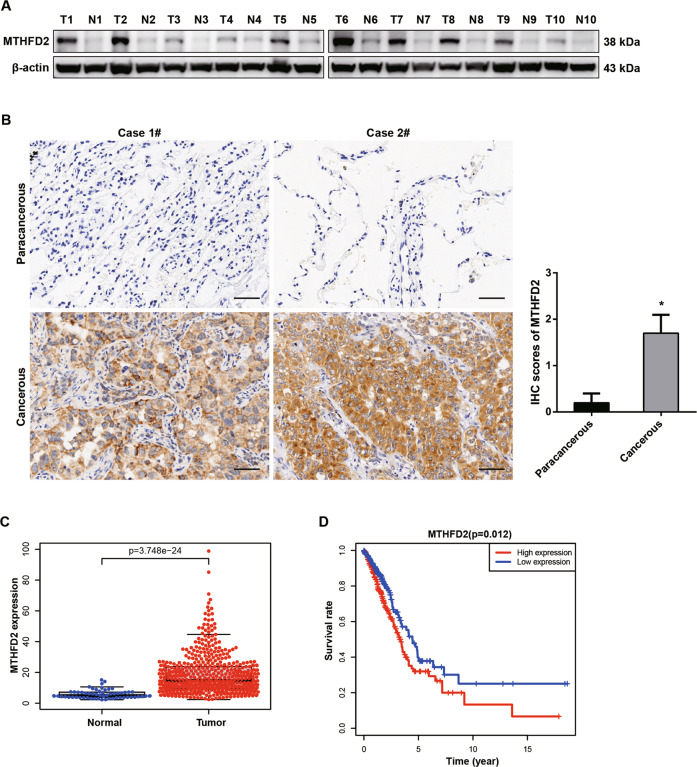
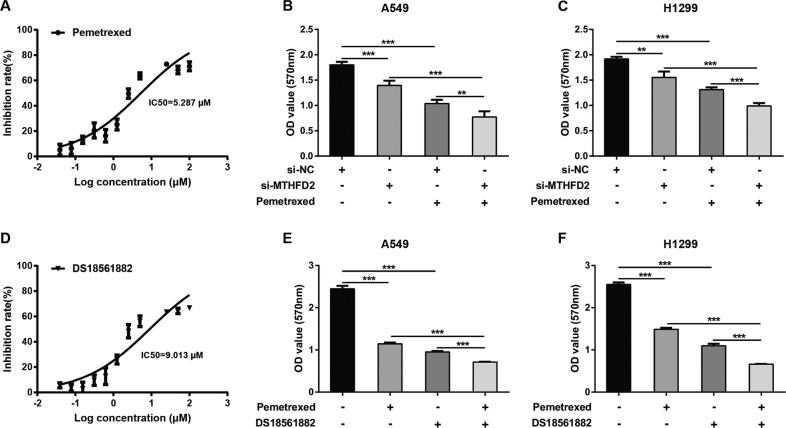
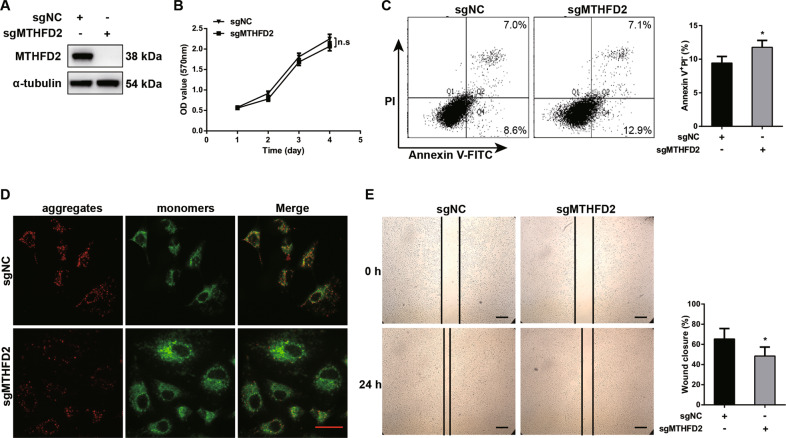
Metabolic remodeling is the fundamental molecular feature of malignant tumors. Cancer cells require sufficient energy supplies supporting their high proliferative rate. MTHFD2, a mitochondrial one-carbon metabolic enzyme, is dysregulated in several malignancies and may serve as a promising therapeutic candidate in cancer treatment. Here, our data confirmed that MTHFD2 gene and protein was upregulated in the cancerous tissues of LUAD patients and was correlated with a poor survival in LUAD. MTHFD2 was involved in lung cancer cell proliferation, migration, and apoptosis by mediating its downstream molecules, such as DNA helicases (MCM4 and MCM7), as well as ZEB1, Vimentin and SNAI1, which contributed to tumor cell growth and epithelial-to-mesenchymal transition (EMT) process. Moreover, we identified that miRNA-99a-3p appeared to be an upstream mediator directly regulating MTHFD2 and MCM4 expression. Moreover, specific inhibition of MTHFD2 functions by siRNA or a chemical compound, improved anti-tumor sensitivities induced by pemetrexed in LUAD. Taken together, our study revealed the underlying molecular mechanisms of MTHFD2 in regulating cell proliferation and identified a novel therapeutic strategy improving the treatment efficacies in LUAD.
代谢重塑是恶性肿瘤的基本分子特征。癌细胞需要充足的能量供应来支持其高增殖率。MTHFD2是一种线粒体一碳代谢酶,在多种恶性肿瘤中表达失调,可能是癌症治疗中一个有前景的治疗靶点。在此,我们的数据证实,LUAD患者癌组织中MTHFD2基因和蛋白上调,且与LUAD患者的不良生存相关。MTHFD2通过介导其下游分子,如DNA解旋酶(MCM4和MCM7)以及ZEB1、波形蛋白和SNAI1,参与肺癌细胞的增殖、迁移和凋亡,这些分子促进肿瘤细胞生长和上皮-间质转化(EMT)过程。此外,我们发现miRNA-99a-3p似乎是直接调节MTHFD2和MCM4表达的上游介质。此外,通过siRNA或化合物特异性抑制MTHFD2功能,可提高培美曲塞诱导的LUAD抗肿瘤敏感性。综上所述,我们的研究揭示了MTHFD2调节细胞增殖的潜在分子机制,并确定了一种提高LUAD治疗效果的新治疗策略。