Malaria Consortium Nigeria, Abuja, Nigeria.
Malaria Consortium United States, Raleigh, NC, 27615, USA.
BMC Health Serv Res. 2022 Jul 5;22(1):871. doi: 10.1186/s12913-022-08264-z.
Bi-annual high dose vitamin A supplements administered to children aged 6-59 months can significantly reduce child mortality, but vitamin A supplementation (VAS) coverage is low in Nigeria. The World Health Organization recommends that VAS be integrated into other public health programmes which are aimed at improving child survival. Seasonal malaria chemoprevention (SMC) provides a ready platform for VAS integration to improve health outcomes. This study explored the feasibility and acceptability of integrating VAS with SMC in one local government area in Sokoto State.
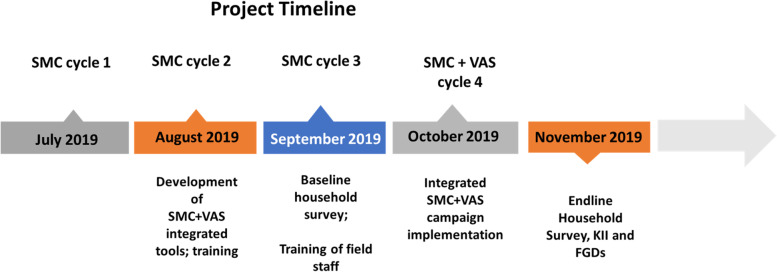
A concurrent QUAN-QUAL mixed methods study was used to assess the feasibility and acceptability of co-implementing VAS with SMC in one LGA of Sokoto state. Existing SMC implementation tools and job aids were revised and SMC and VAS were delivered using a door-to-door approach. VAS and SMC coverage were subsequently assessed using questionnaires administered to 188 and 197 households at baseline and endline respectively. The qualitative component involved key informant interviews and focus group discussions with policymakers, programme officials and technical partners to explore feasibility and acceptability. Thematic analysis was carried out on the qualitative data.
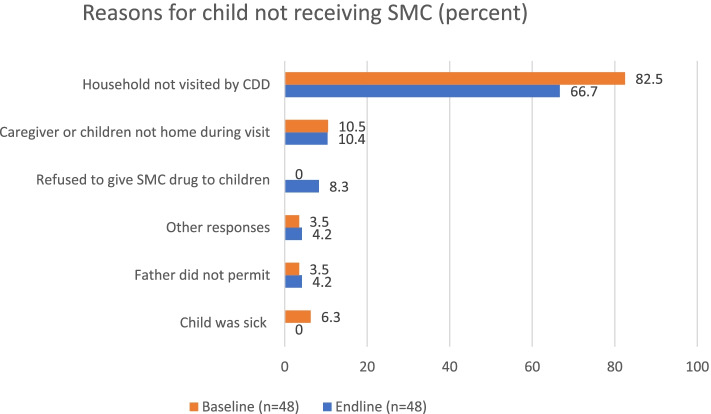
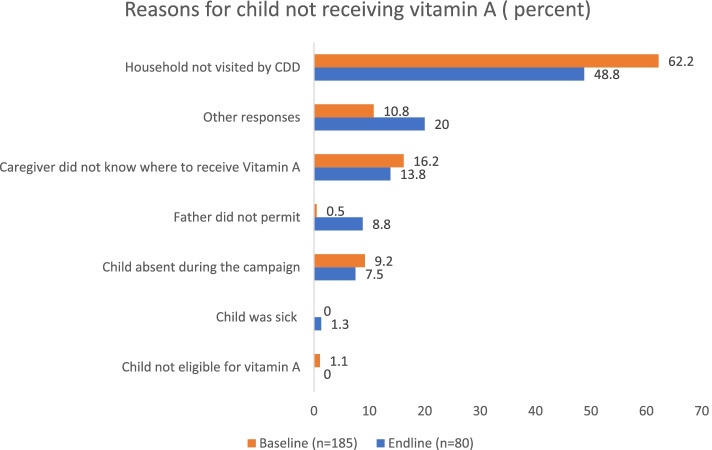
At endline, the proportion of children who received at least one dose of VAS in the last six months increased significantly from 2 to 59% (p < 0.001). There were no adverse effects on the coverage of SMC delivery with 70% eligible children reached at baseline, increasing to 76% (p = 0.412) at endline. There was no significant change (p = 0.264) in the quality of SMC, measured by proportion of children receiving their first dose as directly observed treatment (DOT), at baseline (54%) compared to endline (68%). The qualitative findings are presented as two overarching themes relating to feasibility and acceptability of the integrated VAS-SMC strategy, and within each, a series of sub-themes describe study participants' views of important considerations in implementing the strategy.
This study showed that it is feasible and acceptable to integrate VAS with SMC delivery in areas of high seasonal malaria transmission such as northern Nigeria, where SMC campaigns are implemented. SMC-VAS integrated campaigns can significantly increase vitamin A coverage but more research is required to demonstrate the feasibility of this integration in different settings and on a larger scale.
每六个月为 6-59 个月大的儿童提供高剂量维生素 A 补充剂可显著降低儿童死亡率,但尼日利亚的维生素 A 补充剂(VAS)覆盖率很低。世界卫生组织建议将 VAS 纳入旨在改善儿童生存的其他公共卫生方案中。季节性疟疾化学预防(SMC)为 VAS 整合提供了一个现成的平台,以改善健康结果。本研究探讨了在索科托州一个地方政府区域内将 VAS 与 SMC 整合的可行性和可接受性。
使用同时进行的 QUAN-QUAL 混合方法研究来评估在索科托州一个地方政府区域内共同实施 VAS 与 SMC 的可行性和可接受性。修订了现有的 SMC 实施工具和作业辅助工具,并通过逐户上门的方式提供 SMC 和 VAS。随后使用调查问卷分别在基线和终点评估 VAS 和 SMC 的覆盖情况,共调查了 188 户和 197 户家庭。定性部分涉及决策者、方案官员和技术合作伙伴的关键人物访谈和焦点小组讨论,以探讨可行性和可接受性。对定性数据进行了主题分析。
在终点时,在过去六个月内至少接受过一次 VAS 剂量的儿童比例从 2%显著增加到 59%(p<0.001)。SMC 交付的覆盖率没有受到不利影响,基线时有 70%的合格儿童到达,终点时增加到 76%(p=0.412)。在作为直接观察治疗(DOT)接受首剂的儿童比例(54%)方面,衡量 SMC 质量的基线(54%)与终点(68%)之间没有显著变化(p=0.264)。定性结果呈现出两个总体主题,与高季节性疟疾传播地区(如尼日利亚北部)中 VAS-SMC 综合战略的可行性和可接受性有关,每个主题下都有一系列子主题描述了研究参与者对实施该战略的重要考虑因素的看法。
本研究表明,在季节性疟疾传播较高的地区,如尼日利亚北部,将 VAS 与 SMC 交付相结合是可行和可接受的,那里实施了 SMC 运动。SMC-VAS 综合运动可显著提高维生素 A 的覆盖率,但需要更多研究来证明在不同环境和更大规模上整合这一策略的可行性。