National Malaria Elimination Programme (NMEP), Abuja, Nigeria.
University of Abomey-Calavi, (UAC), Cotonou, Benin.
Malar J. 2023 Apr 11;22(1):120. doi: 10.1186/s12936-023-04547-w.
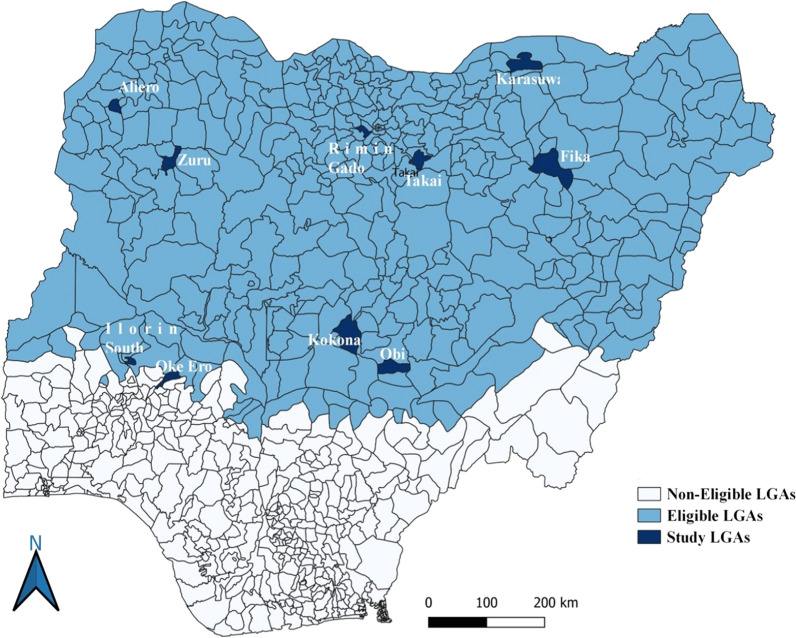
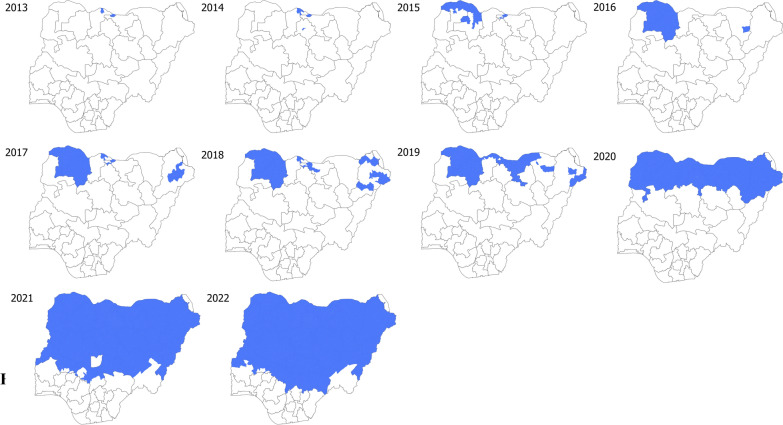
SMC was adopted in Nigeria in 2014 and by 2021 was being implemented in 18 states, over four months between June and October by 143000 community drug distributors (CDDs) to a target population of 23million children. Further expansion of SMC is planned, extending to 21 states with four or five monthly cycles. In view of this massive scale-up, the National Malaria Elimination Programme undertook qualitative research in five states shortly after the 2021 campaign to understand community attitudes to SMC so that these perspectives inform future planning of SMC delivery in Nigeria.
In 20 wards representing urban and rural areas with low and high SMC coverage in five states, focus group discussions were held with caregivers, and in-depth interviews conducted with community leaders and community drug distributors. Interviews were also held with local government area and State malaria focal persons and at national level with the NMEP coordinator, and representatives of partners working on SMC in Nigeria. Interviews were recorded and transcribed, those in local languages translated into English, and transcripts analysed using NVivo software.
In total, 84 focus groups and 106 interviews were completed. Malaria was seen as a major health concern, SMC was widely accepted as a key preventive measure, and community drug distributors (CDDs) were generally trusted. Caregivers preferred SMC delivered door-to-door to the fixed-point approach, because it allowed them to continue daily tasks, and allowed time for the CDD to answer questions. Barriers to SMC uptake included perceived side-effects of SMC drugs, a lack of understanding of the purpose of SMC, mistrust and suspicions that medicines provided free may be unsafe or ineffective, and local shortages of drugs.
Recommendations from this study were shared with all community drug distributors and others involved in SMC campaigns during cascade training in 2022, including the need to strengthen communication about the safety and effectiveness of SMC, recruiting distributors from the local community, greater involvement of state and national level pharmacovigilance coordinators, and stricter adherence to the planned medicine allocations to avoid local shortages. The findings reinforce the importance of retaining door-to-door delivery of SMC.
2014 年,尼日利亚采用了 SMC,到 2021 年,已经在 18 个州实施了四个多月,由 143000 名社区药剂师(CDD)向 2300 万儿童目标人群分发药物。计划进一步扩大 SMC 的覆盖范围,扩展到 21 个州,每个州进行四到五个月的周期。鉴于这一大规模的扩展,国家疟疾消除计划在 2021 年运动后不久在五个州进行了定性研究,以了解社区对 SMC 的态度,以便为未来在尼日利亚规划 SMC 的实施提供信息。
在五个州的代表城市和农村地区的 20 个区进行了焦点小组讨论,参与者为看护人,并对社区领导人和社区药剂师进行了深入访谈。还与地方政府区和州疟疾协调员以及国家疟疾消除计划协调员以及在尼日利亚参与 SMC 的合作伙伴代表进行了访谈。访谈进行了录音和记录,当地语言的访谈记录被翻译成英语,并用 NVivo 软件对访谈记录进行了分析。
共完成了 84 个焦点小组和 106 次访谈。疟疾被视为一个主要的健康问题,SMC 被广泛认为是一项关键的预防措施,社区药剂师(CDD)普遍受到信任。看护人更喜欢上门提供 SMC,而不是固定点提供,因为这样可以让他们继续日常工作,并且有时间让 CDD 回答问题。SMC 采用的障碍包括对 SMC 药物的副作用的看法、对 SMC 目的的理解不足、对提供的免费药品可能不安全或无效的不信任和怀疑,以及当地药品短缺。
本研究的建议在 2022 年的级联培训期间与所有参与 SMC 运动的社区药剂师和其他人分享,包括加强对 SMC 的安全性和有效性的沟通、从当地社区招募药剂师、更深入地参与州和国家层面的药物警戒协调员、以及更严格地遵守计划的药品分配,以避免当地药品短缺。这些发现强调了保留 SMC 上门提供的重要性。