Neurobiology Group, SISSA, Scuola Internazionale Superiore di Studi Avanzati, 34136, Trieste, Italy.
Department of Basic Medical Sciences, Neuroscience and Sensory Organs, University of Bari A. Moro, 70124, Bari, Italy.
Sci Rep. 2022 Jul 6;12(1):11447. doi: 10.1038/s41598-022-15572-1.
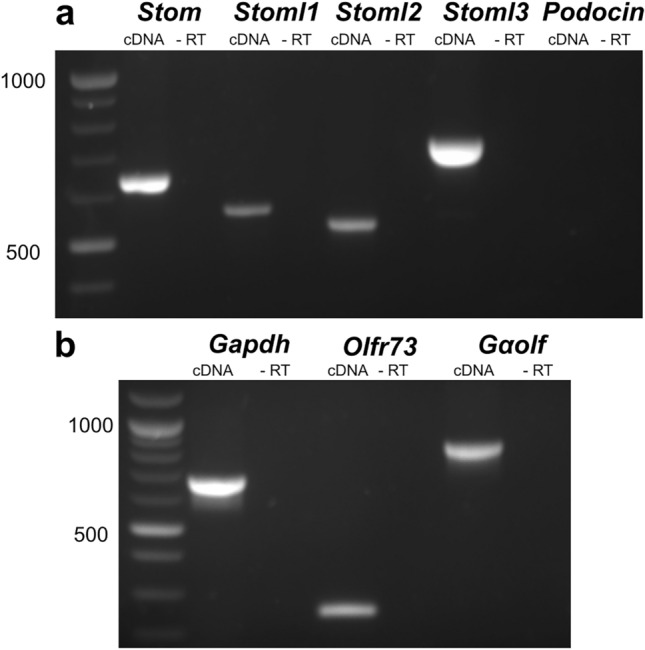
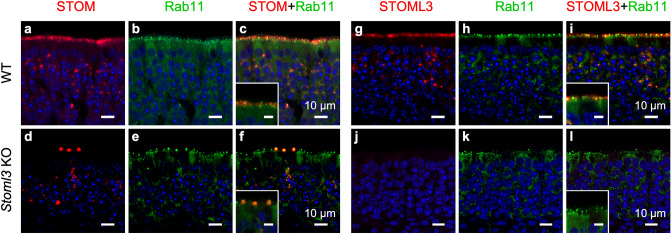
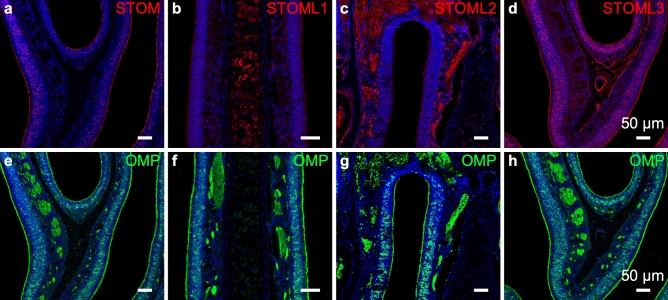
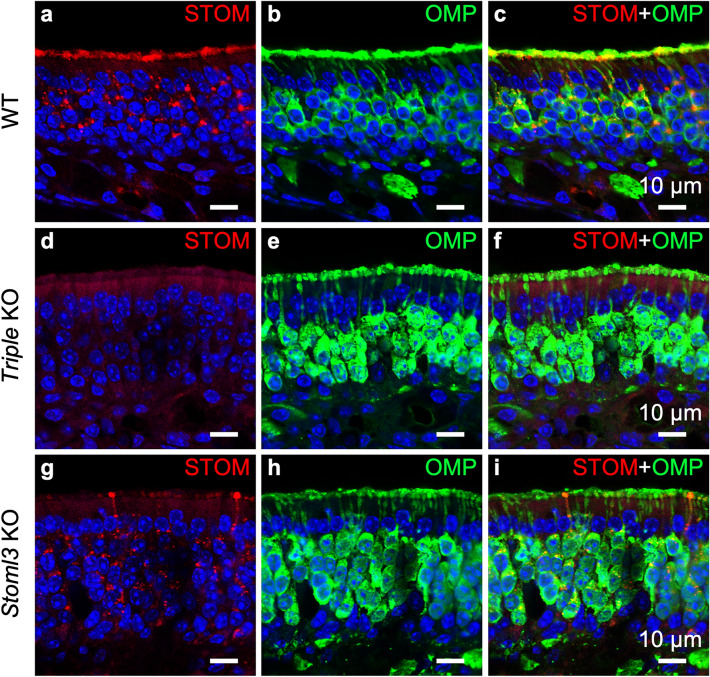
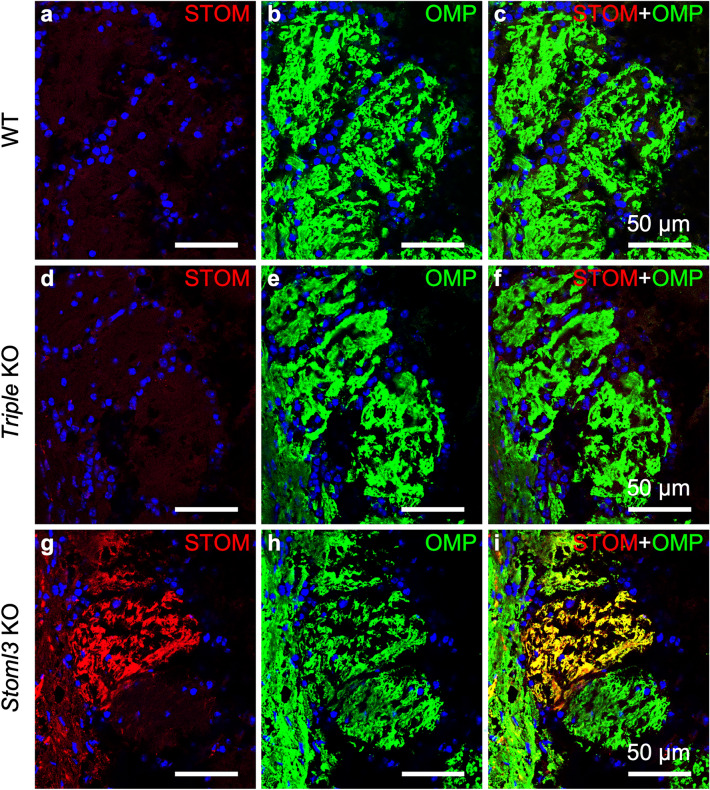
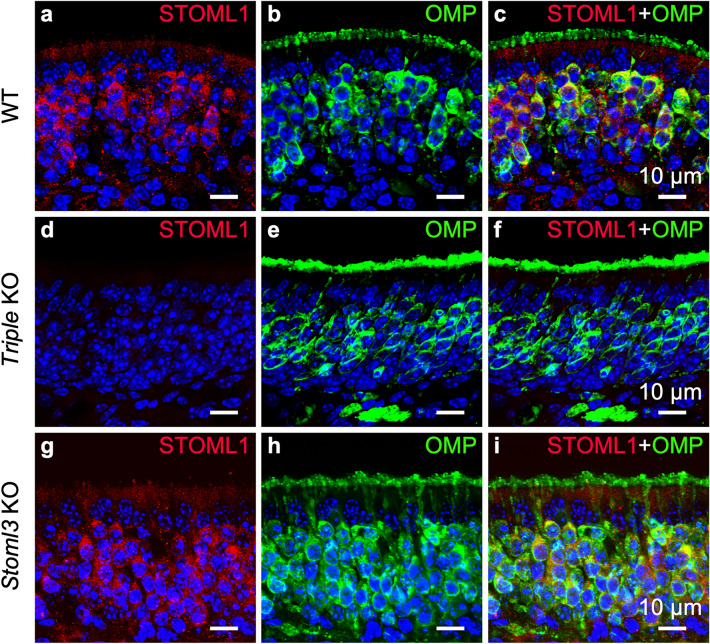
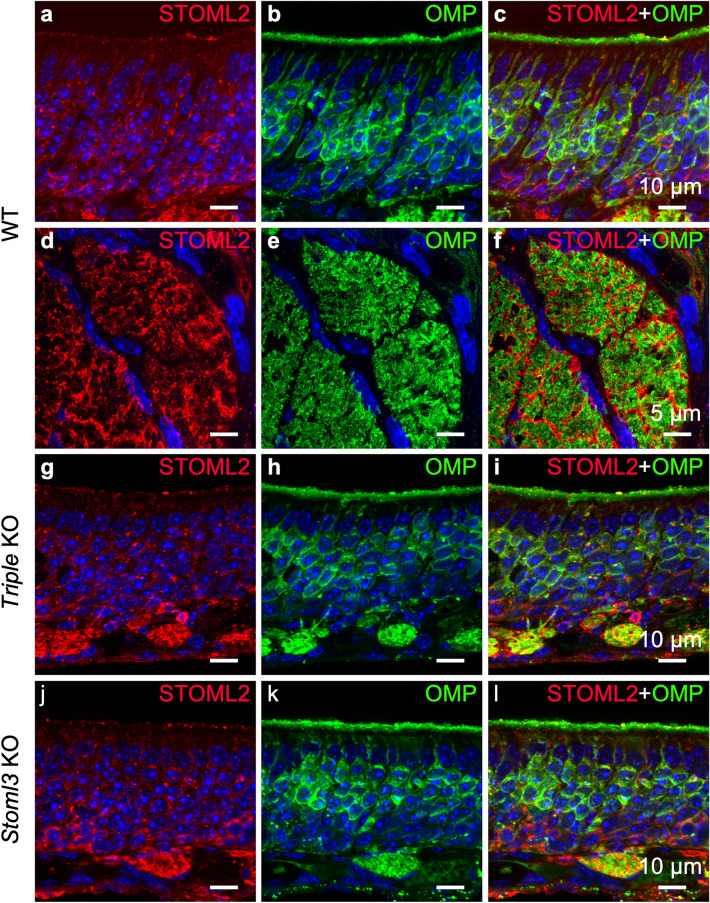
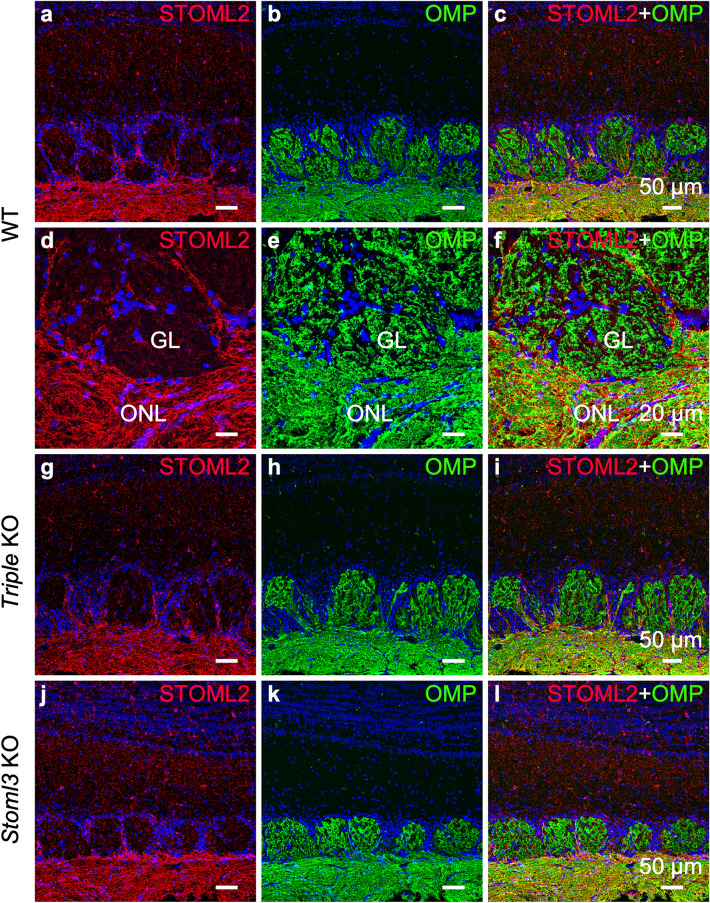
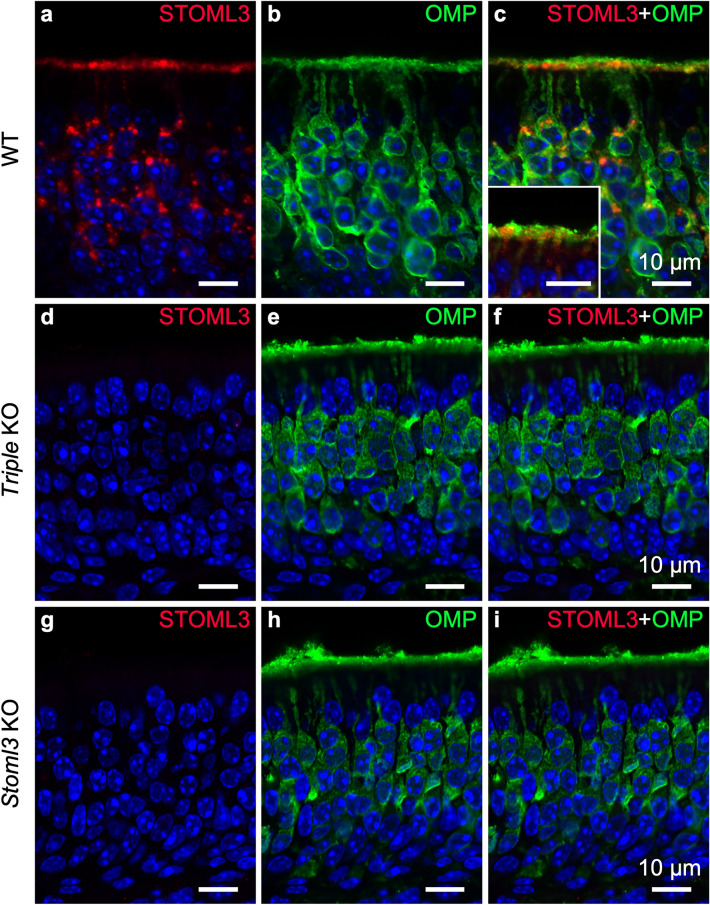
Recent data show that Stomatin-like protein 3 (STOML3), a member of the stomatin-domain family, is expressed in the olfactory sensory neurons (OSNs) where it modulates both spontaneous and evoked action potential firing. The protein family is constituted by other 4 members (besides STOML3): STOM, STOML1, STOML2 and podocin. Interestingly, STOML3 with STOM and STOML1 are expressed in other peripheral sensory neurons: dorsal root ganglia. In here, they functionally interact and modulate the activity of the mechanosensitive Piezo channels and members of the ASIC family. Therefore, we investigated whether STOM and STOML1 are expressed together with STOML3 in the OSNs and whether they could interact. We found that all three are indeed expressed in ONSs, although STOML1 at very low level. STOM and STOML3 share a similar expression pattern and STOML3 is necessary for STOM to properly localize to OSN cilia. In addition, we extended our investigation to podocin and STOML2, and while the former is not expressed in the olfactory system, the latter showed a peculiar expression pattern in multiple cell types. In summary, we provided a first complete description of stomatin-domain protein family in the olfactory system, highlighting the precise compartmentalization, possible interactions and, finally, their functional implications.
最近的数据表明,质膜突起蛋白 3(STOML3)是质膜突起家族的成员之一,在嗅觉感觉神经元(OSNs)中表达,调节自发性和诱发动作电位的发放。该蛋白家族由其他 4 个成员(除了 STOML3)组成:质膜突起蛋白、质膜突起蛋白 1、质膜突起蛋白 2 和足细胞蛋白。有趣的是,STOML3 与质膜突起蛋白和质膜突起蛋白 1 在其他外周感觉神经元(背根神经节)中表达。在这些神经元中,它们功能性相互作用并调节机械敏感的 Piezo 通道和 ASIC 家族成员的活性。因此,我们研究了 STOM 和 STOML1 是否与 STOML3 一起在 OSNs 中表达,以及它们是否能够相互作用。我们发现这三种蛋白确实都在 OSNs 中表达,尽管 STOML1 的表达水平非常低。质膜突起蛋白和 STOML3 具有相似的表达模式,并且 STOML3 对于 STOM 正确定位于 OSN 纤毛是必需的。此外,我们将研究扩展到足细胞蛋白和 STOML2,虽然前者在嗅觉系统中不表达,但后者在多种细胞类型中表现出特殊的表达模式。总之,我们首次完整描述了嗅觉系统中的质膜突起蛋白家族,强调了精确的分区化、可能的相互作用,以及最终的功能意义。