Comparative Neuroanatomy Laboratory, Biology, Ecology & Earth Science Department (DiBEST), University of Calabria, Arcavacata Di Rende, Ponte Pietro Bucci 4B, 87030, Cosenza, Italy.
Experimental and Clinical Medicine Department, Molecular Oncology Laboratory, University Magna Graecia of Catanzaro, 88100, Catanzaro, Italy.
Cerebellum. 2023 Aug;22(4):698-707. doi: 10.1007/s12311-022-01432-1. Epub 2022 Jul 6.
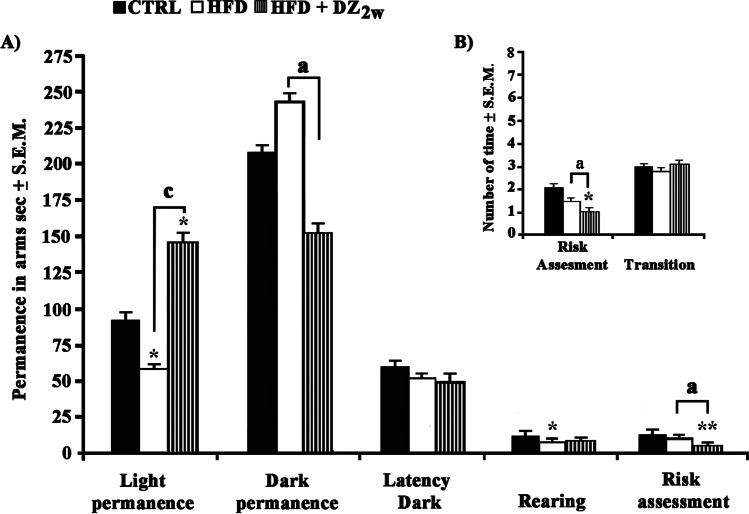
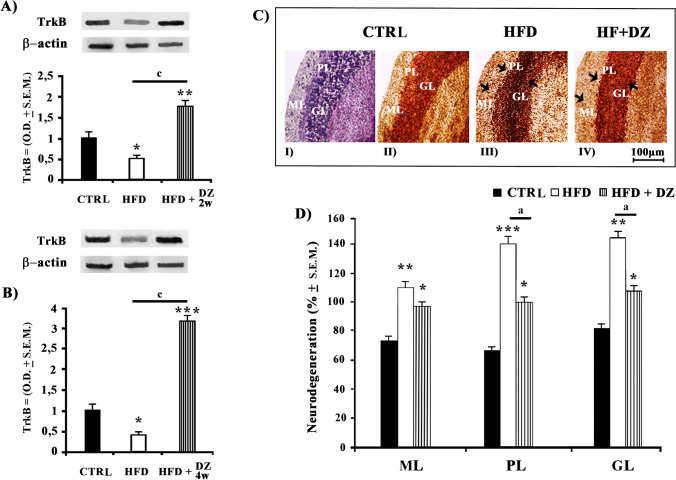
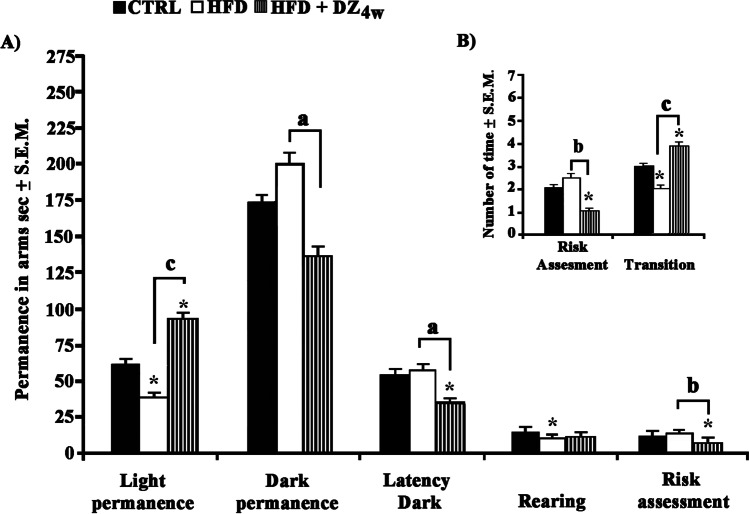
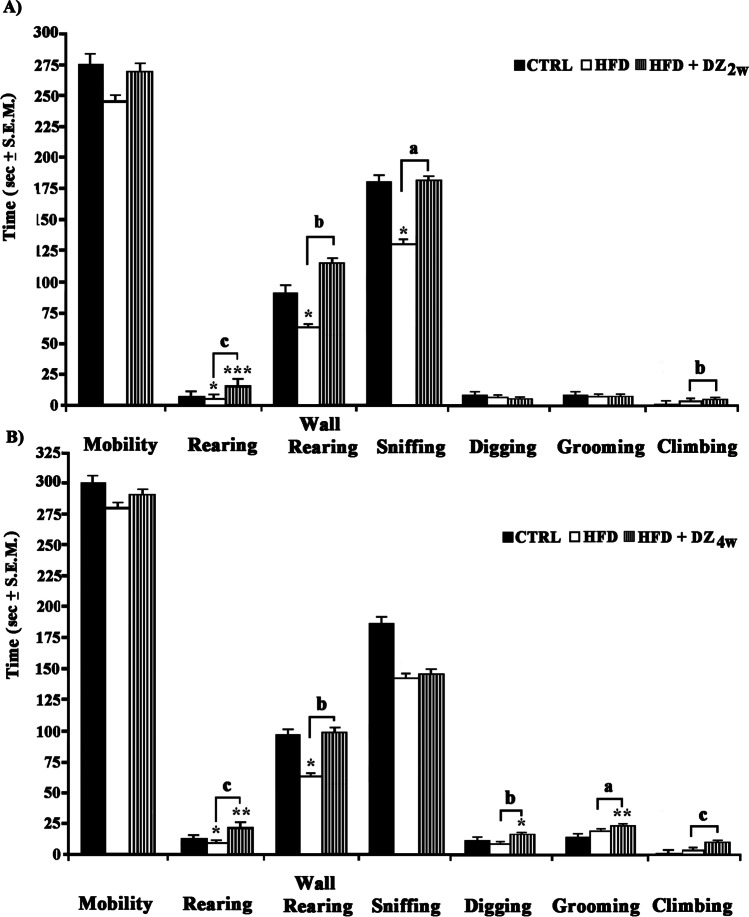
Current evidence supports the beneficial role of phytoestrogens in metabolic diseases, but their influences on spontaneous motor and anxiety behaviors plus neuroprotective effects have still not been completely elucidated. With the present study, neuro-behavioral activities were correlated to daidzein (DZ)-dependent expression changes of a high affinity catalytic receptor for several neurotrophins, and namely tropomyosin-related kinase B receptor (TrkB) in the cerebellar cortex of high-fat diet (HFD) hamsters (Mesocricetus auratus). Indeed, these changes appear to be tightly linked to altered plasma lipid profiles as shown by reduced low-density lipoproteins plus total cholesterol levels in DZ-treated obesity hamsters accounting for increased spontaneous locomotor together with diminished anxiety activities in novel cage (NCT) and light/dark box (LDT) tests. For this latter case, the anxiolytic-like hamsters spent more time in the light compartment, which was retained the aversive area of the LDT box. As for the evaluation of the neurotrophin receptor site, significantly elevated TrkB levels were also detected, for the first time, in the cerebellum of obese hamsters treated with DZ. In this condition, such a treatment widely led to an overall improvement of HFD-induced neurodegeneration damages, above all in the Purkinje and granular layers of the cerebellum. In this context, the notably active TrkB signaling events occurring in a DZ-dependent manner may turn out to be a key neuroprotective element capable of restoring normal emotional and spontaneously linked locomotor behaviors regulated by cerebellar cortical areas especially in obesity-related conditions.
目前的证据支持植物雌激素在代谢性疾病中的有益作用,但它们对自发性运动和焦虑行为的影响以及神经保护作用仍未完全阐明。在本研究中,神经行为活动与大豆苷元(DZ)依赖性的几种神经营养因子的高亲和力催化受体表达变化相关联,即在高脂肪饮食(HFD)仓鼠(Mesocricetus auratus)的小脑皮质中,即原肌球蛋白相关激酶 B 受体(TrkB)。事实上,这些变化似乎与改变的血浆脂质谱密切相关,如 DZ 处理的肥胖仓鼠中的低密度脂蛋白和总胆固醇水平降低,导致自发运动增加,同时新笼(NCT)和明暗箱(LDT)测试中的焦虑活动减少。对于后者情况,抗焦虑样仓鼠在亮区花费更多时间,这保留了 LDT 箱的厌恶区域。至于神经营养因子受体位点的评估,首次在 DZ 处理的肥胖仓鼠的小脑检测到 TrkB 水平显著升高。在这种情况下,这种治疗方法广泛导致 HFD 诱导的神经退行性损伤得到整体改善,尤其是在小脑的浦肯野和颗粒层。在这种情况下,以 DZ 依赖方式发生的明显活跃的 TrkB 信号事件可能成为一种关键的神经保护元素,能够恢复由小脑皮层调节的正常情绪和自发运动行为,尤其是在肥胖相关情况下。