Sainsbury Wellcome Centre, London, UK.
Cell and Developmental Biology Department, University College London, London, UK.
Nature. 2022 Jul;607(7920):741-746. doi: 10.1038/s41586-022-04913-9. Epub 2022 Jul 6.
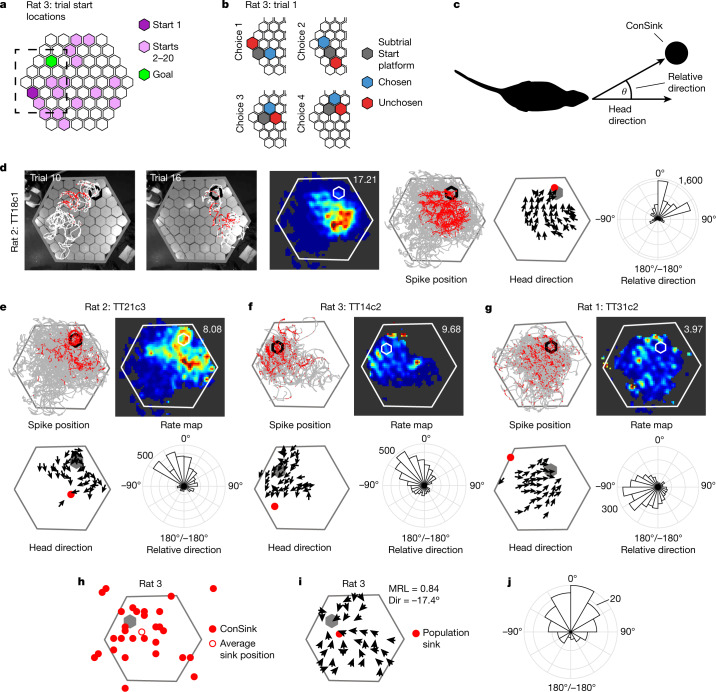
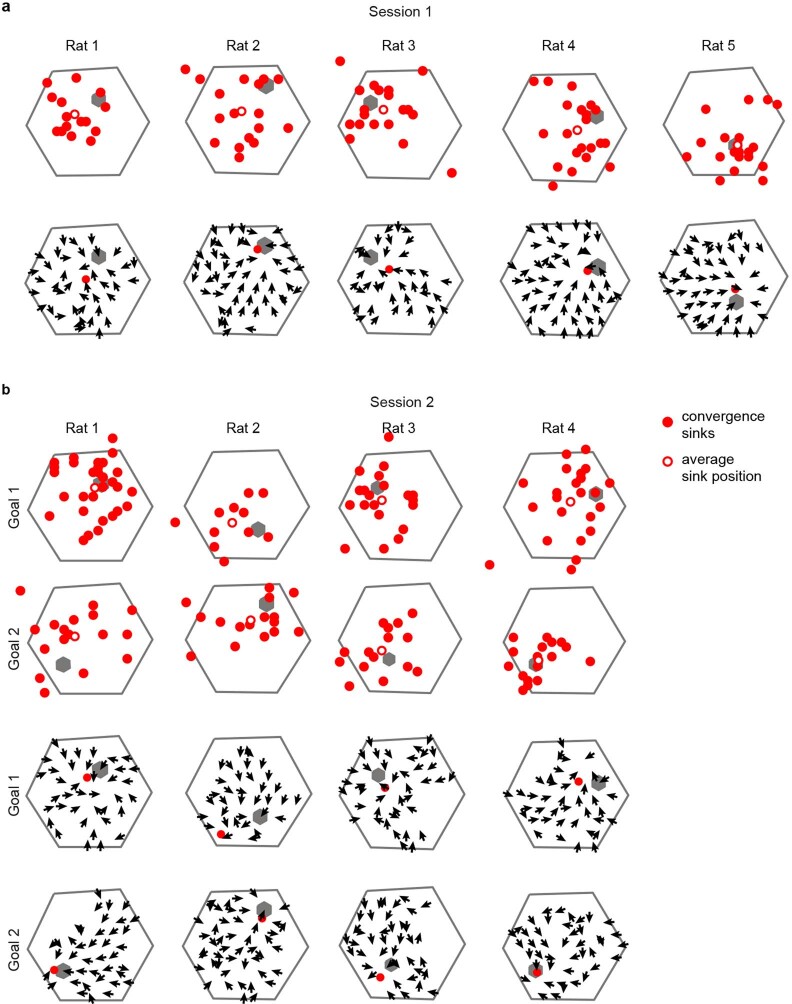
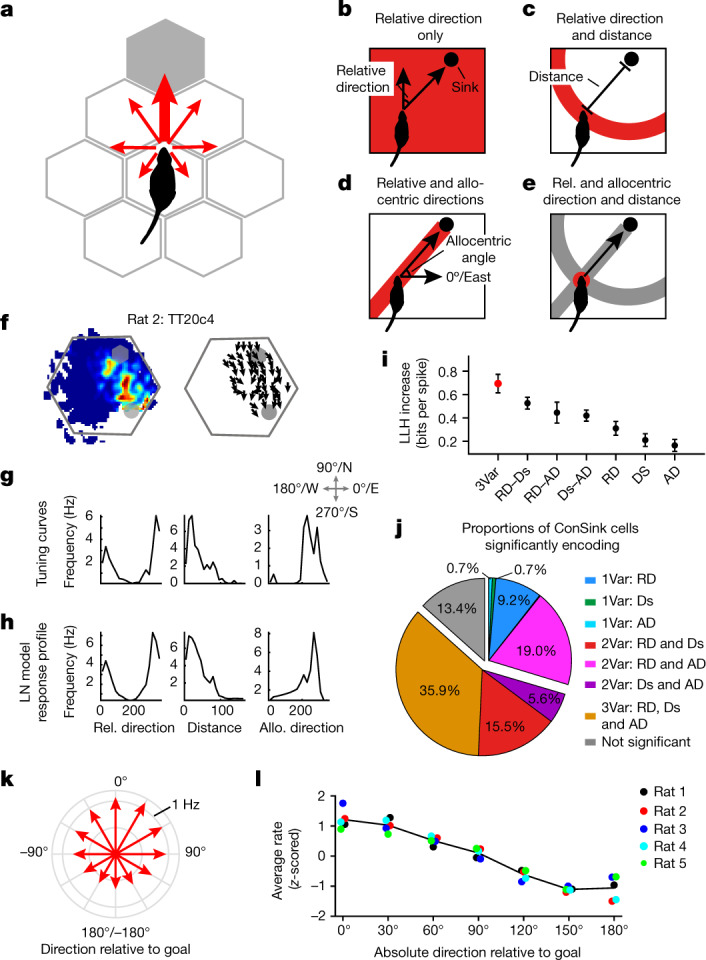
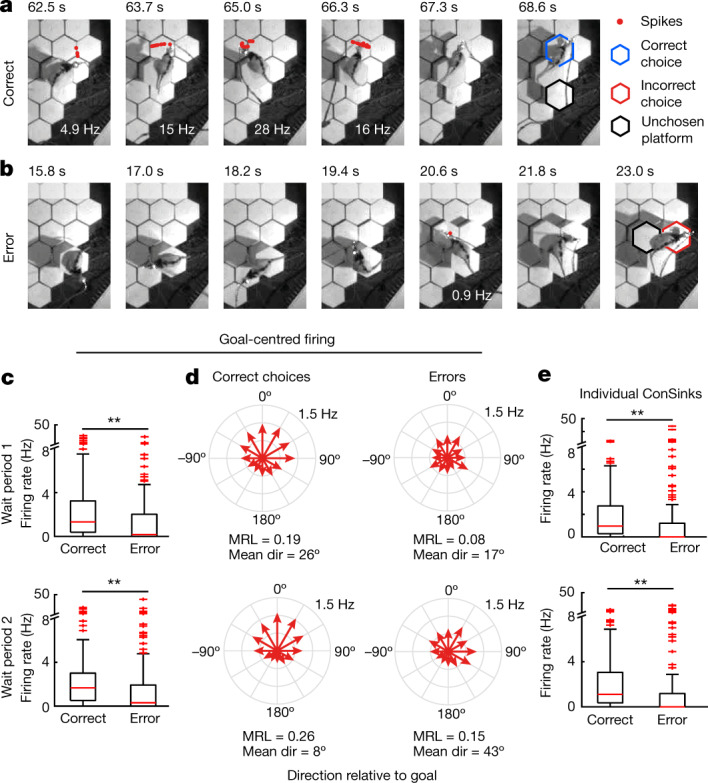
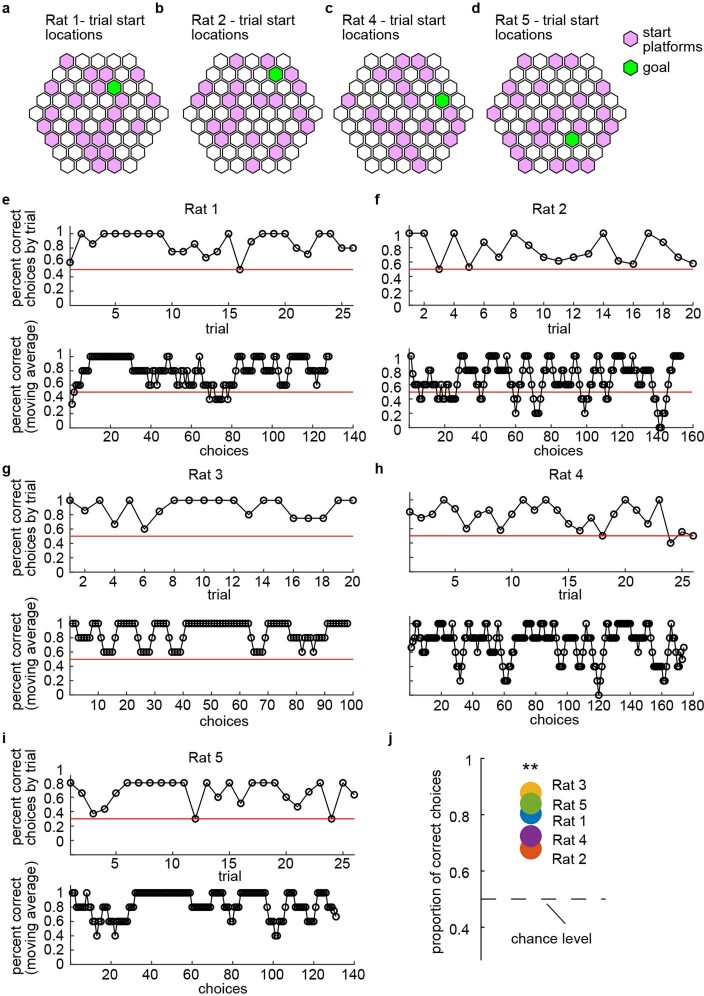
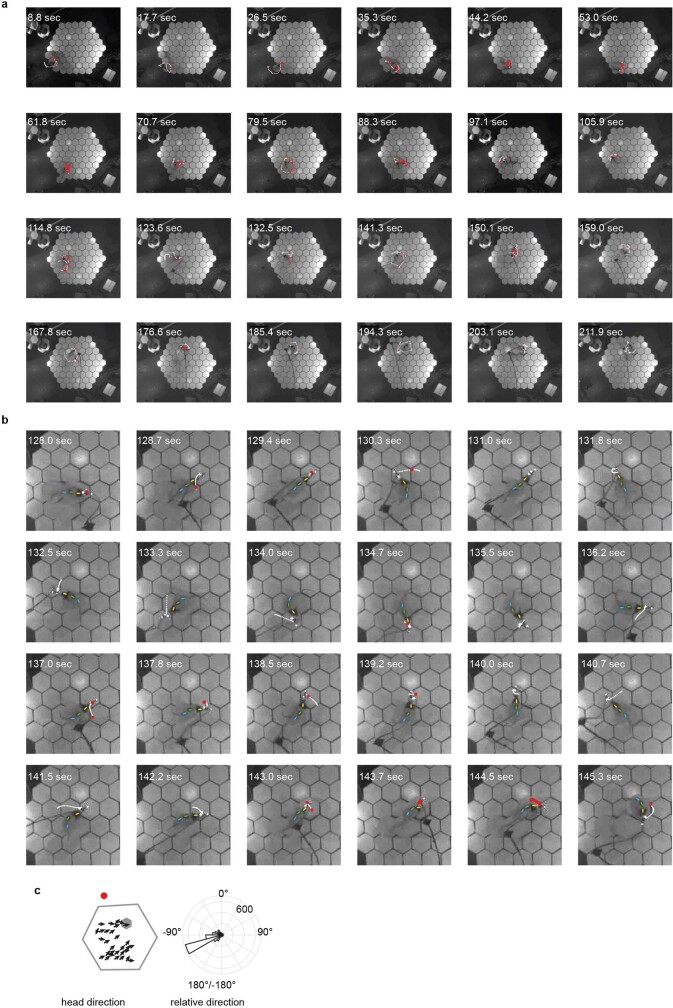
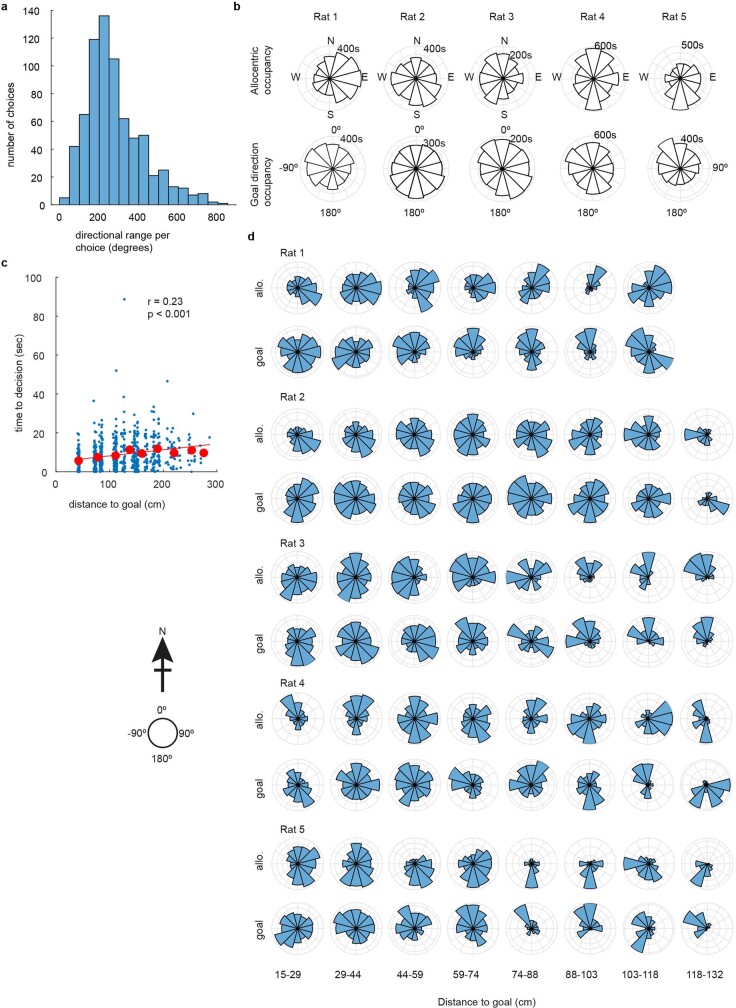
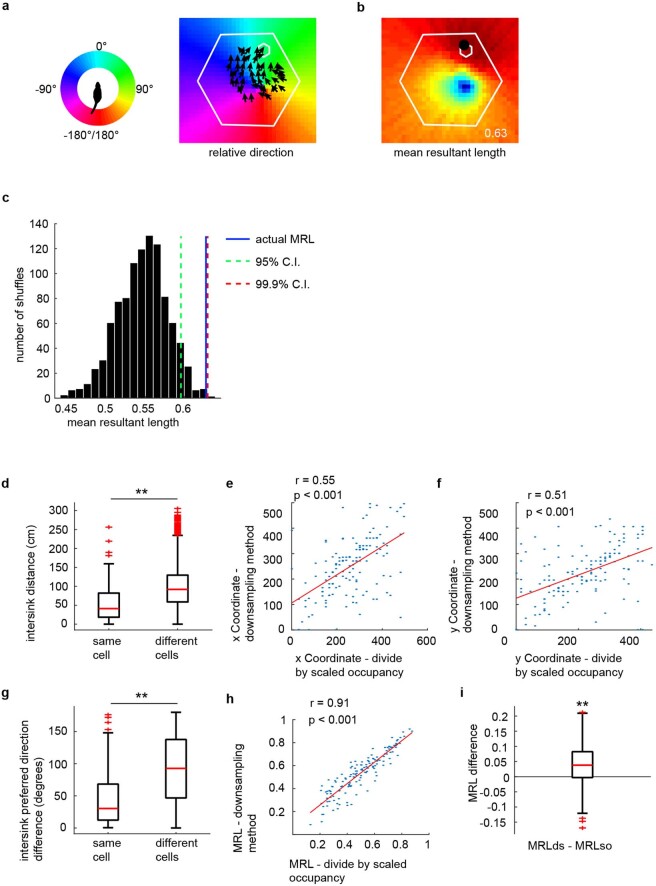
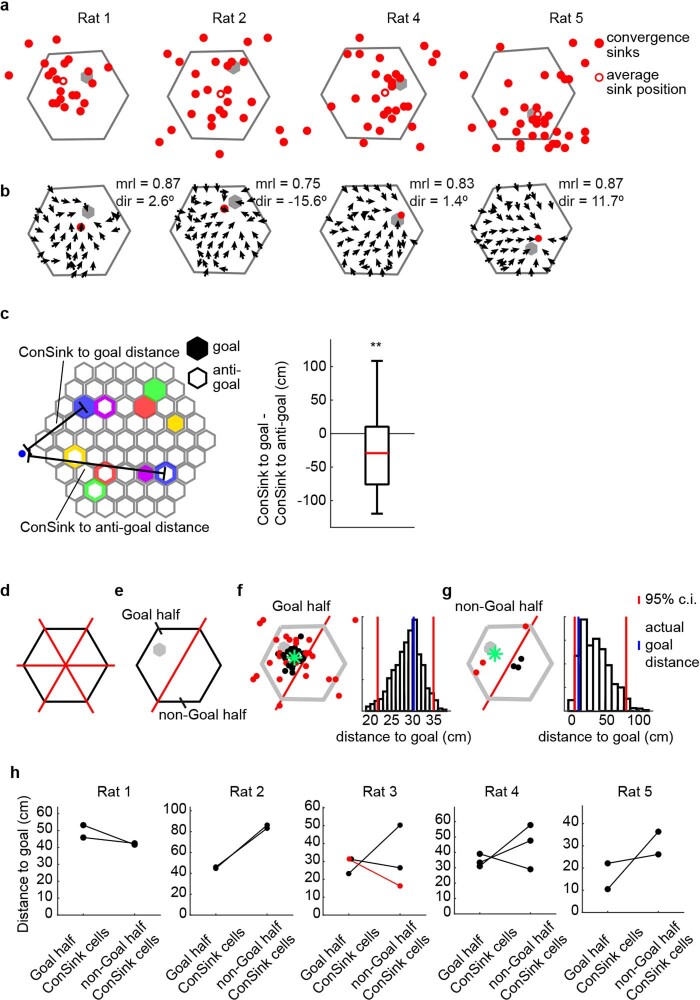
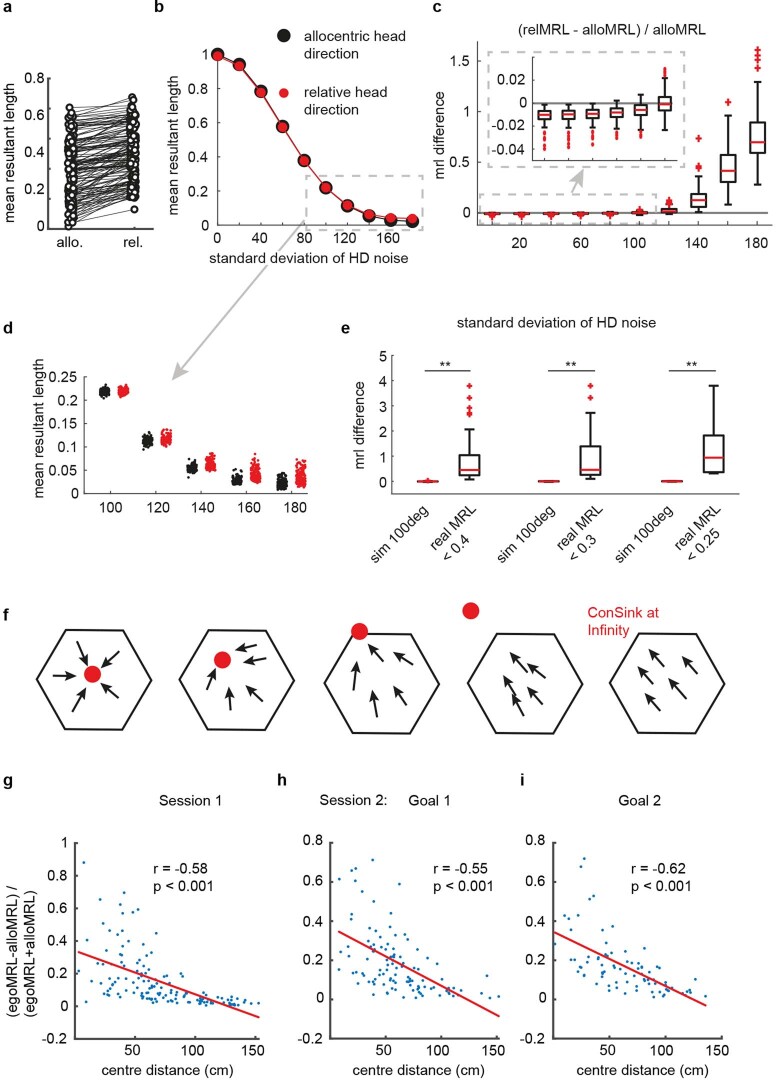
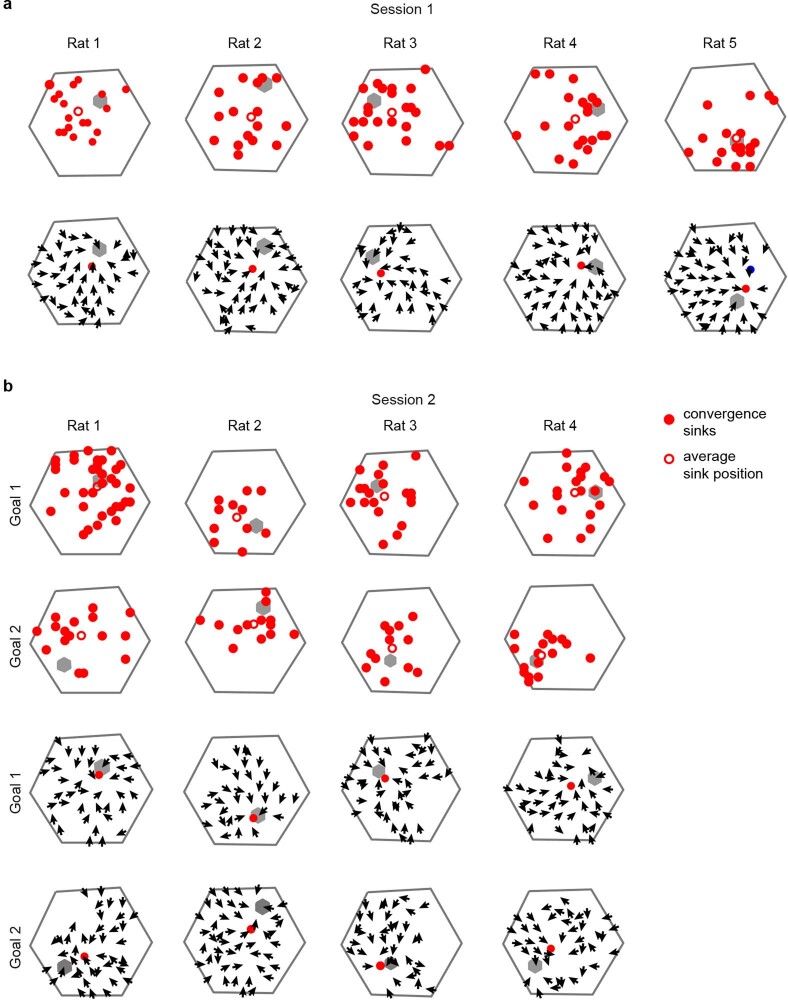
The hippocampal cognitive map supports navigation towards, or away from, salient locations in familiar environments. Although much is known about how the hippocampus encodes location in world-centred coordinates, how it supports flexible navigation is less well understood. We recorded CA1 place cells while rats navigated to a goal on the honeycomb maze. The maze tests navigation via direct and indirect paths to the goal and allows the directionality of place cells to be assessed at each choice point. Place fields showed strong directional polarization characterized by vector fields that converged to sinks distributed throughout the environment. The distribution of these 'convergence sinks' (ConSinks) was centred near the goal location and the population vector field converged on the goal, providing a strong navigational signal. Changing the goal location led to movement of ConSinks and vector fields towards the new goal. The honeycomb maze allows independent assessment of spatial representation and spatial action in place cell activity and shows how the latter relates to the former. The results suggest that the hippocampus creates a vector-based model to support flexible navigation, allowing animals to select optimal paths to destinations from any location in the environment.
海马体认知图支持在熟悉环境中朝着或远离显著位置进行导航。尽管人们已经了解了海马体如何在以世界为中心的坐标系中对位置进行编码,但它如何支持灵活的导航还不太清楚。当大鼠在蜂巢迷宫中导航到目标时,我们记录了 CA1 位置细胞。该迷宫通过直接和间接路径测试导航,并允许在每个选择点评估位置细胞的方向性。位置场表现出强烈的方向极化特征,表现为汇聚到分布在整个环境中的汇的向量场。这些“汇聚汇”(ConSinks)的分布集中在目标位置附近,并且群体向量场汇聚到目标,提供了一个强大的导航信号。改变目标位置会导致 ConSinks 和向量场朝着新目标移动。蜂巢迷宫允许在位置细胞活动中对空间表示和空间动作进行独立评估,并展示了后者与前者的关系。结果表明,海马体创建了一个基于向量的模型来支持灵活的导航,允许动物从环境中的任何位置选择到目的地的最佳路径。