Department of Air Quality and Noise, Division of Climate and Environmental Health, Norwegian Institute of Public Health, Skøyen, PO Box 222, 0213, Oslo, Norway.
Geological Survey of Norway, Trondheim, Norway.
Part Fibre Toxicol. 2022 Jul 6;19(1):46. doi: 10.1186/s12989-022-00486-7.
Respirable mineral particles represent a potential health hazard in occupational settings and ambient air. Previous studies show that mineral particles may induce cytotoxicity and inflammatory reactions in vitro and in vivo and that the potency varies between samples of different composition. However, the reason for these differences is largely unknown and the impact of mineralogical composition on the biological effects of mineral dust remains to be determined.
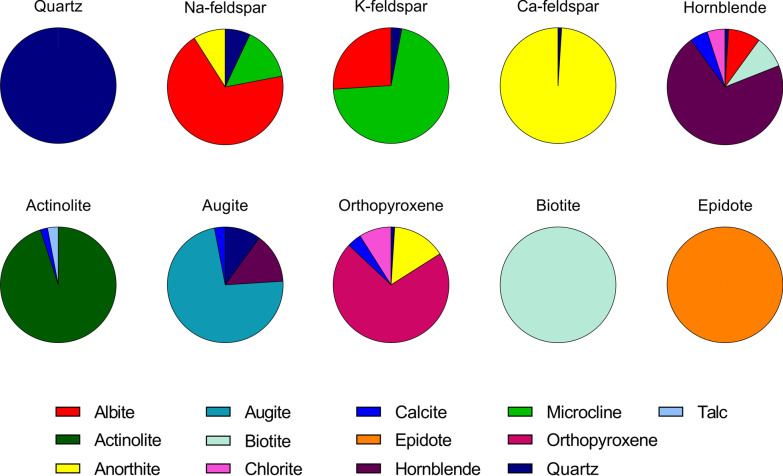
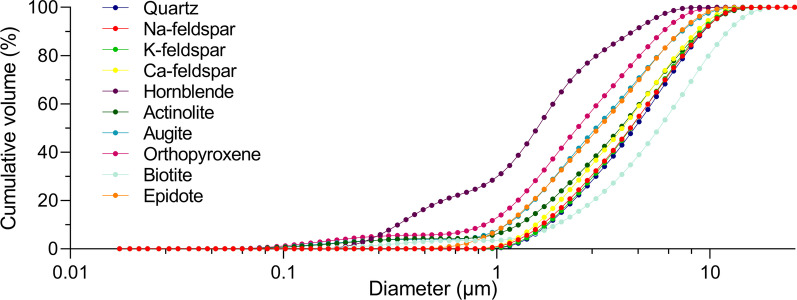
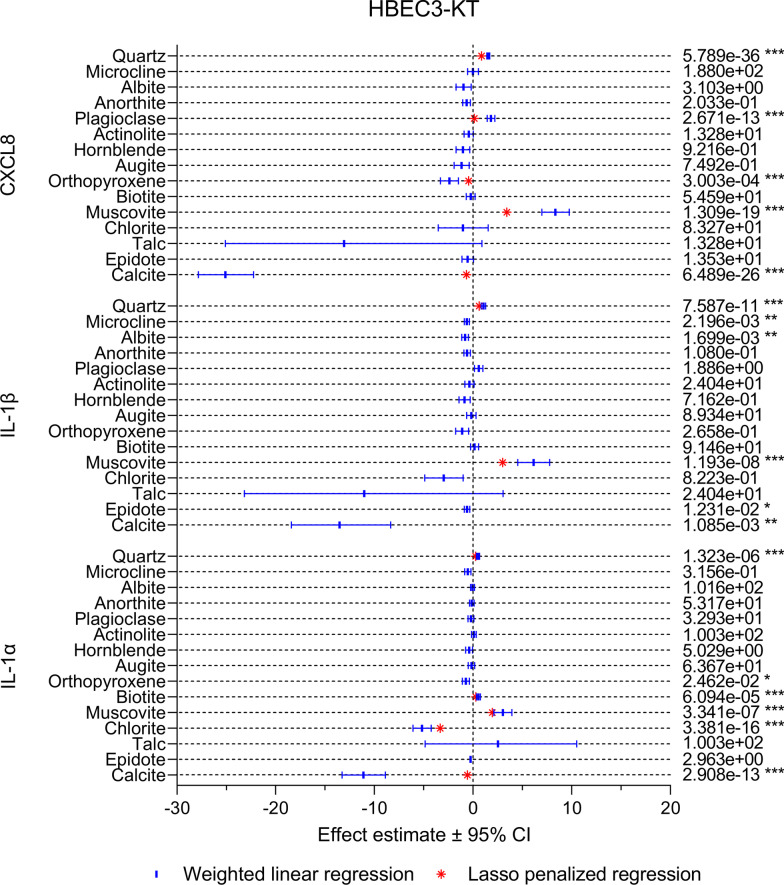
We have assessed the cytotoxic and pro-inflammatory effects of ten mineral particle samples of different composition in human bronchial epithelial cells (HBEC3-KT) and THP-1-derived macrophages, as well as their membranolytic properties in erythrocytes. Moreover, the results were compiled with the results of recently published experiments on the effects of stone particle exposure and analysed using linear regression models to elucidate which mineral components contribute most to the toxicity of mineral dust.
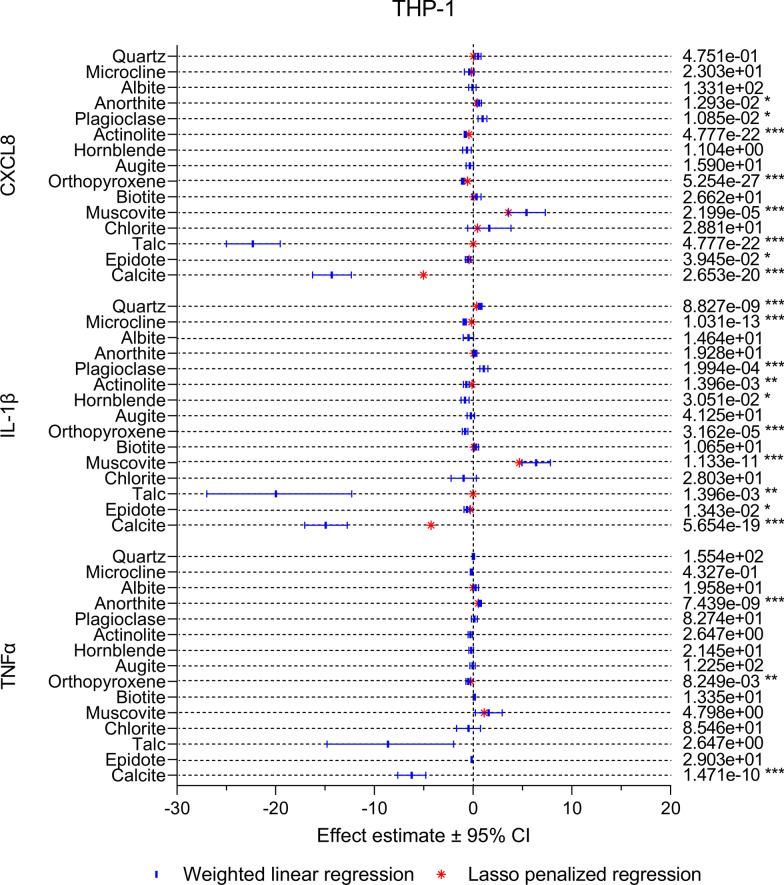
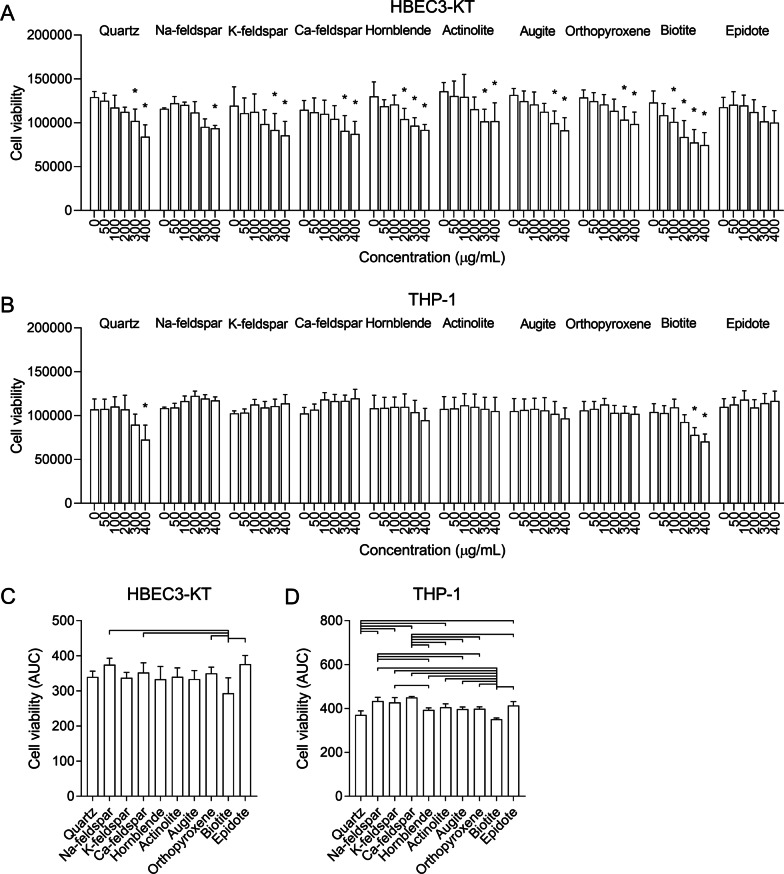
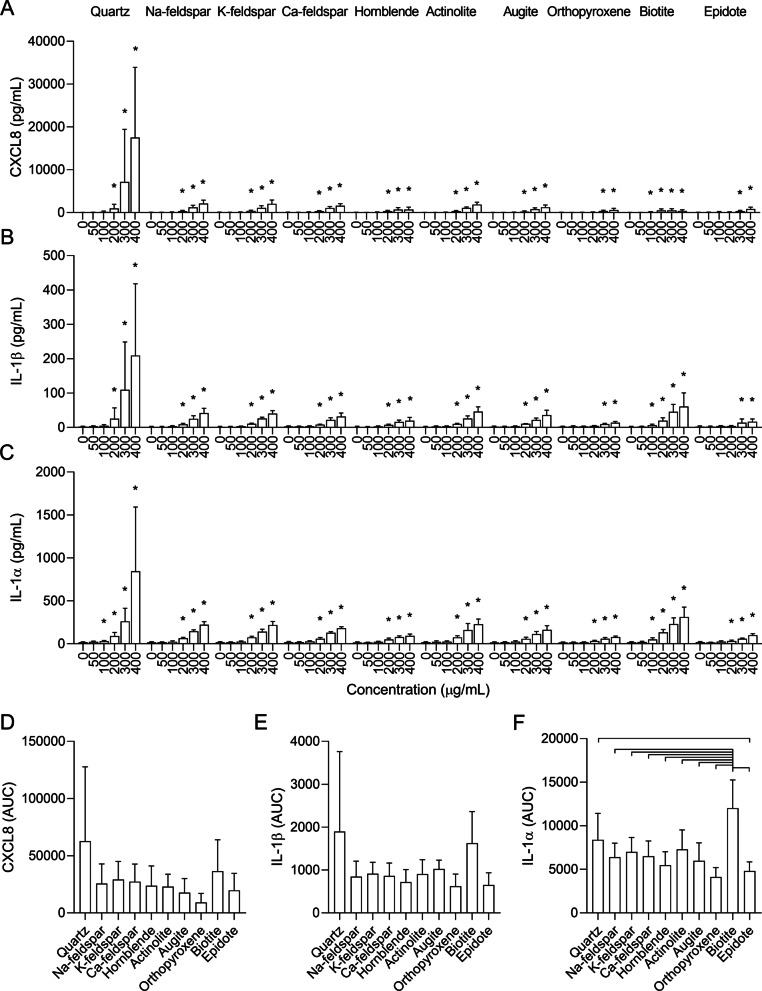
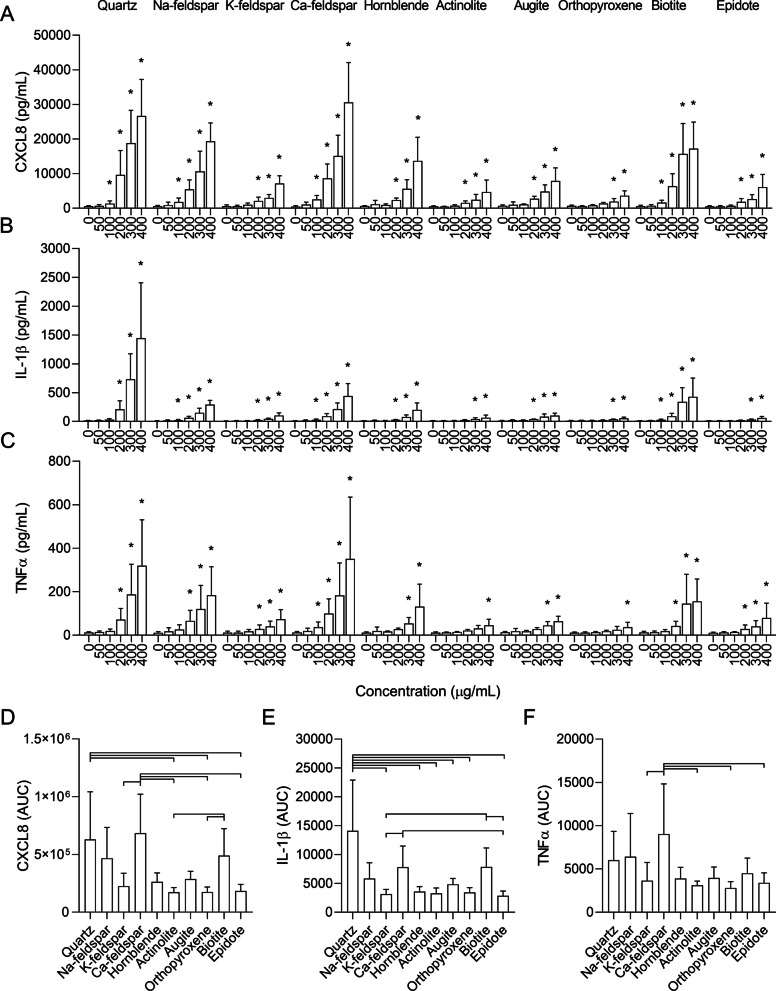
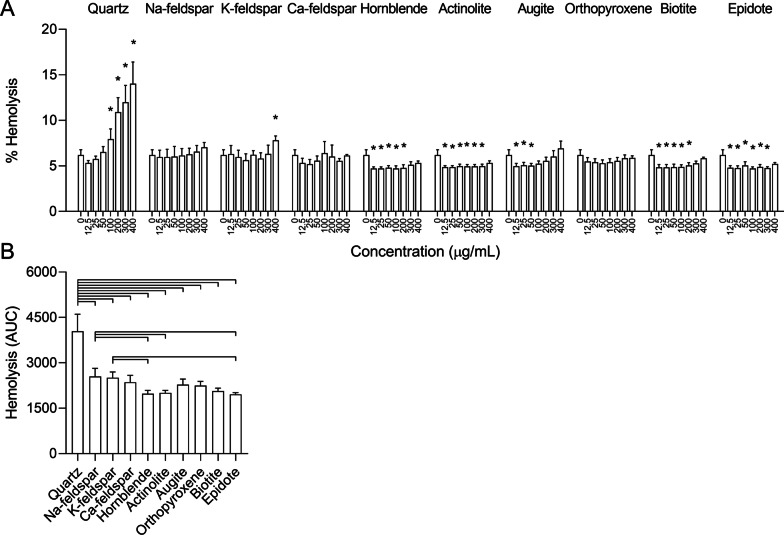
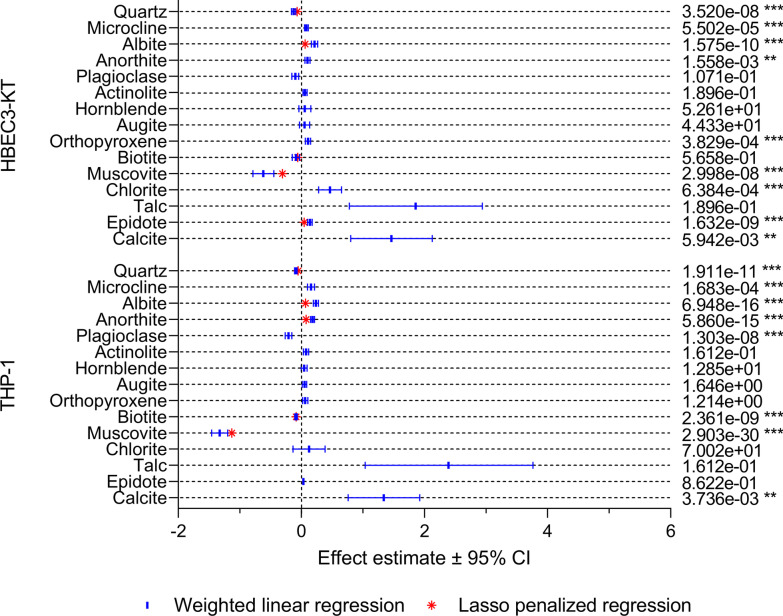
While all mineral particle samples were more cytotoxic to HBEC3-KT cells than THP-1 macrophages, biotite and quartz were among the most cytotoxic in both cell models. In HBEC3-KT cells, biotite and quartz also appeared to be the most potent inducers of pro-inflammatory cytokines, while the quartz, Ca-feldspar, Na-feldspar and biotite samples were the most potent in THP-1 macrophages. All particle samples except quartz induced low levels of membranolysis. The regression analyses revealed associations between particle bioactivity and the content of quartz, muscovite, plagioclase, biotite, anorthite, albite, microcline, calcite, chlorite, orthopyroxene, actinolite and epidote, depending on the cell model and endpoint. However, muscovite was the only mineral consistently associated with increased cytotoxicity and cytokine release in both cell models.
The present study provides further evidence that mineral particles may induce cytotoxicity and inflammation in cells of the human airways and that particle samples of different mineralogical composition differ in potency. The results show that quartz, while being among the most potent samples, does not fully predict the toxicity of mineral dust, highlighting the importance of other particle constituents. Moreover, the results indicate that the phyllosilicates muscovite and biotite may be more potent than other minerals assessed in the study, suggesting that this group of sheet-like minerals may warrant further attention.
可吸入的矿物质颗粒在职业环境和环境空气中是潜在的健康危害。先前的研究表明,矿物质颗粒可能在体外和体内诱导细胞毒性和炎症反应,并且不同组成的样品之间的效力不同。然而,这些差异的原因在很大程度上是未知的,矿物质尘埃的生物效应的矿物质组成的影响仍有待确定。
我们已经评估了十种不同组成的矿物质颗粒样品在人支气管上皮细胞(HBEC3-KT)和 THP-1 衍生的巨噬细胞中的细胞毒性和促炎作用,以及它们在红细胞中的膜溶解特性。此外,将这些结果与最近发表的关于石材颗粒暴露影响的实验结果进行了汇编,并使用线性回归模型进行了分析,以阐明哪些矿物质成分对矿物质尘埃的毒性贡献最大。
虽然所有的矿物质颗粒样品对 HBEC3-KT 细胞的细胞毒性都高于 THP-1 巨噬细胞,但黑云母和石英在这两种细胞模型中都是最具细胞毒性的。在 HBEC3-KT 细胞中,黑云母和石英似乎也是最有效的促炎细胞因子诱导物,而石英、钙长石、钠长石和黑云母样品在 THP-1 巨噬细胞中是最有效的。除石英外,所有颗粒样品均诱导低水平的膜溶解。回归分析表明,颗粒生物活性与石英、白云母、斜长石、黑云母、钙长石、钠长石、微斜长石、方解石、绿泥石、单斜辉石、角闪石和绿帘石的含量之间存在关联,具体取决于细胞模型和终点。然而,白云母是唯一一种在两种细胞模型中均与细胞毒性和细胞因子释放增加相关的矿物质。
本研究进一步证明矿物质颗粒可能在人体气道细胞中诱导细胞毒性和炎症,并且不同矿物组成的颗粒样品在效力上存在差异。结果表明,虽然石英是最有效的样品之一,但它不能完全预测矿物质尘埃的毒性,这突出了其他颗粒成分的重要性。此外,结果表明,层状硅酸盐云母和黑云母可能比研究中评估的其他矿物质更有效,这表明这组层状矿物质可能需要进一步关注。