Louvain Centre for Toxicology and Applied Pharmacology, UCLouvain, 1200 Brussels, Belgium.
Department of Chemistry, University of Turin, 10124 Turin, Italy.
Proc Natl Acad Sci U S A. 2020 Nov 10;117(45):27836-27846. doi: 10.1073/pnas.2008006117. Epub 2020 Oct 23.
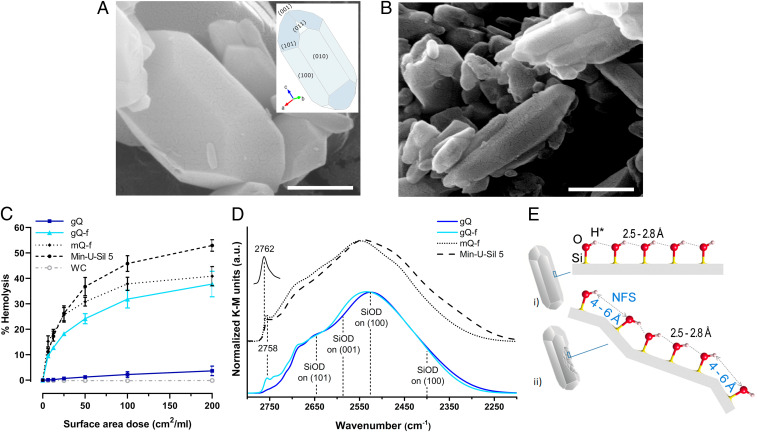
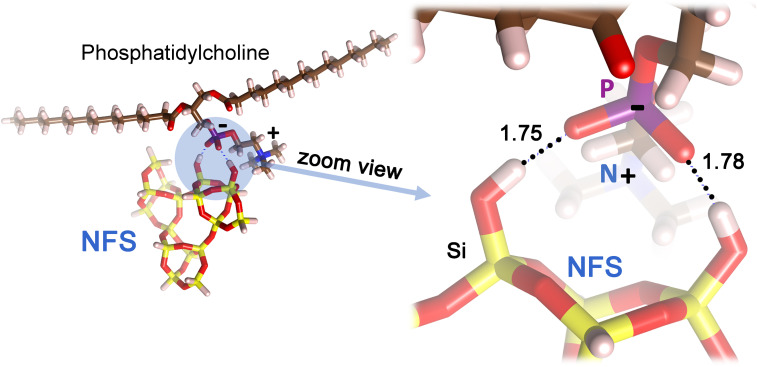
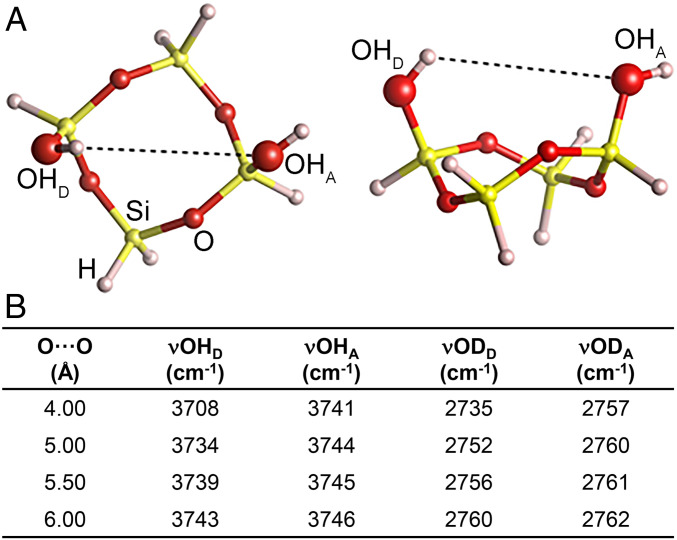
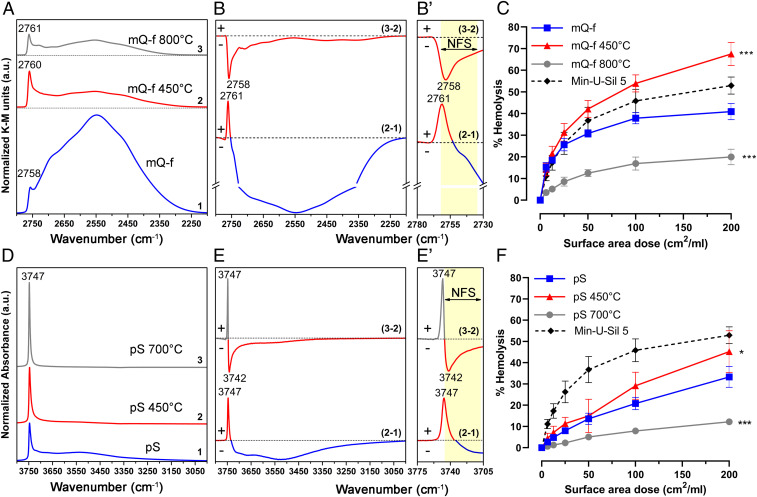
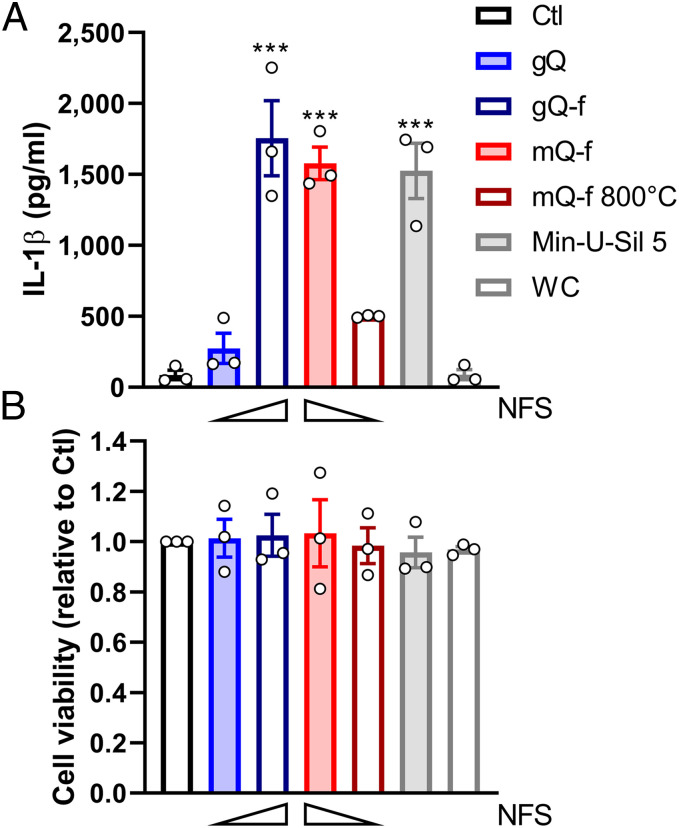
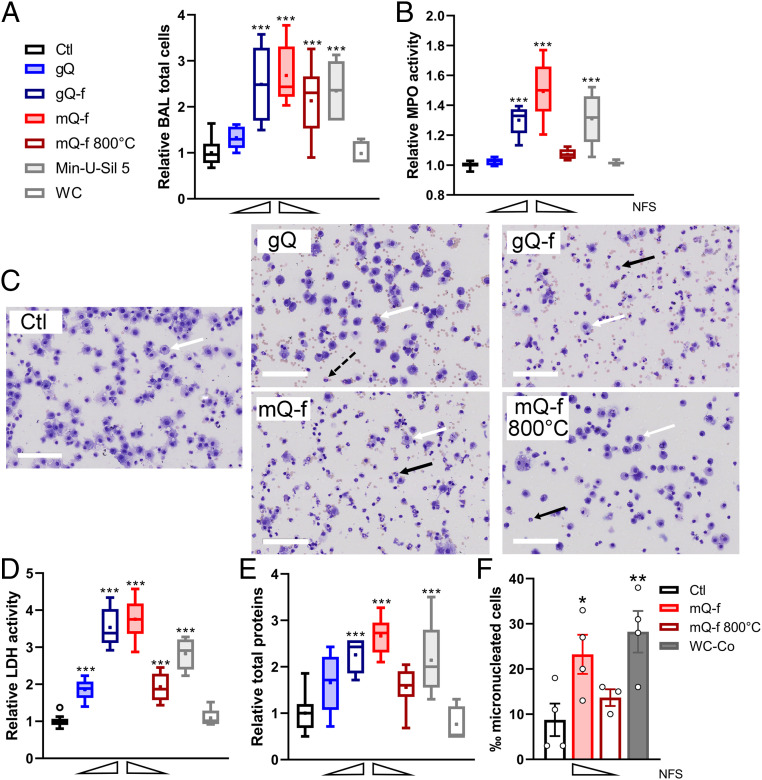
Inhalation of silica particles can induce inflammatory lung reactions that lead to silicosis and/or lung cancer when the particles are biopersistent. This toxic activity of silica dusts is extremely variable depending on their source and preparation methods. The exact molecular moiety that explains and predicts this variable toxicity of silica remains elusive. Here, we have identified a unique subfamily of silanols as the major determinant of silica particle toxicity. This population of "nearly free silanols" (NFS) appears on the surface of quartz particles upon fracture and can be modulated by thermal treatments. Density functional theory calculations indicates that NFS locate at an intersilanol distance of 4.00 to 6.00 Å and form weak mutual interactions. Thus, NFS could act as an energetically favorable moiety at the surface of silica for establishing interactions with cell membrane components to initiate toxicity. With ad hoc prepared model quartz particles enriched or depleted in NFS, we demonstrate that NFS drive toxicity, including membranolysis, in vitro proinflammatory activity, and lung inflammation. The toxic activity of NFS is confirmed with pyrogenic and vitreous amorphous silica particles, and industrial quartz samples with noncontrolled surfaces. Our results identify the missing key molecular moieties of the silica surface that initiate interactions with cell membranes, leading to pathological outcomes. NFS may explain other important interfacial processes involving silica particles.
吸入二氧化硅颗粒会引起肺部炎症反应,如果这些颗粒具有生物持久性,就会导致矽肺和/或肺癌。二氧化硅粉尘的这种毒性活性因其来源和制备方法而异,变化极大。解释和预测二氧化硅这种可变毒性的确切分子部分仍然难以捉摸。在这里,我们已经确定了一种独特的硅醇亚家族,它是二氧化硅颗粒毒性的主要决定因素。这种“几乎自由硅醇”(NFS)群体在石英颗粒断裂时出现在表面上,可以通过热疗进行调节。密度泛函理论计算表明,NFS 位于 4.00 到 6.00Å 的硅醇间距离处,并形成较弱的相互作用。因此,NFS 可以作为二氧化硅表面上能量有利的部分,与细胞膜成分相互作用,引发毒性。通过专门制备的富含或缺乏 NFS 的模型石英颗粒,我们证明 NFS 会引发毒性,包括膜溶解、体外促炎活性和肺部炎症。NFS 的毒性活性已通过发热和玻璃态无定形二氧化硅颗粒以及具有非控制表面的工业石英样品得到证实。我们的研究结果确定了启动与细胞膜相互作用、导致病理结果的缺失的关键分子部分。NFS 可能解释了涉及二氧化硅颗粒的其他重要界面过程。