Hatipoğlu Tevfik, Esmeray Sönmez Esra, Hu Xiaozhou, Yuan Hongling, Danyeli Ayça Erşen, Şeyhanlı Ahmet, Önal-Süzek Tuğba, Zhang Weiwei, Akman Burcu, Olgun Aybüke, Özkal Sermin, Alacacıoğlu İnci, Özcan Mehmet Ali, You Hua, Küçük Can
İzmir Biomedicine and Genome Center, İzmir, Turkey.
İzmir International Biomedicine and Genome Institute, Dokuz Eylül University, İzmir, Turkey.
Front Oncol. 2022 Jun 16;12:870487. doi: 10.3389/fonc.2022.870487. eCollection 2022.
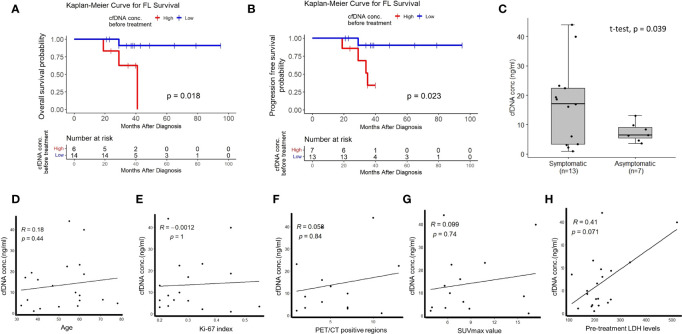
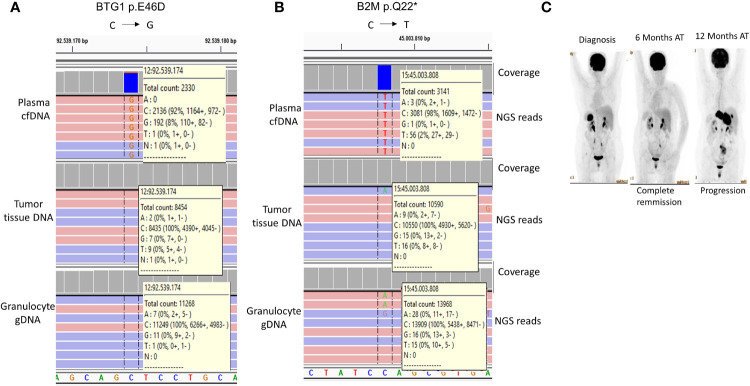
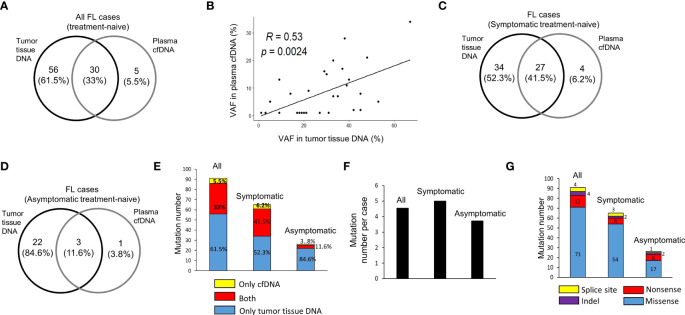
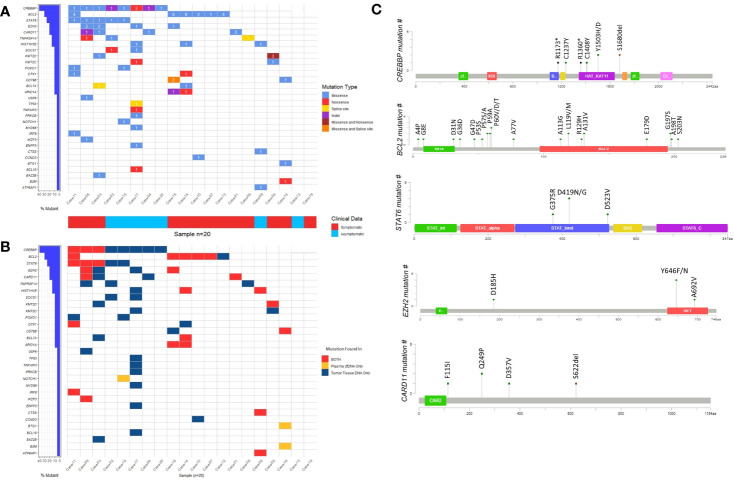
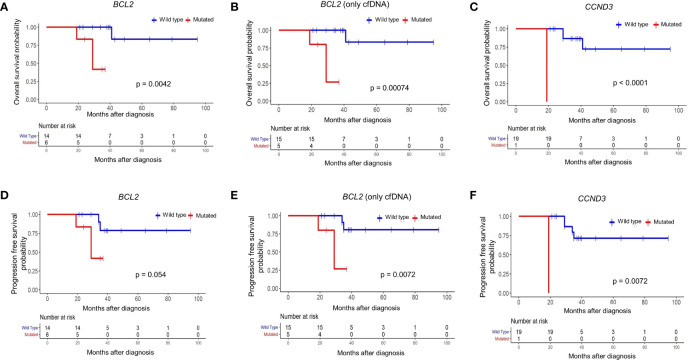
Follicular lymphoma (FL) is the second most frequent non-Hodgkin lymphoma accounting for 10-20% of all lymphomas in western countries. As a clinically heterogeneous cancer, FL occasionally undergoes histological transformation to more aggressive B cell lymphoma types that are associated with poor prognosis. Here we evaluated the potential of circulating cell-free DNA (cfDNA) to improve the diagnosis and prognosis of follicular lymphoma patients. Twenty well-characterized FL cases (13 symptomatic and 7 asymptomatic) were prospectively included in this study. Plasma cfDNA, formalin-fixed paraffin-embedded (FFPE) tumor tissue DNA, and patient-matched granulocyte genomic DNA samples were obtained from 20 treatment-naive FL cases. Ultra-deep targeted next-generation sequencing was performed with these DNA samples by using a custom-designed platform including exons and exon-intron boundaries of 110 FL related genes. Using a strict computational bioinformatics pipeline, we identified 91 somatic variants in 31 genes in treatment-naive FL cases. Selected variants were cross-validated by using PCR-Sanger sequencing. We observed higher concentrations of cfDNA and a higher overlap of somatic variants present both in cfDNA and tumor tissue DNA in symptomatic FL cases compared to asymptomatic ones. Variants known to be associated with FL pathogenesis such as STAT6 p.D419 or EZH2 p.Y646 were observed in patient-matched cfDNA and tumor tissue samples. Consistent with previous observations, high Ki-67 staining, elevated LDH levels, FDG PET/CT positivity were associated with poor survival. High plasma cfDNA concentrations or the presence of mutations in cfDNA showed significant association with poor survival in treatment-naive patients. mutation evaluations in cfDNA improved the prognostic utility of previously established variables. In addition, we observed that a FL patient who had progressive disease contained histological transformation-associated gene (i.e. and ) mutations only in cfDNA. Pre-treatment concentrations and genotype of plasma cfDNA may be used as a liquid biopsy to improve diagnosis, risk stratification, and prediction of histological transformation. Targeted therapies related to oncogenic mutations may be applied based on cfDNA genotyping results. However, the results of this study need to be validated in a larger cohort of FL patients as the analyses conducted in this study have an exploratory nature.
滤泡性淋巴瘤(FL)是第二常见的非霍奇金淋巴瘤,在西方国家占所有淋巴瘤的10%-20%。作为一种临床异质性癌症,FL偶尔会发生组织学转化,变为侵袭性更强的B细胞淋巴瘤类型,预后较差。在此,我们评估了循环游离DNA(cfDNA)改善滤泡性淋巴瘤患者诊断和预后的潜力。本研究前瞻性纳入了20例特征明确的FL病例(13例有症状,7例无症状)。从20例初治FL病例中获取血浆cfDNA、福尔马林固定石蜡包埋(FFPE)肿瘤组织DNA以及患者匹配的粒细胞基因组DNA样本。使用定制设计的平台对这些DNA样本进行超深度靶向二代测序,该平台包括110个FL相关基因的外显子和外显子-内含子边界。通过严格的计算生物信息学流程,我们在初治FL病例的31个基因中鉴定出91个体细胞变异。通过PCR-Sanger测序对选定的变异进行交叉验证。我们观察到,与无症状FL病例相比,有症状FL病例的cfDNA浓度更高,且cfDNA和肿瘤组织DNA中存在的体细胞变异重叠度更高。在患者匹配的cfDNA和肿瘤组织样本中观察到了已知与FL发病机制相关的变异,如STAT6 p.D419或EZH2 p.Y646。与先前的观察结果一致,高Ki-67染色、LDH水平升高、FDG PET/CT阳性与生存不良相关。高血浆cfDNA浓度或cfDNA中存在突变与初治患者的生存不良显著相关。cfDNA中的突变评估提高了先前确立变量的预后效用。此外,我们观察到一名疾病进展的FL患者仅在cfDNA中含有组织学转化相关基因(即 和 )的突变。治疗前血浆cfDNA的浓度和基因型可用作液体活检,以改善诊断、风险分层和组织学转化预测。可根据cfDNA基因分型结果应用与致癌突变相关的靶向治疗。然而,由于本研究中的分析具有探索性,本研究结果需要在更大规模的FL患者队列中进行验证。