Ruan Haixiang, Shi Xingxing, Gao Liping, Rashid Arif, Li Yan, Lei Ting, Dai Xinlong, Xia Tao, Wang Yunsheng
State Key Laboratory of Tea Plant Biology and Utilization, Anhui Agricultural University, Hefei, Anhui 230036, China.
School of Life Science, Anhui Agricultural University, Hefei, Anhui 230036, China.
Hortic Res. 2022 Apr 22;9:uhac098. doi: 10.1093/hr/uhac098. eCollection 2022.
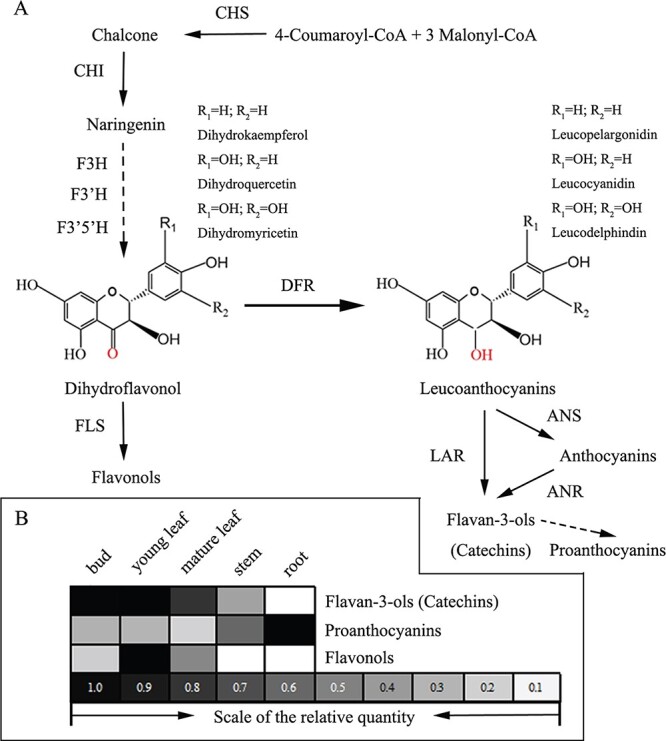
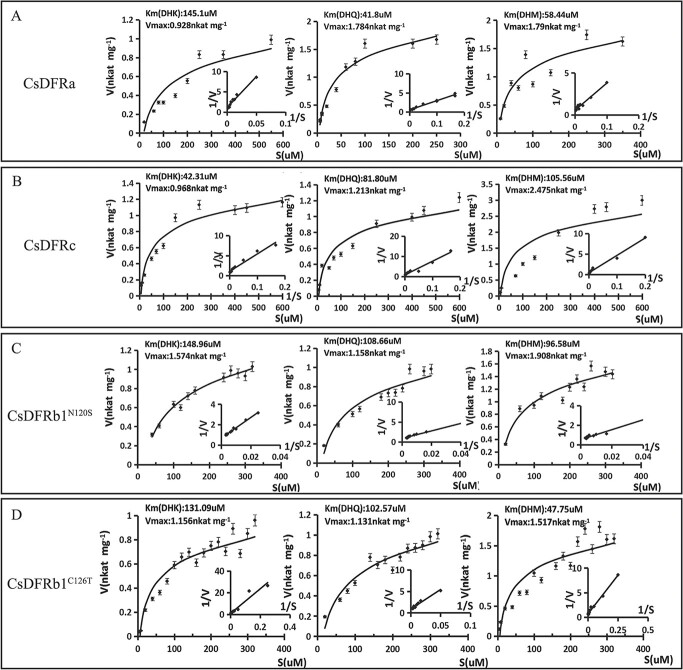
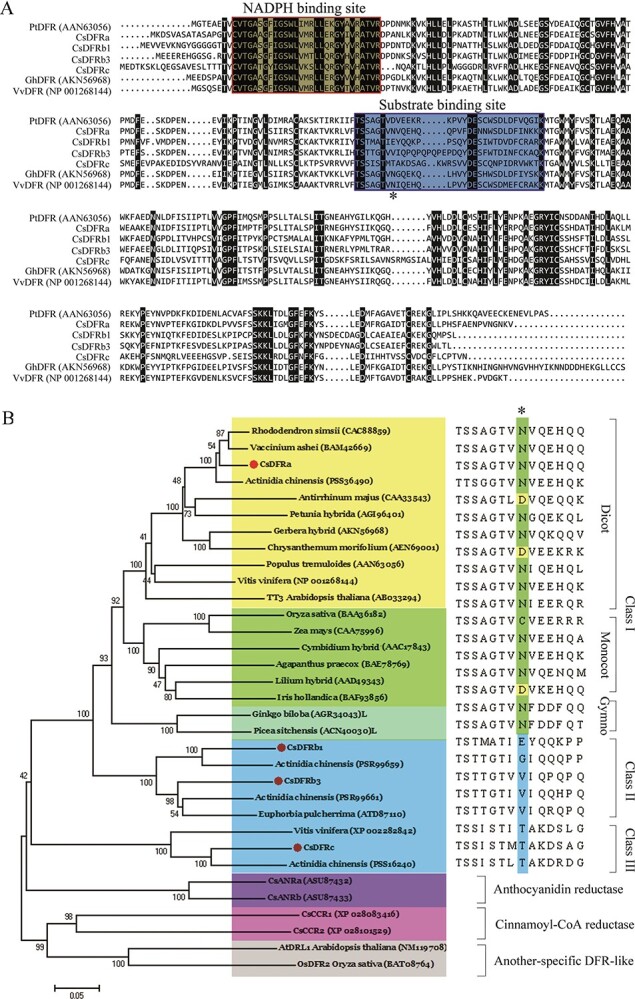
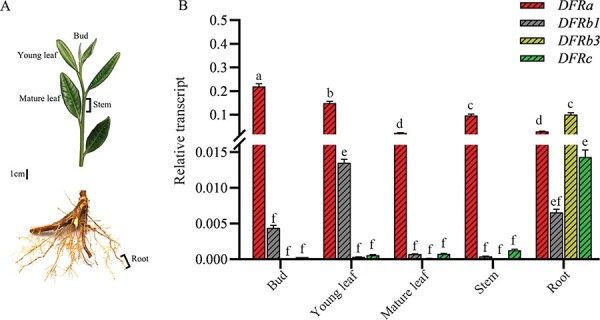
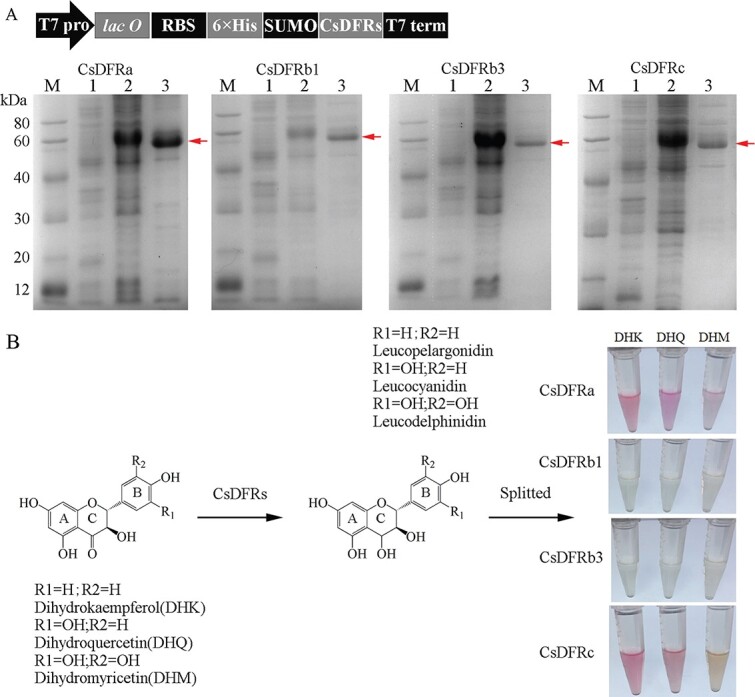
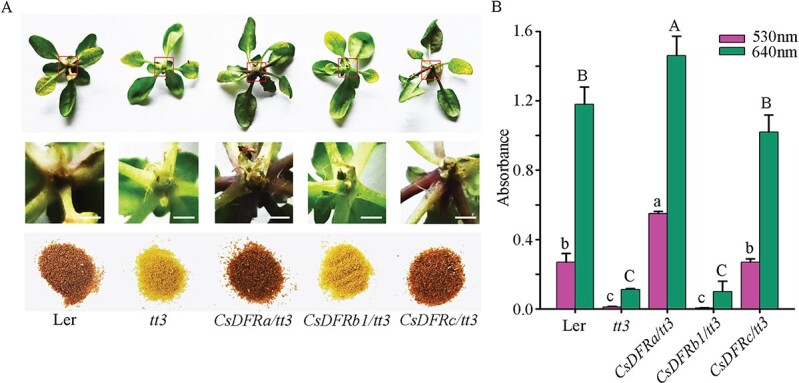
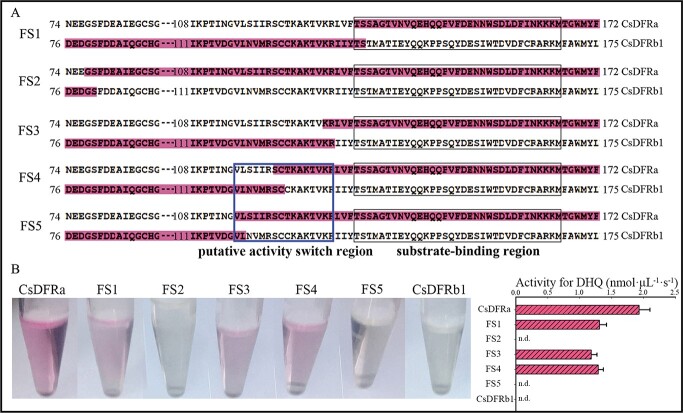
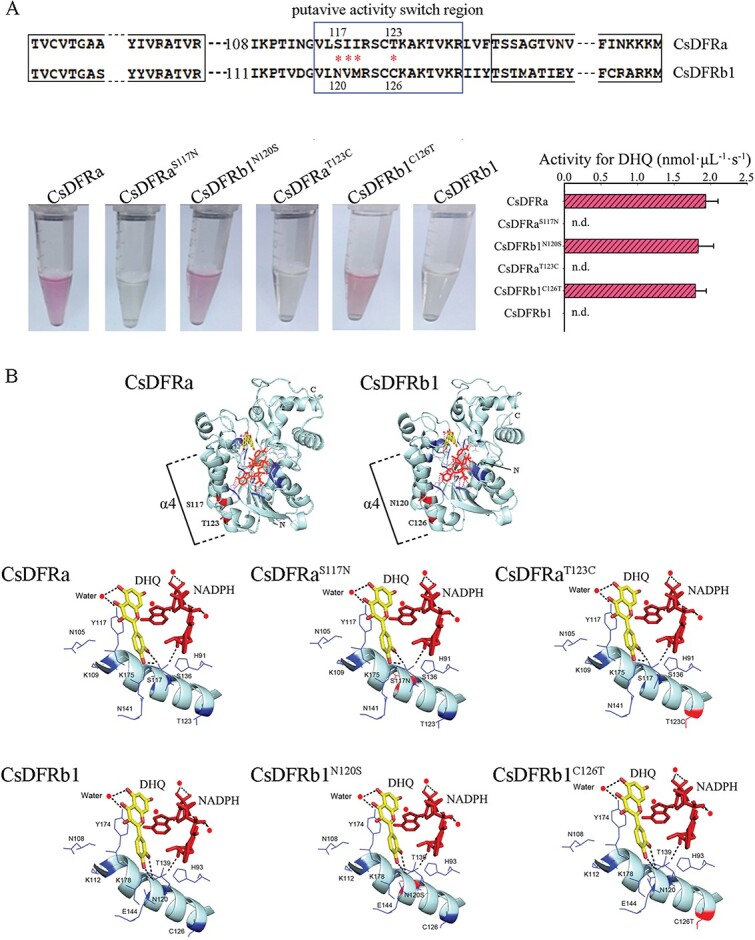
Anthocyanins and proanthocyanidins (PAs) are important types of flavonoids, plant secondary metabolites with a wide range of industrial and pharmaceutical applications. DFR (dihydroflavonol 4-reductase) is a pivotal enzyme that plays an important role in the flavonoid pathway. Here, four genes were isolated from , and their overexpression was analyzed and Based on transcription and metabolic analyses, expression was closely consistent with catechins and PAs accumulation. Moreover, enzyme activity analyses revealed that the two recombinant proteins CsDFRa and CsDFRc exhibited DFR activity, converting dihydroflavonols into leucoanthocyanins , but CsDFRb1 and CsDFRb3 did not. and overexpression in mutants () revealed that are involved in the biosynthesis of anthocyanins and PAs, as and restored not only the purple petiole phenotype but also the seed coat color. Site-directed mutagenesis revealed that the two amino acid residues S117 and T123 of CsDFRa play a prominent role in controlling DFR reductase activity. Enzymatic assays indicated that CsDFRa and CsDFRc exhibited a higher affinity for DHQ and DHK, respectively, whereas CsDFRb1 and CsDFRb1 exhibited a higher affinity for DHM. Our findings comprehensively characterize the DFRs from and shed light on their critical role in metabolic engineering.
花青素和原花青素(PAs)是重要的类黄酮类型,是具有广泛工业和医药应用的植物次生代谢产物。二氢黄酮醇4-还原酶(DFR)是类黄酮途径中起重要作用的关键酶。在此,从[具体来源未给出]中分离出四个基因,并对它们的过表达进行了分析,基于转录和代谢分析,[基因名称未明确]的表达与儿茶素和原花青素的积累密切相关。此外,酶活性分析表明,两种重组蛋白CsDFRa和CsDFRc表现出DFR活性,将二氢黄酮醇转化为无色花青素,但CsDFRb1和CsDFRb3没有。在[植物名称未明确]突变体([突变体名称未明确])中的[基因名称未明确]过表达表明,[基因名称未明确]参与花青素和原花青素的生物合成,因为[基因名称未明确]不仅恢复了紫色叶柄表型,还恢复了种皮颜色。定点诱变表明,CsDFRa的两个氨基酸残基S117和T123在控制DFR还原酶活性方面起重要作用。酶活性测定表明,CsDFRa和CsDFRc分别对DHQ和DHK表现出更高的亲和力,而CsDFRb1和CsDFRb1对DHM表现出更高的亲和力。我们的研究结果全面表征了来自[植物名称未明确]的DFR,并揭示了它们在代谢工程中的关键作用。