Sotoudeh-Anvari Alireza
Department of Industrial Engineering, Science and Research Branch, Islamic Azad University, Tehran, Iran.
Appl Soft Comput. 2022 Sep;126:109238. doi: 10.1016/j.asoc.2022.109238. Epub 2022 Jun 30.
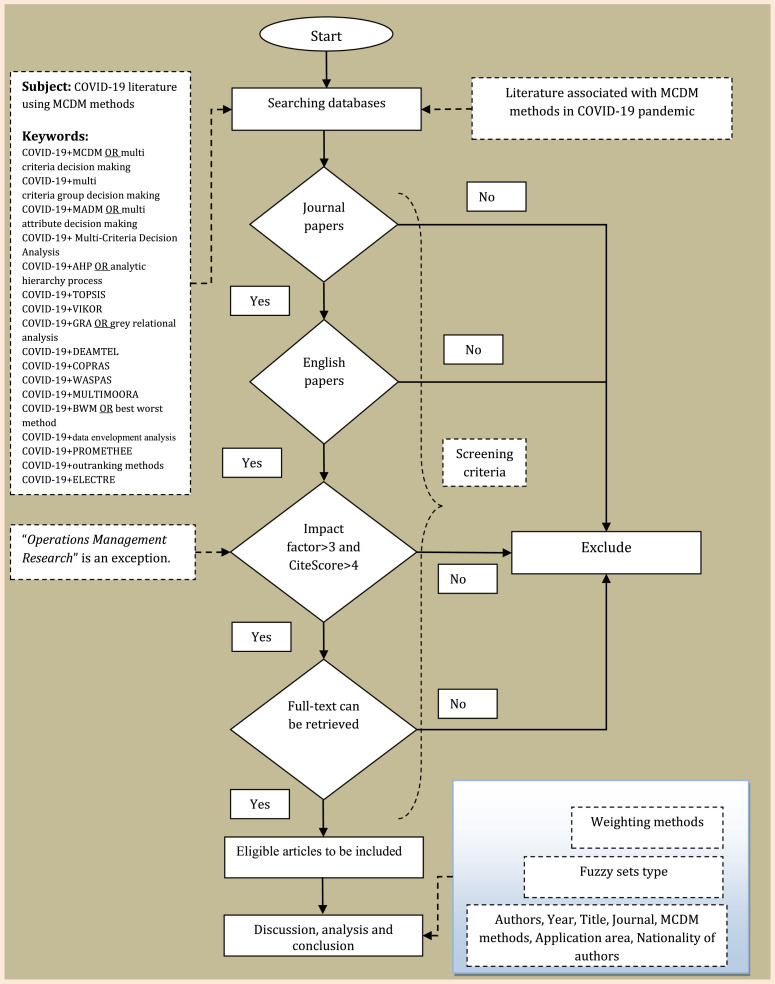
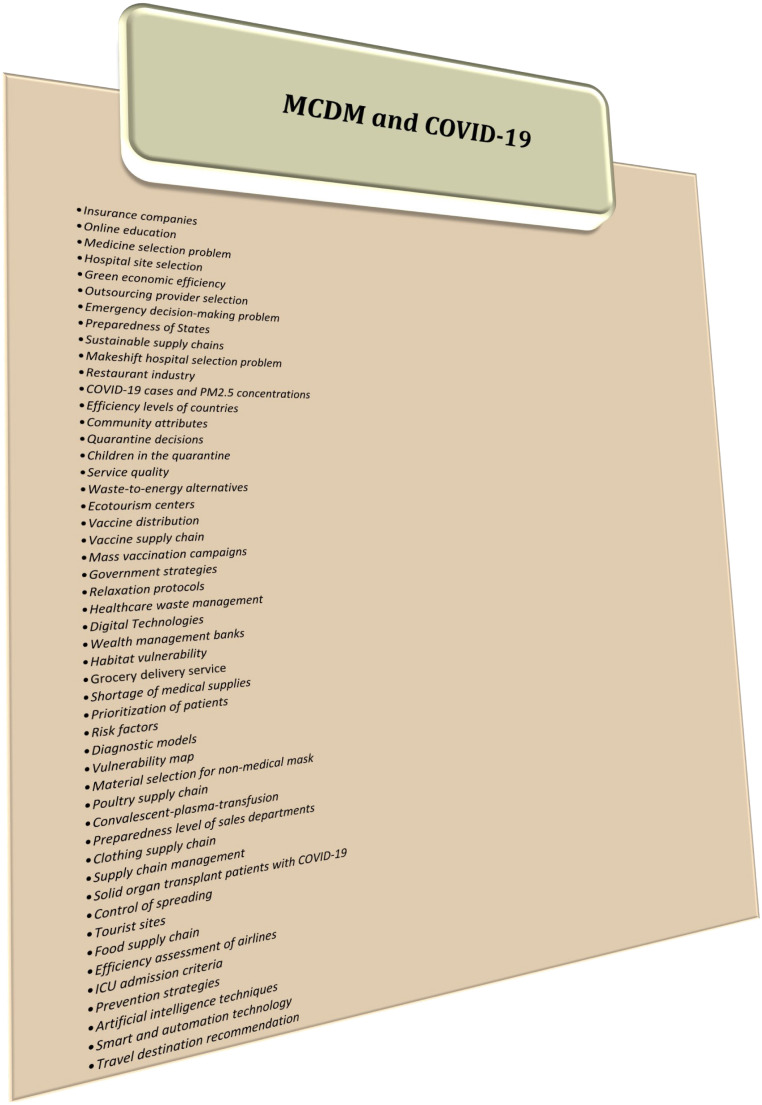
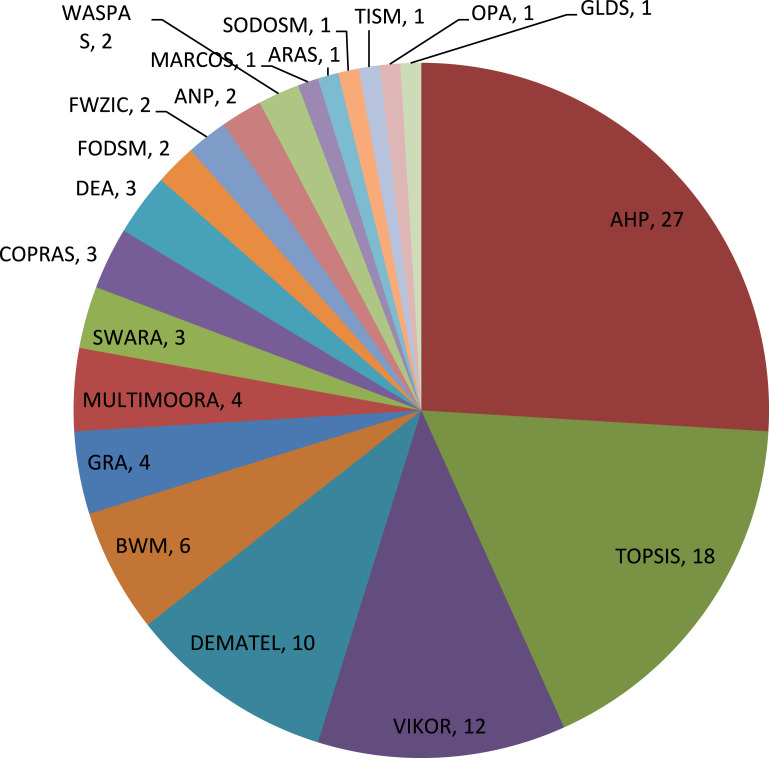
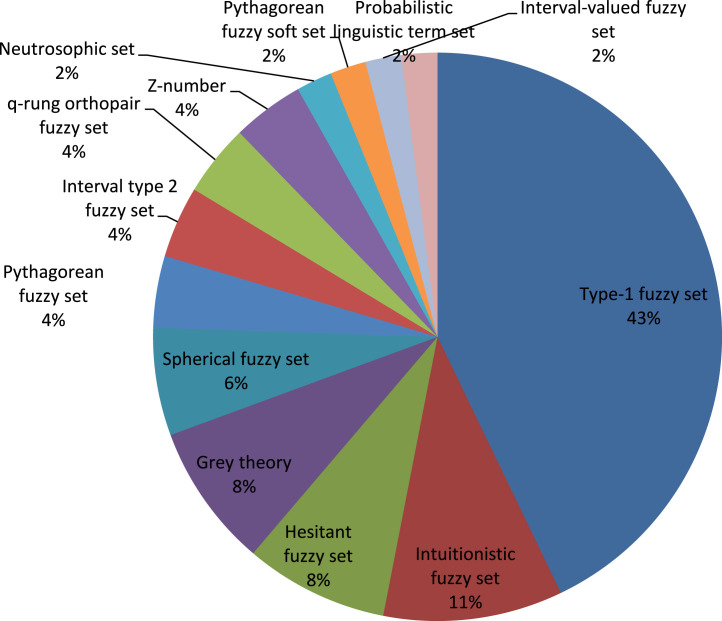
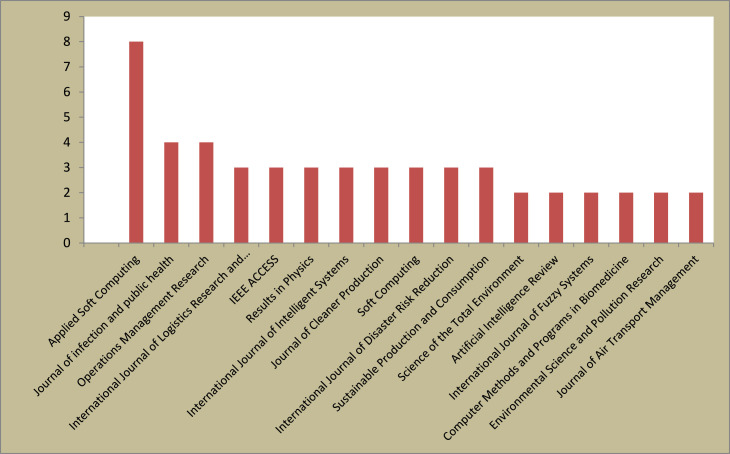
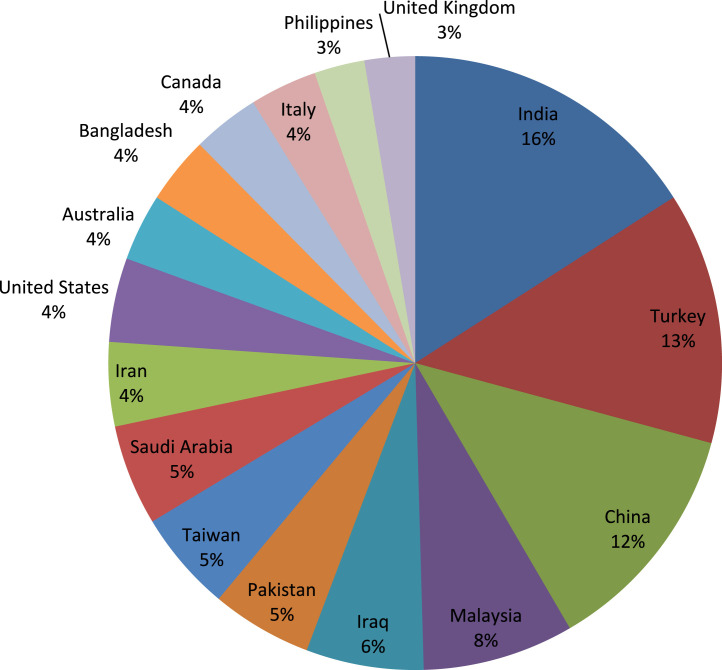
Likened to the economic calamity of World War Two, the COVID-19 pandemic has sparked fears of a deep economic crisis, killed more than six million people worldwide and had a ripple effect on all aspects of life. MCDM (multi-criteria decision making) methods have become increasingly popular in modeling COVID-19 problems owing to the multi-dimensionality of this crisis and the complexity of health and socio-economic systems. This paper is aimed to review 72 papers published in 37 leading peer-reviewed journals indexed in Web of Science that used MCDM methods in different areas of COVID-19 pandemic. In this paper, data retrieval follows the PRISMA protocol for systematic literature reviews. 35 countries have contributed to this multidisciplinary research and India is identified as the leading country in this field followed by Turkey and China. Also 36 articles, namely 50% of papers are presented in the form of international cooperation. "" is the journal with the highest number of articles whereas and "" are ranked in the second place. The results indicate that AHP (including fuzzy AHP) is the most popular MCDM method applied in 37.5% of papers followed by TOPSIS and VIKOR. This review reveals that the use of MCDM methods is one of the most attractive research areas in the field of COVID-19. As a result, one of the main purposes of this work is to identify diverse applications of MCDM methods in the COVID-19 pandemic. Most studies i.e. 69% (49 papers) of the papers combined various fuzzy sets with MCDM methods to overcome the problem of uncertainty and ambiguity while analyzing information. Nevertheless, the main drawback of those papers has been the lack of theoretical justifications. In fact, fuzzy MCDM methods impose heavy computational load and there is no general consensus on the clear advantage of fuzzy methods over crisp methods in terms of the solution quality. We hope the researchers who applied fuzzy MCDM methods to COVID-19-related research understand the theoretical basis of MCDM methods and the serious challenges associated with basic operations of fuzzy numbers to avoid potential disadvantages. This paper contributes to the body of knowledge via suggesting a deep vision to critique the fuzzy MCDM methods from mathematical perspective.
新冠疫情堪比二战时期的经济灾难,引发了人们对深度经济危机的担忧,已造成全球600多万人死亡,并对生活的方方面面产生了连锁反应。由于这场危机的多维度性以及卫生和社会经济系统的复杂性,多准则决策(MCDM)方法在新冠疫情问题建模中越来越受欢迎。本文旨在综述发表在科学网索引的37种领先同行评审期刊上的72篇论文,这些论文在新冠疫情的不同领域使用了MCDM方法。在本文中,数据检索遵循系统文献综述的PRISMA协议。35个国家参与了这项多学科研究,印度被确定为该领域的领先国家,其次是土耳其和中国。此外,36篇文章,即50%的论文是以国际合作的形式呈现的。“”是发表文章数量最多的期刊,而“”和“”并列第二。结果表明,层次分析法(包括模糊层次分析法)是应用最广泛的MCDM方法,在37.5%的论文中被使用,其次是理想解法(TOPSIS)和VIKOR法。这篇综述表明,MCDM方法的应用是新冠疫情领域最具吸引力的研究领域之一。因此,这项工作的主要目的之一是确定MCDM方法在新冠疫情中的各种应用。大多数研究,即69%(49篇论文)的论文将各种模糊集与MCDM方法相结合,以克服在分析信息时的不确定性和模糊性问题。然而,这些论文的主要缺点是缺乏理论依据。事实上,模糊MCDM方法计算量很大,而且在解决方案质量方面,模糊方法相对于清晰方法的明显优势并没有得到普遍认可。我们希望将模糊MCDM方法应用于新冠疫情相关研究的研究人员了解MCDM方法的理论基础以及与模糊数基本运算相关的严峻挑战,以避免潜在的劣势。本文通过从数学角度提出深入见解来批判模糊MCDM方法,为知识体系做出了贡献。